
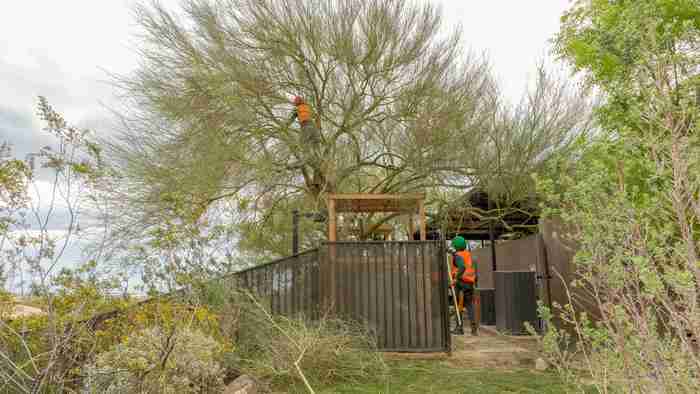
Fall is the best window for Las Vegas tree care. Mojave Desert tips on pruning timing, watering adjustments, and fall planting from ISA Certified Arborists.
As temperatures finally start to cool across the Las Vegas Valley, many homeowners breathe a sigh of relief — and so do your trees. Fall in the Mojave Desert is a critical window for tree care that too many Clark County property owners overlook. While autumn in Las Vegas does not bring the dramatic leaf changes you see in other parts of the country, it is one of the most important seasons for maintaining healthy, strong trees on your property.
At Benjamin's Tree Service, we have been helping Las Vegas homeowners care for their trees since 2001. Our ISA Certified Arborists (Cert. WE-15785A) know that fall tree care in the Mojave Desert looks very different from what you read in most gardening guides — and getting it right can make the difference between trees that thrive and trees that struggle through another desert year.
Quick Summary
- Fall is the best time to prune most desert trees in Las Vegas before winter dormancy sets in
- Watering schedules need gradual adjustment as temperatures drop below 100°F
- October through November is the ideal planting window for new trees in Clark County
- Inspect trees for summer heat damage, pest issues, and structural problems before winter
- Mulching in fall helps protect root systems through cooler desert nights
Why Fall Tree Care Matters in the Mojave Desert
The Mojave Desert climate puts unique stress on trees. After enduring summer temperatures that regularly exceed 110°F, your trees have been in survival mode for months. Fall gives them a chance to recover, and it gives you a chance to address any damage before winter dormancy.
In Las Vegas, Henderson, Summerlin, and North Las Vegas, fall typically brings daytime highs in the 70s and 80s with cooler nights dipping into the 50s and 40s. This temperature range is ideal for tree recovery and root growth. Trees that receive proper care during this window enter winter stronger and emerge in spring healthier.
Skipping fall maintenance is one of the most common mistakes we see across Clark County properties. Homeowners focus on summer watering and spring planting but forget that fall is when you set your trees up for long-term success.
Pruning and Trimming Before Winter
Fall is an excellent time for tree trimming and pruning in the Las Vegas area. Most desert-adapted trees benefit from pruning after the intense summer heat has passed but before they enter winter dormancy.
When to Prune in Fall
For most species in the Las Vegas Valley, late October through November is the sweet spot. By this time, extreme heat stress has subsided, and trees still have enough warm days left to begin healing pruning wounds before dormancy slows their growth.
What to Focus On
- Dead or damaged branches — Summer heat, monsoon winds, and UV exposure take a toll. Remove any branches that show signs of die-back, cracking, or breakage.
- Crossing or rubbing branches — These create wounds that invite pests and disease. Fall pruning lets you address structural issues while the canopy is still full enough to evaluate shape.
- Overgrown canopy — If your tree grew aggressively during summer monsoon season, fall is the time to thin the crown. This improves air circulation and reduces wind resistance heading into winter storms.
- Low-hanging branches — Clear branches that obstruct walkways, driveways, or sight lines. This is especially important in neighborhoods like Summerlin and Green Valley where HOA standards apply.
Species-Specific Considerations
Not all trees should be pruned on the same schedule. Mesquite trees, one of the most common species in Las Vegas landscapes, respond well to fall pruning. Palo verde trees are also good candidates for late-fall structural pruning. However, some species like desert willow should only be lightly pruned in fall — heavy cuts are better left for late winter.
If you are unsure about the right approach for your specific trees, a tree assessment from an ISA Certified Arborist can give you a clear plan.
Adjusting Your Watering Schedule
One of the biggest fall tree care mistakes in the desert is failing to adjust your watering schedule as temperatures drop. Many Las Vegas homeowners keep their summer watering program running well into October and November, which can actually harm your trees.
How to Transition Watering
- September: Begin reducing watering frequency by about 20 percent. Temperatures are still high but trending downward.
- October: Cut watering to roughly half of your peak summer schedule. Most established trees in Las Vegas need deep watering every 10 to 14 days by mid-October.
- November: Reduce to once every two to three weeks for established trees. New plantings and young trees still need more frequent watering.
- December: Most established desert-adapted trees need watering only once or twice per month during winter.
Deep Watering Is Still Essential
Even as you reduce frequency, every watering session should still be deep. In the rocky, caite-heavy soil common across Clark County, shallow watering encourages surface root growth that makes trees unstable and drought-vulnerable. Water slowly for 30 to 60 minutes at the drip line — the outer edge of the canopy — to push moisture down to the root zone.
Watch for Overwatering Signs
Yellow leaves, soft or mushy bark near the base, fungal growth, and a sour smell near the root zone are all signs you may be overwatering. In the Mojave Desert, overwatering kills more established trees than underwatering does.
Fall Is the Best Time to Plant Trees in Las Vegas
If you have been thinking about adding trees to your property, fall is your best planting window. The combination of cooler air temperatures and still-warm soil creates ideal conditions for root establishment.
Why Fall Planting Works
When you plant a tree in fall, the roots have several months of mild temperatures to establish before the stress of summer arrives. Trees planted in October or November in Las Vegas typically develop stronger root systems than those planted in spring, which face brutal heat within just a few months.
Best Trees for Fall Planting in Clark County
Some excellent choices for fall planting in the Las Vegas area include:
- Desert willow — Drought-tolerant, beautiful blooms, and well-suited to alkaline desert soil
- Chilean mesquite — Fast-growing shade tree that thrives in the Mojave heat
- Palo verde — Low water needs with striking green bark and yellow spring flowers
- Arizona ash — Provides excellent shade and grows well in Clark County conditions
- African sumac — Evergreen option that provides year-round shade and privacy
For help choosing and planting the right trees for your specific property, our team offers tree service plans tailored to Las Vegas landscapes and soil conditions.
Inspect for Summer Damage
Fall is the time to carefully inspect your trees for damage accumulated during the brutal Las Vegas summer. Months of extreme heat, UV exposure, and dry winds can cause problems that are not immediately obvious.
What to Look For
- Sunscald — Look for cracked, peeling, or discolored bark on the south and west-facing sides of trunks. This is extremely common in Las Vegas where summer sun is intense.
- Heat stress dieback — Branch tips that turned brown and brittle during summer may indicate deeper health issues. If dieback extends more than a foot or two, the tree may need professional evaluation.
- Pest activity — Bark beetles, borers, and spider mites become more active in stressed trees. Look for small holes in bark, sawdust-like frass, or unusual webbing in the canopy.
- Root exposure — Summer monsoon rains can wash away soil and expose surface roots. If you see exposed roots, add mulch or soil to protect them before winter.
- Structural cracks — High winds during monsoon season can create cracks in trunks or major limbs that weaken the tree structurally. These can become emergency situations during winter wind events if not addressed.
If you notice any of these issues, it is worth having a professional arborist take a look. Early intervention in fall is far less expensive and disruptive than dealing with a tree failure in winter.
Mulching for Winter Protection
Mulching around your trees in fall provides multiple benefits in the desert climate. A two to four inch layer of organic mulch spread around the base of your trees — but not touching the trunk — helps in several ways.
Benefits of Fall Mulching
- Insulates roots from temperature swings during desert winter nights, which can drop into the 20s and 30s in parts of the Las Vegas Valley
- Retains soil moisture between watering sessions, reducing the need for supplemental irrigation
- Suppresses weeds that compete with trees for water and nutrients
- Improves soil quality over time as mulch breaks down and adds organic matter to the typically nutriite-poor desert soil
Use wood chips, bark mulch, or shredded leaves. Avoid piling mulch against the trunk — this creates a moist environment that encourages rot and pest activity. Keep a three to four inch gap between the mulch ring and the trunk.
Fertilizing in Fall
Fall fertilization is generally not recommended for most established desert trees in Las Vegas. Desert soil is naturally alkaline, and many native species are adapted to low-nutrient conditions. Over-fertilizing causes excessive growth that is vulnerable to winter frost damage.
Non-native trees like ash, elm, or fruit trees may benefit from a light fall application of a slow-release fertilizer. If your trees showed signs of nutrient deficiency during summer, a soil test can help determine what they need.
Preparing for Winter Wind Events
Las Vegas experiences significant wind events between November and March with gusts exceeding 60 mph. Fall preparation includes removing dead branches, thinning dense canopies to reduce wind resistance, staking young trees, and identifying hazard trees with structural damage. In some cases, professional tree removal is the safest option before winter storms arrive.
FAQs
When should I stop watering my trees in Las Vegas?
You should not stop watering entirely — even in winter, Las Vegas trees need some supplemental irrigation because natural rainfall averages under five inches per year. Reduce frequency gradually from September through December, but continue deep watering once or twice per month through winter for established trees.
Can I prune my palm trees in fall?
Yes, fall is a good time to remove dead fronds from palm trees. However, only remove fully brown, dead fronds — never cut green fronds, as this weakens the tree and makes it more vulnerable to cold damage.
Is fall a good time for tree removal in Las Vegas?
Fall is one of the best times for tree removal in the Las Vegas area. Cooler temperatures make the work safer, and removing hazardous trees before winter wind events protects your property.
How do I know if my tree survived the summer heat?
Look for green, flexible branch tips and healthy buds. If large sections of the canopy are brown and brittle, try a scratch test — scrape a small area of bark on a young branch to check for green tissue underneath. When in doubt, call a certified arborist for an evaluation.
You may also find our guide on How to Prepare Your Trees for Las Vegas Summer helpful. The Southern Nevada Water Authority's watering guidance covers how and when to water trees in our climate.
Schedule Your Fall Tree Care Today
Fall is a short but critical window for tree care in the Las Vegas Valley. Do not let it pass without giving your trees the attention they need to stay healthy, safe, and beautiful through the coming year.
Benjamin's Tree Service has been serving Las Vegas, Henderson, Summerlin, North Las Vegas, and all of Clark County since 2001. Our ISA Certified Arborists (Cert. WE-15785A) provide expert trimming, pruning, tree health assessments, and complete tree care plans designed specifically for the Mojave Desert climate.
Call us today at (725) 227-6160 or visit benjaminstreeservice.com to schedule your fall tree care service. We are fully licensed and insured in Nevada, and we are proud to be one of the highest-rated tree service companies in the Las Vegas Valley.
Benjamin's Tree Service
ISA Certified Arborists serving Las Vegas & the surrounding areas since 2001.
Related Reading
Seasonal Care
Late Summer Tree Care in Las Vegas: What to Do Now
Three months of Las Vegas heat stress trees before anyone notices. Learn when to ease watering, dela…
9 min read
Seasonal Care
Monsoon Tree Care in Las Vegas: Storm Damage Guide
A complete Las Vegas monsoon tree care guide: how storms damage trees, warning signs to inspect for,…
11 min read
Seasonal Care
How to Prepare Your Trees for Las Vegas Summer
Prepare Las Vegas trees for summer heat with proven watering, mulching, and pruning steps trusted by…
8 min read