
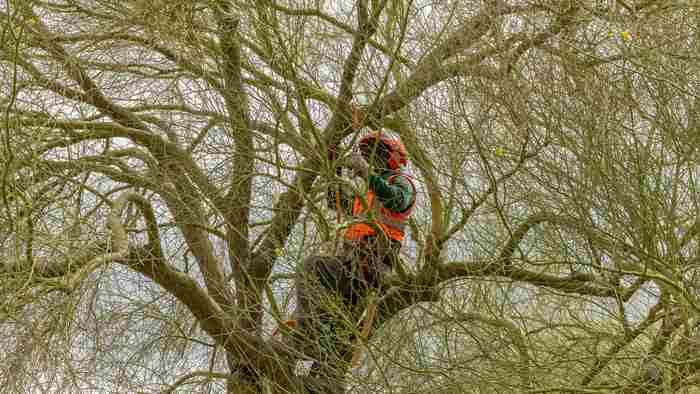
Prepare Las Vegas trees for summer heat with proven watering, mulching, and pruning steps trusted by local arborist experts.
As temperatures in the Las Vegas Valley begin climbing past 100°F in late May, the trees on your property face one of the toughest stretches of the year. Summer in Clark County is not just hot — it is extreme. Sustained highs above 110°F, single-digit humidity, intense UV radiation, and drying desert winds create a hostile environment that can injure, stress, and even kill trees that are not properly prepared.
At Benjamin's Tree Service, we have been helping Las Vegas homeowners protect their trees through brutal summers since 2001. Our team, including ISA Certified Arborists (ISA Cert. WE-15785A), sees the same preventable problems every June and July: sunscalded bark, wilting canopies, pest invasions, and root systems that fail because of dehydration or poor soil management.
The good news? A little preparation in May and early June goes a long way. This guide walks you through everything you need to do now to give your trees the best chance of thriving through a Las Vegas summer.
> Quick Summary
> - Adjust watering depth and frequency before triple-digit heat arrives
> - Apply 3–4 inches of organic mulch around the root zone to insulate soil and retain moisture
> - Complete any necessary pruning before June — never prune in peak summer heat
> - Inspect for early signs of pests and disease while treatment is still effective
> - Protect young trees from sunscald with trunk wraps or temporary shade structures
Adjust Your Watering Strategy Before the Heat Hits
Water is the single most important factor in summer tree survival across Southern Nevada. The desert soil in Las Vegas, Henderson, Summerlin, and North Las Vegas drains quickly and retains very little moisture compared to loamy soils found in other parts of the country.
How Much Water Do Trees Need in Summer?
Established shade trees in Las Vegas need approximately 1 to 2 inches of water per week during peak summer. Newly planted trees and younger specimens may need water every 2 to 3 days until their root systems are established.
The key is *deep watering* rather than frequent shallow irrigation. Shallow watering encourages roots to grow near the surface, where soil temperatures can exceed 130°F in July. Deep watering — running a slow drip for 30 to 60 minutes at the drip line — pushes moisture down 18 to 24 inches where roots can access it safely.
Timing Matters
Always water early in the morning (before 8 a.m.) or in the evening (after 7 p.m.). Watering during midday heat leads to rapid evaporation — you lose a significant percentage of the water before it reaches the roots. Morning watering is ideal because it gives roots time to absorb moisture before the day's heat peaks.
Watch for Caliche Problems
Much of Clark County sits above caliche, a calcium-carbonate hardpan that can trap water and create drainage issues. If your trees are planted in caliche soil, water may pool above the hardpan and suffocate roots rather than draining through. If you notice standing water hours after irrigation or your tree shows signs of root rot despite regular watering, the caliche layer may need professional assessment. Our tree assessment service can identify these hidden problems before they become emergencies.
Apply Mulch to Protect Root Zones
Mulch is one of the most underused tools in desert tree care. A proper mulch ring around each tree delivers multiple benefits during Las Vegas summers:
- Insulates soil from extreme surface temperatures
- Retains moisture by reducing evaporation from the root zone
- Suppresses weeds that compete for water
- Adds organic matter as it breaks down, improving poor desert soil over time
How to Mulch Correctly
Apply 3 to 4 inches of organic mulch — wood chips, shredded bark, or composted material — in a ring around the tree extending to the drip line (the outermost edge of the canopy). Keep mulch at least 4 to 6 inches away from the trunk itself. Piling mulch against the trunk creates a moisture trap that invites fungal diseases and bark decay.
Replenish mulch in late spring if last year's application has broken down. In the Las Vegas climate, organic mulch decomposes faster than in cooler regions, so an annual top-up is standard practice.
Complete Pruning Before Summer Begins
If your trees need trimming or structural pruning, now is the time — not July or August. Pruning during peak summer heat creates open wounds that expose inner bark and cambium tissue to intense UV radiation, leading to sunscald and secondary infections.
What to Prune Now
- Dead or damaged branches: Remove any branches that did not leaf out this spring or show signs of decay
- Crossing or rubbing limbs: These create bark wounds that attract pests and disease
- Low-hanging branches: Raise the canopy for clearance over walkways, driveways, and structures
- Storm-risk limbs: Heavy branches with weak attachment angles (V-crotches) that could break in summer monsoon winds
What NOT to Do
Never remove more than 25% of a tree's canopy in a single pruning session. Over-pruning removes the shade that protects the trunk and lower branches from sunscald. In Las Vegas, aggressive pruning is one of the leading causes of tree decline — we see it constantly.
For professional trimming and pruning timed correctly for your specific tree species, schedule a consultation now rather than waiting until the damage is done.
Inspect for Pests and Disease Early
Late spring is the window when many common Las Vegas tree pests become active. Catching infestations early — before summer stress compounds the problem — dramatically improves treatment outcomes.
Common Pests to Watch For
Bark beetles: These small insects bore into stressed trees, leaving small round entry holes and fine sawdust (frass) at the base. Bark beetles are especially aggressive against drought-stressed trees in the Mojave region. Once a tree is heavily infested, removal may be the only option.
Spider mites: Nearly invisible to the naked eye, spider mites cause stippling (tiny yellow or white dots) on leaf surfaces and may produce fine webbing. They thrive in hot, dry conditions — exactly what Las Vegas delivers.
Aphids: These soft-bodied insects cluster on new growth and the undersides of leaves. Heavy infestations produce honeydew, a sticky residue that attracts sooty mold.
Borers: Several species of borer insects target trees in Southern Nevada, especially those weakened by poor watering or recent transplant shock. Entry holes, sap seepage, and branch dieback are typical signs.
When to Call a Professional
If you notice any of these symptoms — sawdust at the base, unexplained leaf drop, sticky residue on surfaces below the canopy, or sudden branch death — do not wait. Pest problems in summer escalate fast. Our ISA Certified Arborists can diagnose the issue and recommend targeted treatment before it spreads to neighboring trees.
Read our full guide on signs your tree is diseased or dying to learn what to look for during your inspection.
Protect Young and Recently Planted Trees
Trees planted within the last two to three years are especially vulnerable to their first or second Las Vegas summer. Their root systems are still limited, their trunks have not yet developed thick protective bark, and their canopies may not provide enough self-shading.
Trunk Wraps
For young trees with thin bark — especially species like ash, maple, and citrus — applying a light-colored trunk wrap from the base to the first major branch can prevent sunscald. Sunscald appears as cracked, peeling, or darkened bark on the south- and west-facing sides of the trunk where afternoon sun exposure is most intense.
Temporary Shade Structures
For the first summer after planting, a shade cloth (30% to 50% shade rating) draped over a simple frame can reduce heat stress significantly. Remove it once the tree's canopy fills in enough to shade its own trunk.
Extra Watering
Young trees in Las Vegas should be watered every 2 to 3 days during June through September. Use a slow drip at the base and gradually move the water source outward as roots expand. If you are unsure how to plan ongoing care for new trees, our team can set up a custom tree service plan for your property.
Prepare for Monsoon Season
Las Vegas monsoon season typically runs from mid-June through September, bringing sudden thunderstorms, high winds, and occasionally heavy rain. While monsoon moisture can benefit trees, the storms themselves pose serious risks.
Pre-Storm Checklist
- Identify weak branches that could snap in high winds — schedule removal now
- Check for leaning trees with exposed or lifting root plates — these may need cabling or removal
- Clear deadwood from the canopy so wind passes through rather than catching like a sail
- Stake young trees if they are not yet self-supporting (but do not leave stakes on for more than one year)
If a storm damages your trees, our emergency tree service team is available to respond quickly and safely remove hazards from your property. Read our recent guide on what to do after storm damage for immediate steps.
Create a Summer Maintenance Schedule
Consistency is what separates trees that merely survive Las Vegas summer from those that thrive. Here is a simple monthly maintenance framework:
May–Early June
- Complete all pruning
- Apply or refresh mulch
- Inspect for pests and disease
- Adjust irrigation timers to summer schedule
- Wrap trunks of young or thin-barked trees
June–August (Peak Heat)
- Monitor watering — check soil moisture weekly by probing 6 to 8 inches deep
- Watch for signs of heat stress: leaf curl, premature leaf drop, wilting despite adequate water
- DO NOT prune unless removing a safety hazard
- Inspect after every monsoon event for broken limbs or root damage
September
- Gradually reduce watering frequency as temperatures moderate
- Assess summer damage — schedule fall pruning for any structural issues
- Remove trunk wraps and shade cloth from young trees as temperatures drop below 100°F
FAQs
Can I plant a tree during Las Vegas summer?
It is not recommended. The extreme heat and water demands make summer establishment very difficult. Late fall (October–November) and early spring (February–March) are the ideal planting windows in Las Vegas.
How do I know if my tree is getting enough water?
Probe the soil 8 to 10 inches deep near the drip line. If the soil is dry at that depth, your tree needs more water. Leaf wilting in the afternoon that recovers by morning is a common sign of heat stress — not necessarily underwatering.
Should I fertilize my trees in summer?
Avoid heavy fertilization during peak summer heat. Fertilizer stimulates new growth that the tree cannot support when it is already stressed by heat. If soil tests indicate nutrient deficiencies, apply a slow-release formula in early spring or fall.
My tree's leaves are turning yellow — is it dying?
Not necessarily. Yellowing can indicate overwatering, underwatering, iron chlorosis (common in alkaline Las Vegas soil), or heat stress. An ISA Certified Arborist assessment can pinpoint the cause and recommend the right corrective action.
The Southern Nevada Water Authority's watering guidance covers how and when to water trees in our climate.
Get Your Trees Summer-Ready Now
Do not wait until the first 115°F day to think about your trees. The work you do now — adjusting water, laying mulch, completing pruning, and checking for pests — determines whether your trees come through the summer stronger or weaker.
Benjamin's Tree Service has been serving Las Vegas, Henderson, Summerlin, North Las Vegas, and communities throughout Clark County since 2001. Our ISA Certified Arborists (ISA Cert. WE-15785A) know exactly what desert trees need to survive and thrive in this climate. We are fully licensed and insured in Nevada and 5-star rated on Google.
Call us today at 725-227-6160 or schedule a consultation online to get a professional summer preparation plan for your property. Early action is the best protection your trees can get.
Benjamin's Tree Service
ISA Certified Arborists serving Las Vegas & the surrounding areas since 2001.
Related Reading
Seasonal Care
Fall Watering Schedule for Las Vegas Trees: What to Change
Adjusting your fall watering schedule for Las Vegas trees prevents drought stress and overwatering a…
9 min read
Seasonal Care
Late Summer Tree Care in Las Vegas: What to Do Now
Three months of Las Vegas heat stress trees before anyone notices. Learn when to ease watering, dela…
9 min read
Seasonal Care
Monsoon Tree Care in Las Vegas: Storm Damage Guide
A complete Las Vegas monsoon tree care guide: how storms damage trees, warning signs to inspect for,…
11 min read