
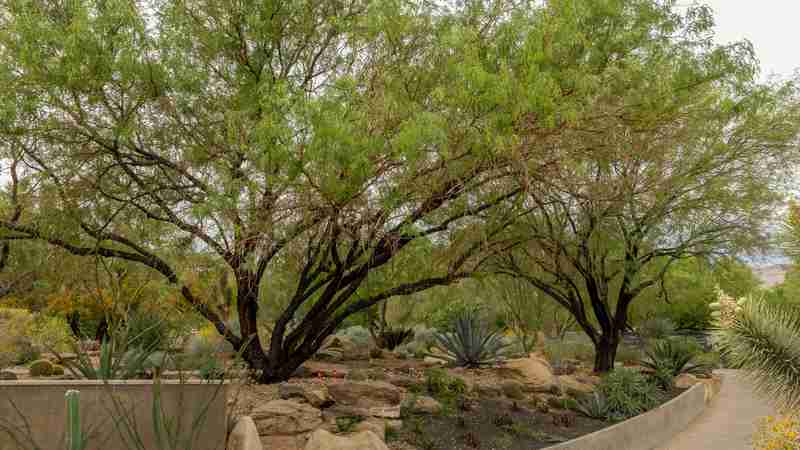
See how professional tree removal works in Las Vegas, from safety planning to cleanup, with trusted licensed arborist crews.
Removing a tree from your Las Vegas property is not as simple as grabbing a chainsaw and cutting it down. Professional tree removal is a carefully planned process that protects your home, your landscaping, nearby utility lines, and everyone on the job site. Whether you have a dead palm threatening your roof in Summerlin or a massive mesquite that has outgrown its space in Henderson, understanding what happens during a professional removal helps you know what to expect — and why hiring a licensed crew matters.
At Benjamin's Tree Service, we have performed thousands of tree removals across the Las Vegas Valley since 2001. Our ISA Certified Arborists (ISA Cert. WE-15785A) follow a proven, safety-first process on every job. Here is a detailed look at what that process involves from start to finish.
> Quick Summary
> - Professional tree removal starts with a thorough on-site assessment before any cutting begins
> - Arborists plan the removal direction, rigging strategy, and equipment needs based on the tree and surroundings
> - Sectional removal (taking the tree down in pieces) is the standard method in Las Vegas residential areas
> - Stump grinding is typically offered as a separate step after the tree is down
> - A licensed, insured crew protects you from liability if something goes wrong
Step 1: The On-Site Assessment
Every professional tree removal begins with an assessment — not a quote over the phone. A qualified arborist visits your property to evaluate the tree in person. During this visit, they look at several key factors:
Tree Size and Species
The species determines wood density, branch structure, and how the tree will behave during cutting. A brittle, dead ash tree responds very differently than a dense, green African sumac. In Las Vegas and Clark County, common removal candidates include dead or dying palms, overgrown mulberry trees, mesquite with structural failure, and eucalyptus that have become too large for residential lots.
Proximity to Structures and Utilities
Most residential lots in Las Vegas, Henderson, North Las Vegas, and Summerlin are compact. Trees often grow within feet of homes, block walls, pool equipment, power lines, and neighboring properties. The arborist maps out every obstacle and plans the safest approach for bringing the tree down in that specific space.
Access and Equipment Needs
Can a crane reach the tree? Is there room for a bucket truck in the driveway? Will the crew need to carry every piece of wood out through a side gate by hand? Access dictates equipment, crew size, and time — all of which affect the scope of the job.
Root System and Soil Conditions
Clark County soil is notoriously challenging. Caliche — a rock-hard calcium carbonate layer — sits just below the surface across much of the Las Vegas Valley. This affects how roots have grown and whether the tree has a stable base or is already compromised underground.
After the assessment, you receive a clear written estimate that explains the scope of work, equipment to be used, and what the finished site will look like. At Benjamin's Tree Service, we walk you through every detail so there are no surprises on removal day.
Step 2: Planning the Removal Strategy
Before the crew arrives with equipment, the arborist develops a removal plan. This is not something that happens on the fly. Professional tree removal in a residential setting requires a deliberate strategy.
Directional Felling vs. Sectional Removal
In open areas with plenty of clearance, a tree can sometimes be felled in one piece in a controlled direction. This is rare in Las Vegas neighborhoods. Most residential removals require sectional removal — taking the tree apart piece by piece from the top down.
Sectional removal uses a combination of climbing, rigging ropes, and sometimes a crane or bucket truck. The climber cuts limbs and trunk sections that are carefully lowered to the ground with ropes, rather than letting them free-fall. This protects roofs, walls, irrigation systems, and landscaping below.
Rigging and Safety Planning
The crew identifies anchor points on the tree for rigging lines. They establish a drop zone where cut sections will land. Every crew member has a specific role — climber, ground crew handling ropes, equipment operator, and spotter. Communication is constant throughout the job.
Step 3: Equipment Setup and Site Preparation
On removal day, the crew arrives and sets up before any cutting begins:
- Ground protection: Plywood or mats are placed to protect driveways, walkways, and landscaping from heavy equipment and falling wood
- Drop zone: An area is cleared and roped off where cut sections will land
- Equipment staging: Chainsaws, rigging ropes, climbing gear, wood chipper, and any heavy equipment (crane, bucket truck) are positioned
- Utility clearance: If the tree is near power lines, the crew coordinates with NV Energy in advance — cutting within 10 feet of energized lines requires special protocols in Clark County
Homeowners are asked to move vehicles, patio furniture, and pets away from the work area. The crew will typically need access to your property for several hours depending on the tree size.
Step 4: The Removal Process
This is where the actual cutting happens, and it follows the plan developed in Step 2.
Limb Removal
The climber (or bucket truck operator) starts at the top and works down, removing branches in manageable sections. Each limb is either rigged and lowered or cut to fall into the designated drop zone. On large trees, this alone can take several hours.
Trunk Sectioning
Once the branches are cleared, the trunk is taken down in sections. The climber makes strategic cuts — typically 3- to 5-foot sections — that are lowered to the ground with ropes or, for very heavy pieces, lifted away by crane.
The crew on the ground processes each section as it comes down. Branches go through the wood chipper immediately. Trunk sections are cut into manageable logs for removal.
Final Cut
The last section is the base of the trunk, cut as close to ground level as possible. This is often the thickest and heaviest piece, requiring careful planning to control where it falls.
Throughout the entire process, the crew is watching for hazards — dead branches that could break unexpectedly, shifting weight as the tree loses limbs, wind gusts (always a factor in the Las Vegas Valley), and any movement near utility lines.
Step 5: Stump Grinding
After the tree is down, you are left with a stump. Most homeowners in Las Vegas opt for stump grinding, which uses a specialized machine to grind the stump 6 to 12 inches below ground level. The resulting wood chips and soil mixture can be used as fill or mulch.
Stump grinding is typically offered as an add-on service. Some homeowners choose to leave the stump temporarily if they are replanting in the same spot, since the ground needs time to settle.
In Clark County's caliche soil, stump removal (pulling the entire root ball out) is rarely practical and can damage underground irrigation, plumbing, or neighboring tree roots. Grinding is almost always the better option for Las Vegas properties.
Step 6: Cleanup and Debris Removal
A professional crew does not leave your property looking like a logging site. Cleanup includes:
- All wood and branches chipped or hauled away
- Sawdust and debris raked and removed from lawn areas, pool decks, and hardscaping
- Ground restoration where the tree stood — filling holes, leveling soil, spreading wood chips if desired
- Final walkthrough with the homeowner to confirm satisfaction
At Benjamin's Tree Service, we pride ourselves on leaving properties cleaner than we found them. Our 5-star Google rating reflects the care our crews take on every job across Las Vegas, Henderson, Summerlin, Spring Valley, and the surrounding Clark County communities.
Why Professional Removal Matters in Las Vegas
You might wonder if it is worth hiring a professional crew when you can rent a chainsaw from a hardware store. Here is why it matters:
Safety
Tree removal is one of the most dangerous jobs in the country. Falling limbs, chainsaw kickback, and electrical contact cause serious injuries and fatalities every year. Professional crews carry insurance, follow OSHA safety protocols, and have hundreds or thousands of hours of hands-on experience.
Liability Protection
If a DIY removal damages your neighbor's property, their roof, or a utility line, you are personally liable. A fully licensed and insured company like Benjamin's Tree Service carries liability coverage that protects you if the unexpected happens. We are fully licensed and insured in Nevada — something you should verify with any company you hire.
Proper Permitting
Clark County and certain HOA communities in Summerlin, Green Valley, and Anthem may require permits or approval before removing trees — especially mature trees or those in common areas. A professional tree service knows the local requirements and can handle the paperwork.
Equipment and Expertise
Professional-grade rigging, cranes, bucket trucks, and chippers are expensive to operate, but they make the difference between a safe, efficient removal and a disaster. Our ISA Certified Arborists assess every tree with a trained eye that comes from decades of experience in the Las Vegas desert environment.
How Long Does Professional Tree Removal Take?
Most residential tree removals in Las Vegas take between 3 and 8 hours, depending on:
- Tree size (a 15-foot palm vs. a 50-foot eucalyptus)
- Location (open yard vs. squeezed between a house and block wall)
- Equipment access (crane jobs are faster but require street access)
- Stump grinding (adds 30 minutes to 2 hours depending on stump size)
Larger or more complex removals — multiple trees, crane-assisted jobs, or trees entangled with power lines — may take a full day or require a second visit.
FAQs About Tree Removal in Las Vegas
Do I need a permit to remove a tree in Las Vegas?
Clark County does not require permits for removing trees on private residential property in most cases. However, certain HOA communities and master-planned areas in Henderson, Summerlin, and North Las Vegas may have their own rules. Check with your HOA before scheduling removal.
What time of year is best for tree removal?
Tree removal can be done year-round in Las Vegas. However, scheduling during the cooler months (October through April) is often easier for large jobs. Avoid scheduling during active monsoon season storms when conditions are unpredictable.
Will tree removal damage my yard?
A professional crew takes precautions to protect your landscaping, irrigation, and hardscaping. Ground protection, careful rigging, and controlled lowering of limbs minimize impact. Some minor turf or soil disturbance is normal but is addressed during cleanup.
How do I know if my tree needs removal?
If your tree shows signs of disease, structural failure, extensive dead wood, or is encroaching on structures or utilities, schedule a tree assessment with a certified arborist. Not every problem tree needs removal — sometimes trimming and pruning is enough.
Our team has also covered How to Tell When a Tree Needs Emergency Removal in Las Vegas and How Often to Trim Trees in Las Vegas — both useful companions to this article. The International Society of Arboriculture explains why hiring a certified arborist matters when work like this is on the line.
Schedule Your Free Tree Removal Assessment
If you have a tree on your Las Vegas property that needs to come down, the first step is a professional on-site assessment. Benjamin's Tree Service has been serving homeowners across the Las Vegas Valley since 2001 with safe, thorough tree removals backed by ISA certification and full insurance coverage.
Call us today at 725-227-6160 or visit benjaminstreeservice.com/contact to schedule your free estimate. We serve Las Vegas, Henderson, North Las Vegas, Summerlin, Spring Valley, Enterprise, and all of Clark County.
Benjamin's Tree Service
ISA Certified Arborists serving Las Vegas & the surrounding areas since 2001.
Related Reading
Tree Removal
Tree Removal Near a Pool in Las Vegas: What to Know
Tree removal near a pool in Las Vegas takes careful access planning and root protection. Here's what…
9 min read
Tree Removal
Palm Tree Removal in Las Vegas: A Homeowner's Guide
Thinking about palm tree removal in Las Vegas? Learn the warning signs, what professional removal in…
8 min read
Tree Removal
HOA Tree Removal Rules in Las Vegas: What You Need to Know
Removing a tree in a Las Vegas HOA community involves more than county rules. Learn the approval pro…
10 min read