
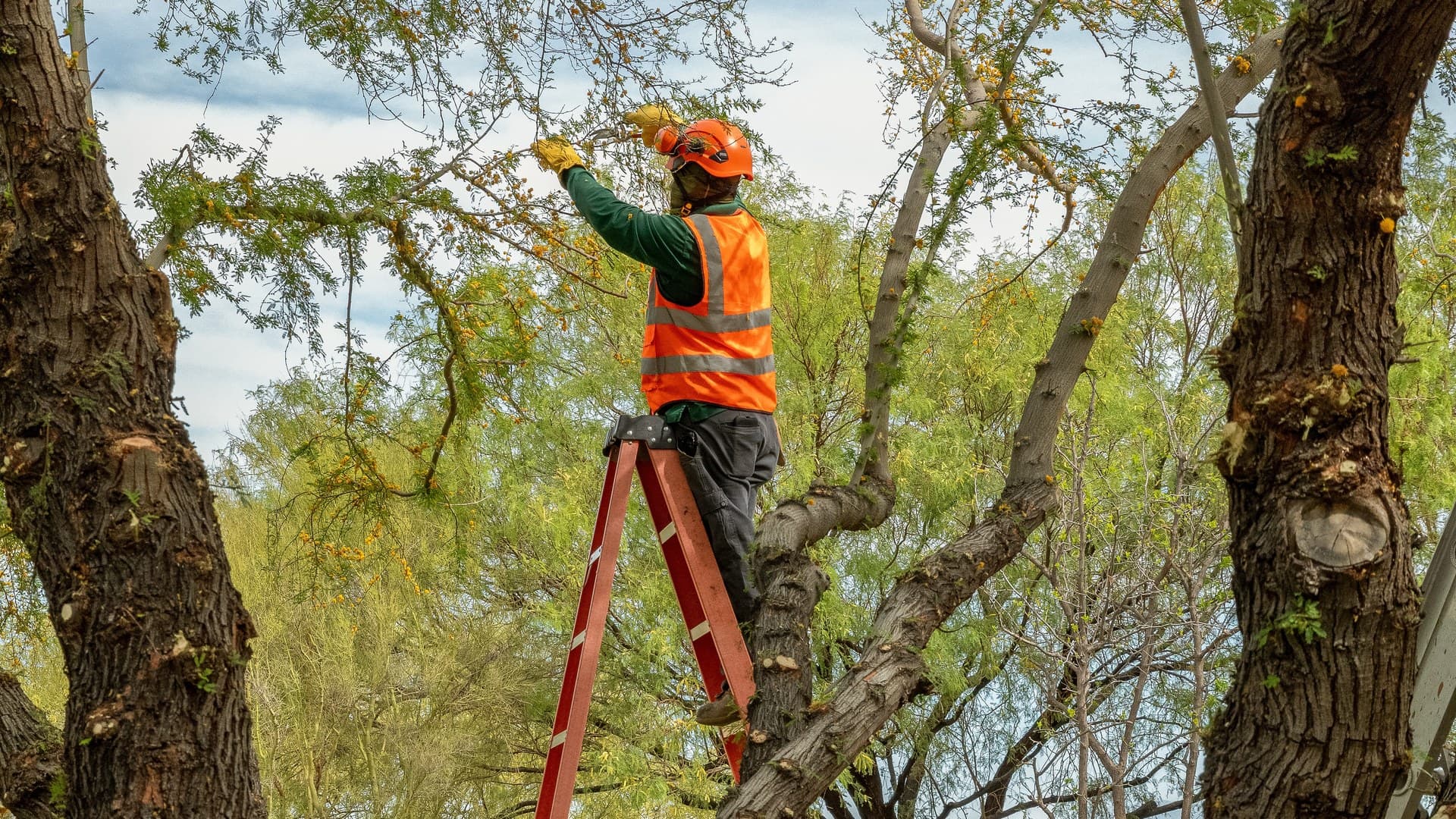
Three months of Las Vegas heat stress trees before anyone notices. Learn when to ease watering, delay pruning, and check for hidden monsoon damage before fall.
By mid-August, most Las Vegas Valley trees have made it through nearly fourteen weeks of triple-digit heat, and the toll rarely shows up the way homeowners expect. Late summer tree care in Las Vegas isn't about planting or major structural work. It's about reading what three months of heat have already done to a tree and making the right adjustments to water, pruning, and inspection before the season turns.
At Benjamin's Tree Service, our ISA Certified Arborists (ISA Cert. WE-15785A) have watched this pattern play out across the Valley since 2001. The trees that struggle each fall are rarely the ones damaged by a single storm or a single missed watering. They're the ones that ran a slow deficit through June, July, and August that nobody caught until the leaves started dropping early.
Quick Summary
- Three months of Las Vegas heat create cumulative stress that often doesn't show up until fall — leaf scorch, sunscald, and a thinning canopy are the earliest signs
- Ease your irrigation clock down gradually as overnight lows drop, rather than cutting water back all at once
- Late summer heat makes pruning wounds harder to heal — save major cuts for cooler weather unless a branch is a genuine hazard
- Monsoon season runs into September here, and storm damage can hide in a canopy for weeks before a limb fails
- Deep root feeding scheduled in late summer sets trees up for stronger fall and spring growth
- Benjamin's Tree Service has managed Las Vegas Valley trees through every summer since 2001, ISA Certified (WE-15785A)
Table of Contents
- What three months of Las Vegas heat does to a tree
- Adjusting your watering schedule as the season turns
- Why late summer is the wrong time for heavy pruning
- Checking for hidden monsoon damage before fall
- Setting up your trees for a strong fall
- Late summer tree care across the Las Vegas Valley
- Frequently asked questions
Why Late Summer Tree Care in Las Vegas Matters More Than You Think
Nevada's hottest stretch doesn't end when the calendar says summer is over. Las Vegas regularly holds triple-digit highs into September, and by the time the weather actually cools, a tree that has been running on stressed reserves since June has little left to recover with before winter dormancy sets in.
Most homeowners notice tree problems in the fall, when leaves drop early or a canopy starts looking thin. By then, the actual damage usually happened weeks earlier, during the peak of summer. Late summer tree care in Las Vegas is about closing that gap: catching heat stress, watering mistakes, and monsoon damage while there's still enough of the growing season left to do something about them.
What Three Months of Las Vegas Heat Does to a Tree
Trees across the Valley are carrying the accumulated effects of a summer most people only measure in degrees, not stress. A few signs show up consistently on the properties we visit this time of year.
- Leaf scorch — browning or crisping along leaf edges and between veins, most visible on the side of the canopy that gets the most afternoon sun
- Sunscald — cracked, sunken, or discolored bark on south- and west-facing trunk sections, especially on trees that were recently pruned and lost shade cover
- Early or patchy leaf drop — leaves falling well before their normal fall timing, often concentrated on the most exposed branches
- A thinning canopy — fewer leaves overall, even where the tree still looks green, as the tree sheds foliage it can no longer support
- Wilting despite regular watering — a sign the problem is at the root level, not the irrigation schedule
None of these are usually emergencies on their own. Together, or left unaddressed into fall, they're the pattern that turns into a bigger problem once cooler weather should be giving a tree room to recover.
Adjust Your Watering Schedule as the Season Turns
Most Las Vegas irrigation controllers are still running a peak-summer schedule in August, and that schedule needs to change gradually as overnight lows start to drop, not disappear all at once. Cutting water too fast after a summer of heat stress can do as much damage as the heat itself, especially to trees that are already running a deficit.
The better approach is a slow step-down: reduce watering frequency in small increments through September and October, and keep watering deep and infrequent rather than shallow and frequent. Desert-adapted species like mesquite and palo verde tolerate this transition well. Non-native or newly planted trees need a more gradual adjustment, since their root systems haven't developed the same drought tolerance. Our guide on watering trees in the desert covers how to judge the right volume for your soil and tree size.
If a tree's roots have been struggling all summer, adjusting the watering schedule alone may not be enough to bring it back. Deep root feeding delivers nutrients and moisture directly to the root zone, which is often the fastest way to help a heat-stressed tree recover before it goes into fall with too little in reserve. This matters across the entire Las Vegas Valley, where caliche soil already limits how far roots can spread on their own.
Why Late Summer Is the Wrong Time for Heavy Pruning
Every August, we get calls from homeowners who want a stressed, thinning tree pruned back hard, thinking a haircut will help it look better. In most cases, it does the opposite. A tree that's already short on water and energy has less capacity to seal and heal a fresh pruning wound, and removing canopy that was providing the trunk and interior branches with shade can trigger sunscald almost immediately.
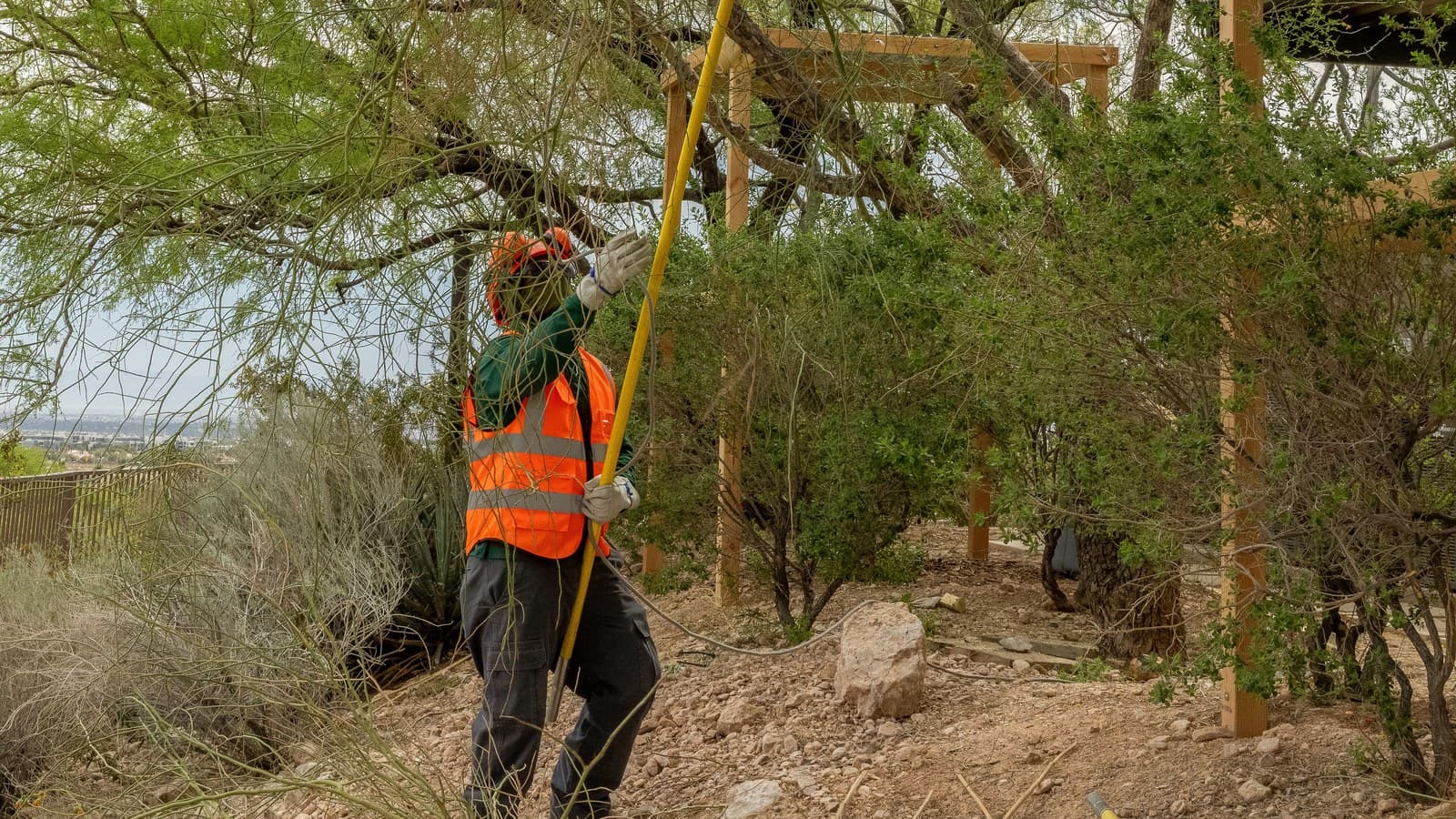
Routine, structural pruning is best scheduled for cooler months, when a tree has the resources to recover from the cuts. Late summer is a time for light, selective work only: removing anything genuinely dead, broken, or hazardous, and leaving the rest of the canopy intact until temperatures ease. Our trimming and pruning team follows this same seasonal logic on every job, and it's part of why we've cautioned against topping trees for years — you can read more about the damage that causes in our guide on why tree topping hurts Las Vegas trees. The Occupational Safety and Health Administration also outlines why pruning cuts and heat exposure both carry real risk when they aren't handled by a trained crew.
Checking for Hidden Monsoon Damage Before Fall
Las Vegas monsoon season typically runs through September, and a storm that looked minor from the ground can leave damage high in a canopy that isn't obvious until a branch finally lets go, sometimes weeks later. Late summer is the right window to have that damage found and documented before it becomes a fall or winter emergency.
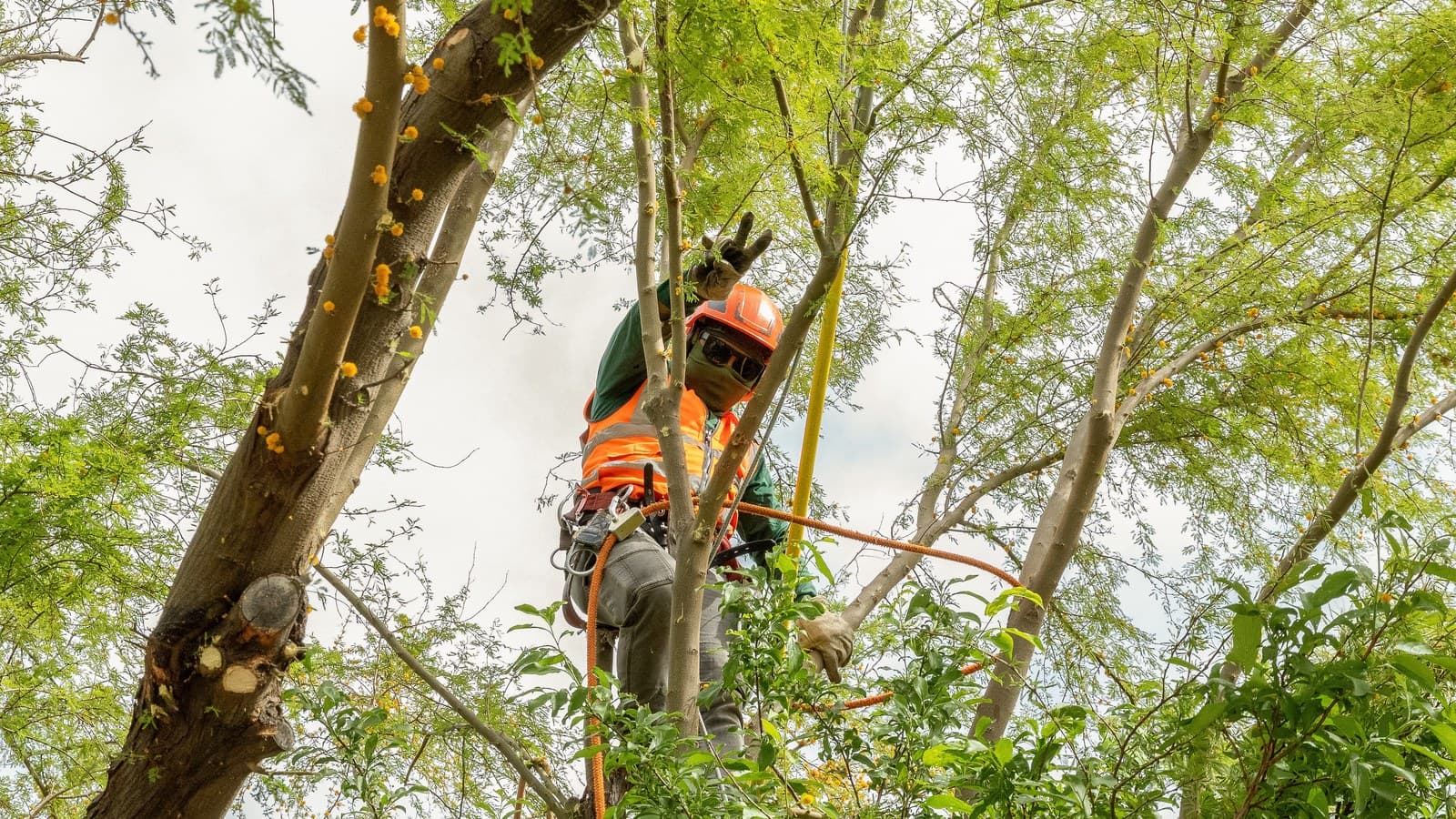
Our arborists look for cracked or split branch unions, torn bark where limbs rubbed together in high wind, and dead wood that a storm knocked loose but didn't fully separate from the tree. Our guide on monsoon tree inspection warning signs walks through what to look for from the ground. For anything higher in the canopy or harder to judge, a tree assessment report from a certified arborist gives you a documented condition report you can act on, rather than guessing. The International Society of Arboriculture recommends exactly this kind of professional evaluation after storm season, since hidden structural damage is rarely something a homeowner can judge safely from the ground. If a storm has already brought a limb down or left a tree visibly unstable, our emergency tree service crews are available to respond the same day.
Setting Up Your Trees for a Strong Fall
Late summer is also a planning window, not just a damage-control one. Trees that get deep root feeding and a proper watering step-down in August and September typically enter dormancy with stronger reserves, which shows up as better spring growth the following year.
If you haven't had your trees looked at since spring, this is a good point in the year to schedule an assessment before cooler weather brings a rush of pruning and planting requests. Our tree service plans are built around this kind of seasonal timing, so root feeding, pruning, and inspections happen when a tree can actually benefit from them instead of on a generic annual schedule.
Late Summer Tree Care Across the Las Vegas Valley
Heat and monsoon stress don't affect every part of the Valley the same way. Older canopy trees in established Summerlin neighborhoods often show sunscald sooner because of years of accumulated pruning cuts, while newer plantings in Henderson and Green Valley are more prone to root stress from irrigation systems still calibrated for a young tree's smaller root zone. In North Las Vegas, where soil tends to run rockier and drainage is often poor, overwatering mistakes during the seasonal step-down show up as root problems more than heat scorch.
Wherever you're located, the underlying advice holds: read what the summer has already done to a specific tree before deciding what it needs next.
Frequently Asked Questions
Is it too hot to prune trees in Las Vegas right now?
For heavy pruning, generally yes. Removing significant canopy in August adds stress and exposes bark to sunscald right when a tree has the least energy to recover. Removing a branch that's already dead, cracked, or a real safety risk is fine any time of year.
Should I stop watering my trees as the weather cools down?
Not all at once. Reduce your irrigation schedule gradually through September and October as overnight temperatures drop. A sharp, sudden cutback after a stressful summer can shock a tree that's already worn down.
How can I tell if my tree has hidden monsoon damage?
Look for cracked branch unions, bark that's torn where branches rubbed together in wind, and any dead wood that looks loose but hasn't fully broken away. If you can't get a clear view into the upper canopy, a professional tree assessment is the more reliable option.
When should I schedule deep root feeding in Las Vegas?
Late summer and early fall is one of the best windows, since it helps a heat-stressed tree recover before dormancy and supports stronger growth the following spring. Trees that struggled visibly this summer are good candidates for an assessment first.
Is late summer a good time to plant new trees in Las Vegas?
It's better to wait. Newly planted trees need consistent root establishment, and extreme heat makes that harder. Fall, once temperatures moderate, is generally the better window for new plantings in the Las Vegas Valley.
Schedule Late Summer Tree Care in Las Vegas Today
Reading what a Las Vegas summer has done to your trees takes a trained eye, not just a hose and a pruning saw. Benjamin's Tree Service has helped Valley homeowners get their trees through this exact transition every year since 2001, licensed, insured, ISA Certified (WE-15785A), and rated 5 stars on Google.
Call us at 725-227-6160 or visit benjaminstreeservice.com/contact to schedule a late-summer assessment before fall pruning season fills our calendar.
Benjamin's Tree Service
ISA Certified Arborists serving Las Vegas & the surrounding areas since 2001.
Related Reading
Seasonal Care
Fall Watering Schedule for Las Vegas Trees: What to Change
Adjusting your fall watering schedule for Las Vegas trees prevents drought stress and overwatering a…
9 min read
Seasonal Care
Monsoon Tree Care in Las Vegas: Storm Damage Guide
A complete Las Vegas monsoon tree care guide: how storms damage trees, warning signs to inspect for,…
11 min read
Seasonal Care
Fall Tree Care Tips for the Mojave Desert
Fall is the best window for Las Vegas tree care. Mojave Desert tips on pruning timing, watering adju…
7 min read