
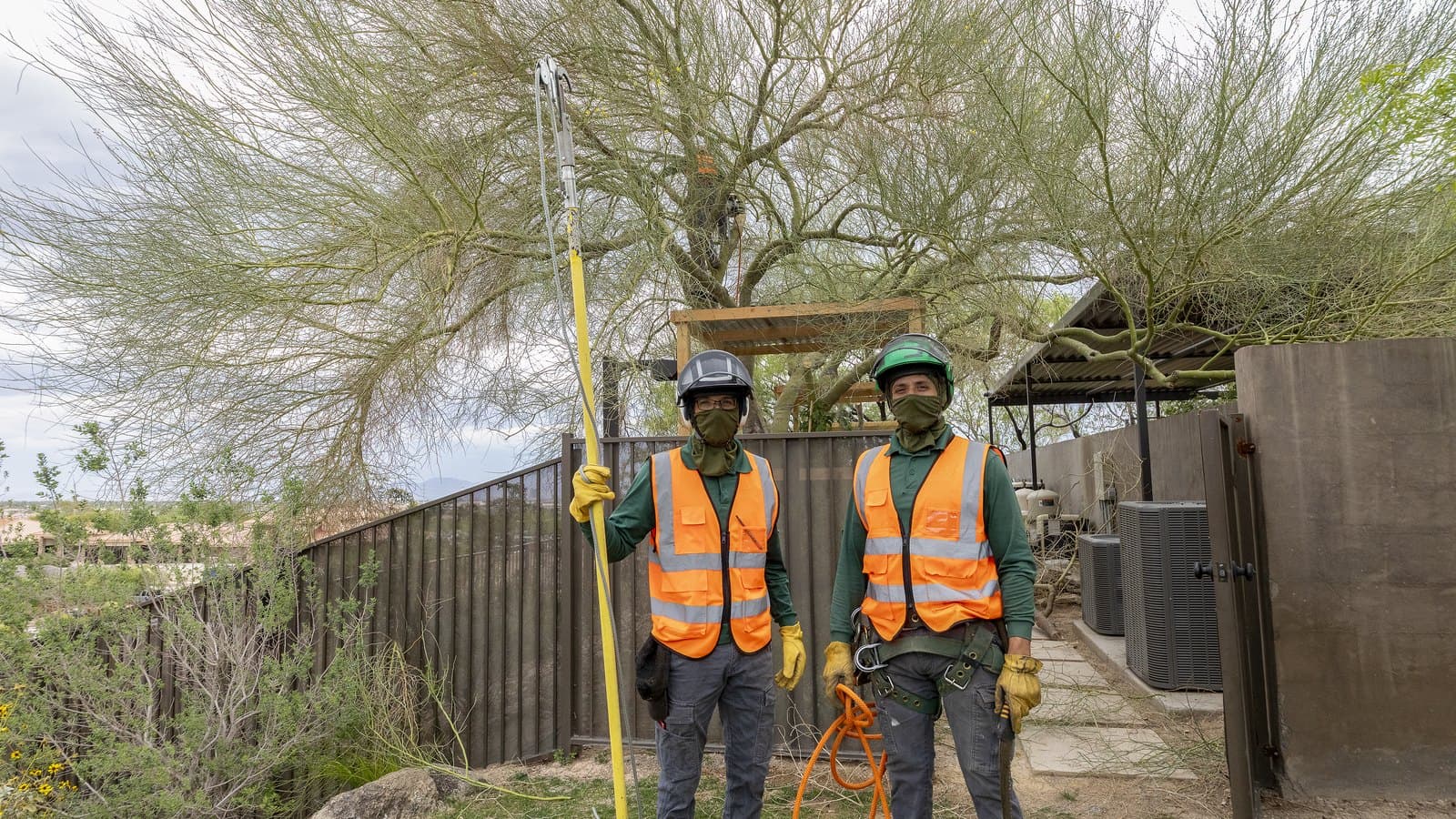
Plan your year with a Las Vegas tree maintenance schedule: when to prune, feed, water and inspect trees in each desert season, plus when to call an arborist.
A good tree maintenance schedule for Las Vegas follows the desert seasons: prune in the cooler months, feed in fall and early spring, hold off on heavy cuts in summer and adjust watering as the weather changes. Our tree service plan builds that calendar around your trees. This guide shows what to do in each season so you can plan the year.
Quick Summary
Las Vegas trees do best on a seasonal routine, not a fixed date for every task. Winter and early spring are the main pruning window, spring is when palms are trimmed, summer is for watching and protecting, and fall is for feeding and getting ready for winter. The best timing depends on the tree.
Key takeaways
- Late fall through early spring, roughly November through March, is the usual window for trimming most species.
- Palms are normally trimmed in late spring, before monsoon season.
- Heavy pruning in June through August can expose bark to sunscald, so keep summer cuts to dead or hazardous wood.
- Deep root feeding works best in fall and early spring.
- Watering changes with the season. The Southern Nevada Water Authority (SNWA) sets seasonal watering restrictions that also apply to drip irrigation, and its drip-watering schedules are recommendations, so check the current restrictions.
What does a tree maintenance schedule for Las Vegas look like?
A Las Vegas tree maintenance schedule is a seasonal calendar of pruning, feeding, watering changes and inspections, timed around desert heat and monsoon storms. It is not one list for every yard. Species, age and location all change the details.
Here is the year at a glance:
- Winter (December through February): prune dormant trees, check for deadwood and keep watering, less often, within SNWA's current restrictions.
- Spring (March through May): feed early, trim palms and check irrigation before the heat.
- Summer (June through August): protect trees from heat stress and avoid heavy cuts.
- Fall (September through November): inspect for monsoon damage, ease irrigation down and feed the roots.
Each season below links to the guide that covers that topic in more depth.
What should you do in winter (December through February)?
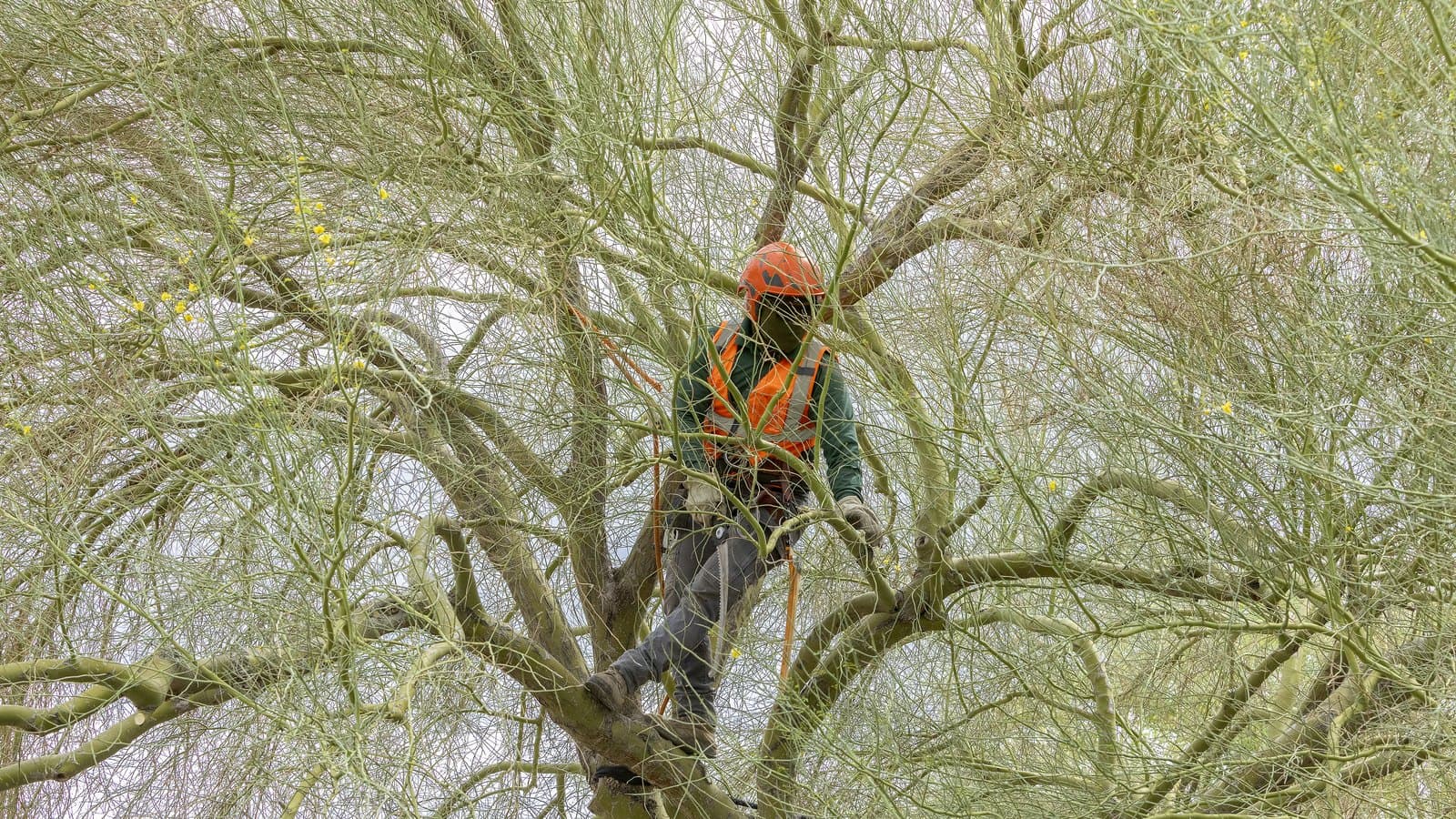
Winter is the best time to prune most trees and to look closely at their structure. Late fall through early spring is the window our guide to how often to trim trees in Las Vegas recommends for most species. Deciduous trees are dormant, cooler temperatures lower the risk of sunscald on newly exposed bark and you can see the branch structure clearly.
A winter checklist:
- Have shade trees and other non-palm trees inspected and trimmed, especially for deadwood, crossing branches and heavy limbs.
- Prune fruit trees in February or early March, just before the spring growth flush.
- Keep watering, but less often. SNWA's watering tips say its seasonal restrictions also apply to drip irrigation, which may run any day of the week but is limited in the number of days by season. SNWA recommends watering drip-irrigated plants about one day a week in winter. A recommendation is not the legal limit, so check the current restrictions, and your assigned watering day if you also run sprinklers.
- Look at your trees after cold snaps or winter wind, and call an arborist if you see a split or a limb hanging.
Mild winters still put stress on trees. Our short Desert Winter reminder explains why a winter check-up is worth scheduling.
What should you do in spring (March through May)?
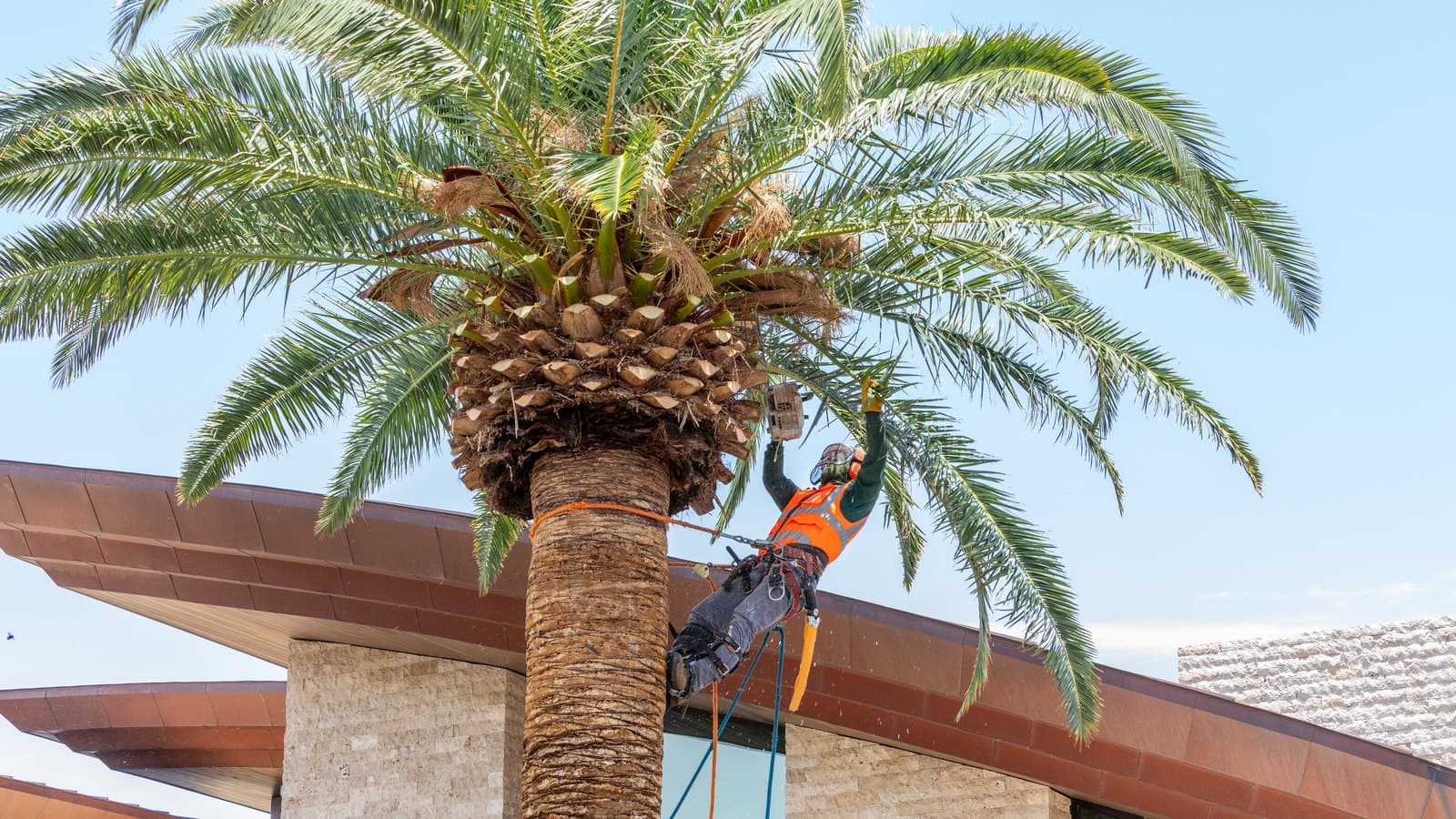
Spring is for feeding, palm trimming and getting the irrigation system ready for the heat. New growth is strong in March and April, and the work you do now sets up trees for summer.
- Feed early. Deep root feeding in February through March gives roots time to take up nutrients before summer heat raises demand, according to our deep root feeding guide.
- Trim palms. Late April through early June, before monsoon season, is the usual window for palms. Dead fronds and seed pods become hazards in high wind. Our palm tree trimming guide explains what to remove and what to leave.
- Finish citrus pruning early. Avoid pruning citrus after mid-April, because late pruning stimulates tender growth that summer heat can scorch.
- Skip heavy pruning right after the flush. The International Society of Arboriculture (ISA) advises avoiding heavy pruning of live tissue just after the spring growth flush, especially on weak trees.
- Check irrigation. SNWA recommends watering drip-irrigated plants two days a week in spring and fall. Its seasonal restrictions are separate: they also apply to drip irrigation, which may run any day of the week but is limited in the number of days by season, so check the current limits. How often a tree needs water depends on its species, age, soil and irrigation, and must stay within the restrictions. SNWA also recommends checking drip lines periodically for breaks and emitters for clogs.
What should you do in summer (June through August)?
Summer is the season to protect your trees, not reshape them. Heat, low rainfall and intense sun are the main stresses, and heavy pruning removes the canopy that shades the bark.
- Avoid heavy pruning. Our trimming guide names June through August as the riskiest time, because removing significant canopy can expose bark to direct sun and cause sunscald. Remove only dead, broken or hazardous wood.
- Do not feed in midsummer. Our deep root feeding guide advises against applying fertilizer in peak heat, when roots take up nutrients less efficiently.
- Water deeply and within the restrictions. SNWA recommends watering drip-irrigated plants about four days a week in summer. That is guidance; its seasonal restrictions also apply to drip irrigation, so check the current limits. How often a tree needs water depends on its species, age, soil and irrigation. SNWA's guidance is to water trees deep enough to penetrate the soil 18 to 24 inches.
- Watch for heat stress. Browning leaf edges, cracked bark on south and west-facing trunks, early leaf drop and a thinning canopy are signs to have a tree checked.
- Prepare for storms. Look for cracks, new leans and overextended limbs from a safe distance before monsoon season. Our monsoon tree inspection guide lists seven warning signs.
What should you do in fall (September through November)?
Fall is the time to check for storm damage, ease watering back and feed the roots. Monsoon season runs into September, and damage can stay hidden in a canopy for weeks before a limb fails.
- Inspect after the storms. Our late summer tree care guide explains how to spot hidden monsoon damage and heat stress before the cooler months.
- Ease irrigation down in stages. Our fall watering guide suggests starting when daytime highs stay below 95°F for several days in a row, typically mid-to-late September. Do not shut water off completely, since trees still need some in fall. SNWA recommends watering drip-irrigated plants two days a week in fall. That is guidance, not the legal limit: its seasonal restrictions also apply to drip irrigation, which may run any day of the week but is limited in the number of days by season. Our fall guide's deep-watering interval is a tree-specific suggestion, not a replacement for the restrictions. How often a tree needs water depends on its species, age, soil and irrigation, and must stay within the current restrictions.
- Schedule deep root feeding. October through November is one of the two best feeding windows, as trees shift energy to root growth.
- Book winter pruning. Trimming season for most trees opens in November. Booking early gives you a choice of dates.
How do you adjust the schedule for your own trees?
Start with the tree, not the calendar. A mature mesquite, a young shade tree, a palm and a citrus tree each need different timing, and our guides note that desert-adapted trees often need lighter, less frequent trimming than non-native shade trees.
A few things change the plan:
- Species: palms follow a late-spring trim. Fruit trees follow a late-winter prune. Many shade trees fit the winter window.
- Age: newly planted trees need regular watering through fall and winter because their roots have not spread yet.
- Condition: a tree with a lean, a split or sudden dieback should not wait for its season. Ask about a tree risk assessment when you are unsure how serious the problem is.
- Location: trees near roofs, walls, power lines or play areas need earlier attention. If a branch touches a power line, stay away and contact the utility.
ISA also notes that light, routine pruning of weak, dead or diseased limbs can be done at any time of year. Pruning decisions should always have a reason, so check with an arborist if you are unsure of the timing. See ISA's guide to pruning trees.
Frequently Asked Questions
What is the best time of year to trim trees in Las Vegas?
For most species, late fall through early spring, roughly November through March, is the best window. Palms are trimmed in late spring and fruit trees in late winter.
How often should trees be maintained in Las Vegas?
It depends on the species. Our trimming guide suggests every one to two years for many non-native shade trees and every two to three years for desert-adapted trees, with palms trimmed once a year. An inspection can tell you what your own trees need.
Should I stop watering trees in winter?
No. Las Vegas gets little rain, so trees generally still need some water in winter. Water less often, stay within SNWA's current seasonal restrictions, which also apply to drip irrigation (its recommendation of about one day a week for drip is guidance, not the legal limit) and make sure the water reaches the root zone.
Is it okay to prune trees in the summer?
Light work to remove dead or hazardous branches is fine. Avoid heavy pruning from June through August, because exposed bark can suffer sunscald. Emergency work after storm damage should not be delayed.
What does a tree service plan include?
According to our service plan page, a plan can include scheduled tree inspections, preventive trimming and pruning, disease and pest monitoring and priority response for emergencies. Detailed records for insurance and HOA needs are an add-on service.
Get a Tree Care Schedule for Your Las Vegas Property
Benjamin's Tree Service has served Las Vegas since 2001, and our work is led by Benjamin Garcia, ISA Certified Arborist (WE-15785A). Tell us about your trees and we will give you a free, no-obligation estimate. We can help you decide whether a one-time trim or a recurring tree service plan fits your property. We serve the Las Vegas and Henderson areas.
Schedule Service or call 725-227-6160.
Sources
- SNWA: Watering tips (seasonal watering restrictions, drip recommendations, tree watering depth)
- SNWA: Find your watering group
- ISA TreesAreGood: Pruning Your Trees
- Benjamin's Tree Service: How Often to Trim Trees in Las Vegas
- Benjamin's Tree Service: Deep Root Feeding in Las Vegas
- Benjamin's Tree Service: Tree Service Plan
Sources checked October 29, 2026. SNWA's seasonal watering restrictions can change, so check the current restrictions at snwa.com.
Related Reading
Benjamin's Tree Service
ISA Certified Arborists serving Las Vegas & the surrounding areas since 2001.
Related Reading
Seasonal Care
The “Desert Winter” Reality Check
Do Las Vegas trees really need winter care?
2 min read
Seasonal Care
Fall Watering Schedule for Las Vegas Trees: What to Change
Adjusting your fall watering schedule for Las Vegas trees prevents drought stress and overwatering a…
9 min read
Seasonal Care
Late Summer Tree Care in Las Vegas: What to Do Now
Three months of Las Vegas heat stress trees before anyone notices. Learn when to ease watering, dela…
9 min read