
Learn when to trim palm trees in Las Vegas, how the process works, and why professional palm tree trimming keeps your property safe and beautiful year-round.
Palm tree trimming in Las Vegas is one of the most requested tree care services across the valley. From towering date palms lining Summerlin boulevards to Mexican fan palms shading Henderson backyards, these iconic desert trees are everywhere. They add beauty, shade, and real estate value to your property — but without proper trimming, they can become a safety hazard and an eyesore.
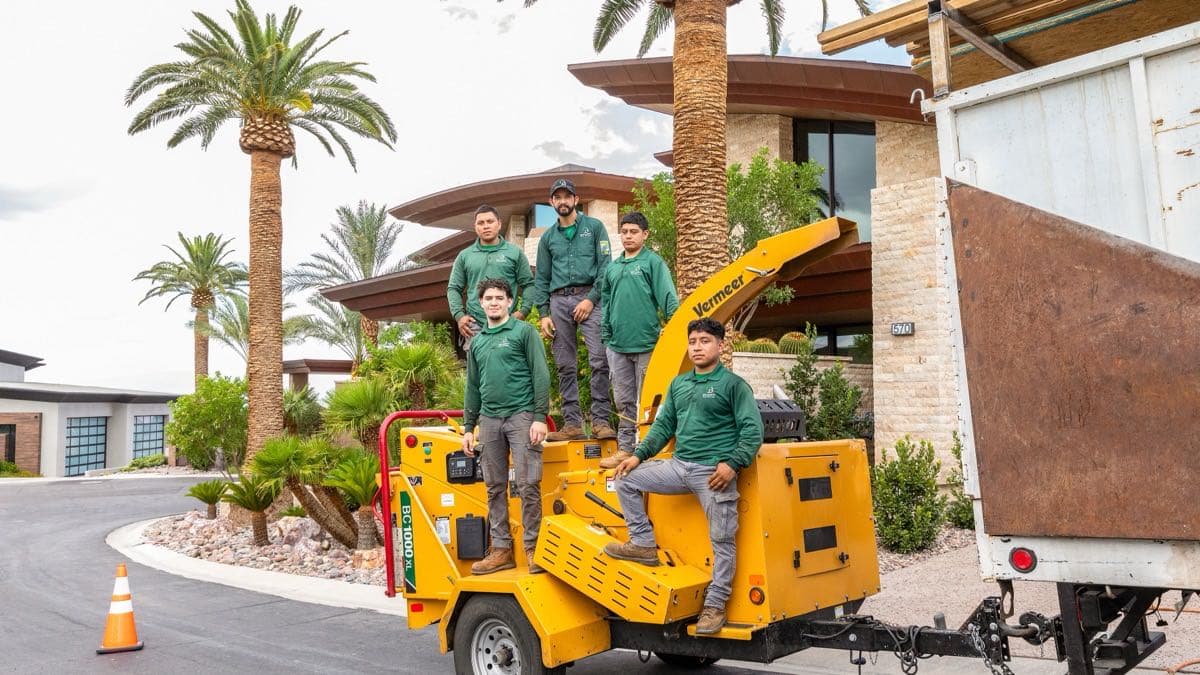
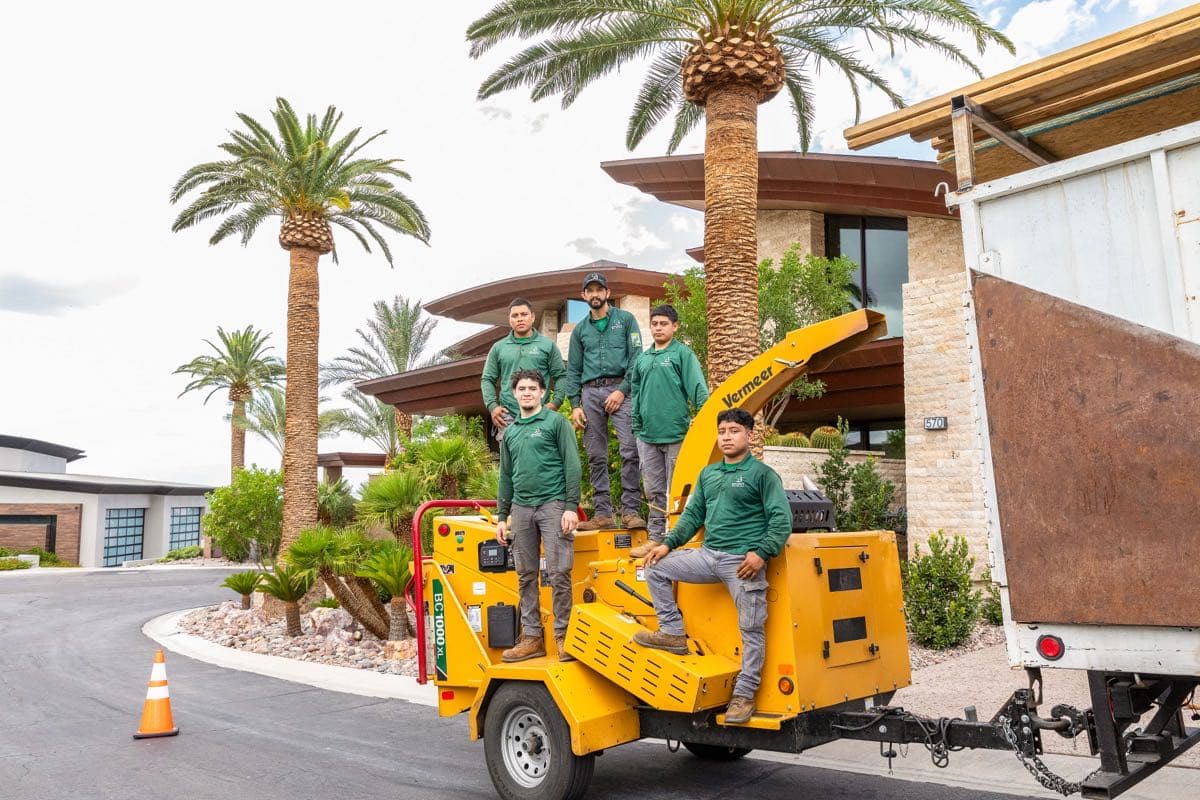
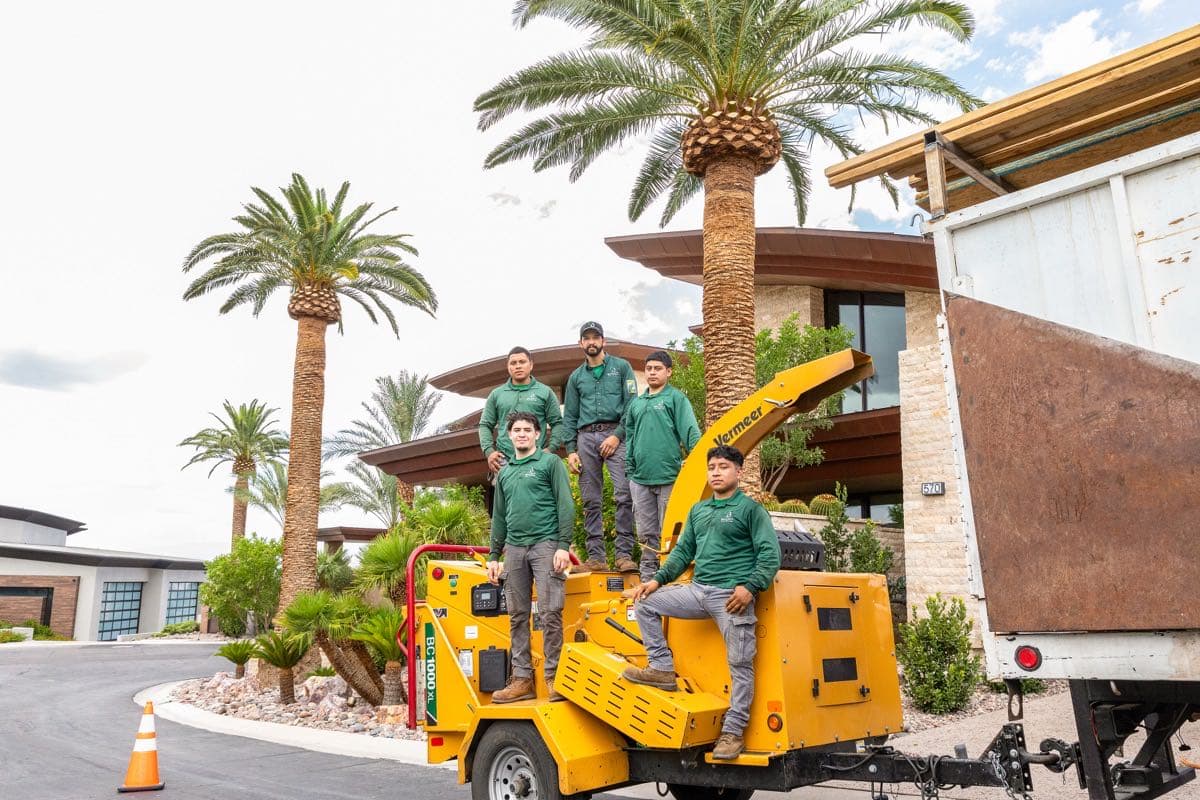
At Benjamin's Tree Service, we have been trimming and maintaining palm trees across Las Vegas, Henderson, North Las Vegas, and all of Clark County since 2001. Here is everything homeowners need to know about keeping their palms healthy and looking their best.
Quick Summary
- Palm trees in Las Vegas should be trimmed once or twice per year, typically in late spring or early summer
- Dead fronds, seed pods, and loose bark are fire hazards and attract pests like roof rats and scorpions
- Professional palm tree trimming requires specialized equipment and training — it is not a DIY job
- ISA Certified Arborists know how to trim palms without damaging the tree's crown or growth point
- Over-trimming (hurricane cutting) weakens the tree and shortens its lifespan
Why Palm Tree Trimming in Las Vegas Matters
Las Vegas homeowners love their palm trees, but the desert climate creates unique challenges. Summer temperatures regularly exceed 115°F, monsoon winds can gust past 70 mph, and the dry air causes fronds to brown and die faster than they would in coastal climates.
Dead fronds hanging on a palm tree are not just ugly. They are a genuine safety risk. A single dried palm frond can weigh 15 to 50 pounds, and when it falls from 30 feet — whether blown by wind or loosened by gravity — it can damage vehicles, break roof tiles, injure people, or knock out outdoor lighting.
There is also the pest problem. The skirt of dead fronds that forms around an untrimmed palm is prime nesting habitat for roof rats, pigeons, bark scorpions, and black widow spiders. In a city where these pests are already common, leaving your palms untrimmed is like rolling out the welcome mat.
When to Trim Palm Trees in Las Vegas
Timing matters. The best window for palm tree trimming in Las Vegas is late spring through early summer — roughly April through June. This is when the previous season's dead fronds are fully dried and easy to identify, and the tree is actively growing so it recovers quickly.
That said, there are situations where trimming outside this window makes sense:
Before Monsoon Season (June–September)
If you have not trimmed your palms by late June, do it before the monsoon storms hit. Heavy winds can rip dead fronds loose and send them across your yard — or into your neighbor's property. Trimming before monsoon season is one of the smartest preventive measures a Las Vegas homeowner can take.
After Storm Damage
If a storm breaks or loosens fronds, do not wait for your next scheduled trim. Hanging, partially detached fronds are unpredictable and dangerous. Call for a professional assessment and get them removed safely. Learn more about protecting your trees during Las Vegas summer heat.
Year-Round for Seed Pods and Fruit
Many palm species in Las Vegas produce heavy seed pods or dates. These can create a mess on driveways, sidewalks, and pool decks, and they attract insects. Removing seed pods is often done as a separate maintenance task from frond trimming.
How Professional Palm Tree Trimming Works
Palm tree trimming is not like trimming a shade tree. The process is specialized, and it requires equipment and training that most homeowners do not have.
Step 1: Assessment
Our ISA Certified Arborist (Cert. WE-15785A) evaluates the tree's health, identifies which fronds need removal, and checks for signs of disease, pests, or structural issues. This step is critical because cutting the wrong fronds — or cutting too many — can permanently damage the tree.
Step 2: Safe Access
Most Las Vegas palms are 20 to 60 feet tall. Our crew uses bucket trucks, climbing gear, and rigging equipment to access the crown safely. We never use climbing spikes on palms, which is a common mistake by unlicensed trimmers. Spikes create wounds that invite disease and weaken the trunk.
Step 3: Selective Removal
We remove only dead, dying, or damaged fronds. Healthy green fronds are left in place because they are feeding the tree. We also remove seed pods, loose bark (called "boots"), and any debris trapped in the crown.
Step 4: Cleanup
Every frond, seed pod, and piece of bark is hauled away. We leave your property clean — no piles of debris, no fronds in the street.
The Problem with Over-Trimming
One of the most common mistakes we see in Las Vegas is over-trimming, also called "hurricane cutting" or "skinning." This is when a tree trimmer removes nearly all the fronds, leaving only a small tuft at the very top.
Over-trimming is harmful for several reasons:
- It removes the fronds that feed the tree through photosynthesis, essentially starving it
- It exposes the growing point (the heart of the palm) to direct sun and wind damage
- It forces the tree to redirect energy from growth to emergency frond production
- It weakens the trunk over time, making the tree more susceptible to failure
- It voids most tree care warranties
A properly trimmed palm should have a full, rounded canopy with fronds extending to at least the 9 o'clock and 3 o'clock positions when viewed from the side. If your palm looks like a feather duster after a trim, too much was removed.
Which Palm Trees Are Common in Las Vegas?
The Las Vegas Valley is home to several palm species, and each has slightly different trimming needs:
Date Palms (Phoenix dactylifera)
The most iconic Las Vegas palm. These large, stately trees produce heavy fronds and abundant dates. They require trimming once or twice per year and regular date and seed pod removal. Date palms are common in Summerlin, Green Valley, and along Las Vegas Boulevard.
Mexican Fan Palms (Washingtonia robusta)
Tall, slender, and fast-growing. Mexican fan palms are found across the entire valley and can reach 80 feet or more. Their fronds dry out quickly in the desert heat and form a heavy skirt that must be trimmed regularly.
California Fan Palms (Washingtonia filifera)
Similar to Mexican fan palms but with a thicker trunk. These are common in older neighborhoods and commercial properties throughout Henderson and North Las Vegas.
Mediterranean Fan Palms (Chamaerops humilis)
Smaller, multi-trunk palms often used in landscaping. They require less frequent trimming but still benefit from annual maintenance.
Why You Should Hire a Professional
Palm tree trimming is consistently ranked among the most dangerous tree care tasks. The height, the weight of the fronds, the proximity to power lines, and the risk of falling make this a job for trained professionals with proper insurance.
Here is what sets a professional palm trimmer apart:
- Licensed and insured: Benjamin's Tree Service carries full liability and workers' compensation coverage in Nevada. If something goes wrong, you are protected.
- ISA Certified: Our arborists know palm biology. They understand which fronds to cut, where to cut, and how much to leave.
- Proper equipment: Bucket trucks, rigging gear, chippers, and safety systems — no climbing spikes.
- Pest awareness: We identify and report pest infestations during trimming — something a general handyman will not catch.
If you are considering a regular maintenance plan, our tree service plan includes scheduled palm trimming along with inspections for your other trees and shrubs.
How Much Does Palm Tree Trimming Cost in Las Vegas?
Pricing depends on the height of the tree, the number of palms, accessibility, and whether seed pod or bark removal is needed. For most single-palm residential jobs in the Las Vegas Valley, expect to pay between $150 and $400. Multi-palm properties and tall date palms run on the higher end.
We provide free on-site estimates with no obligation. Call (725) 227-6160 or visit our contact page to schedule.
Frequently Asked Questions
How often should I trim my palm tree in Las Vegas?
Most palm trees in Las Vegas need trimming once or twice per year. Date palms and Mexican fan palms that grow quickly may need two trims — once in spring and once in late summer after monsoon season. Slower-growing species like Mediterranean fan palms usually need only one trim per year.
Can I trim my own palm tree?
For small palms under 10 feet, careful DIY trimming is possible with a handsaw and safety glasses. For anything taller, we strongly recommend hiring a professional. The combination of height, heavy fronds, and potential proximity to power lines makes palm trimming genuinely dangerous. Read more about the risks of DIY tree trimming.
What is the best month to trim palms in Las Vegas?
May and June are the ideal months. The previous year's dead fronds are fully dried and identifiable, temperatures are high but not yet at peak monsoon levels, and the tree is actively growing. That said, trimming can be done any time of year when safety requires it.
Will trimming my palm tree kill it?
Proper trimming will not harm a healthy palm. Over-trimming — removing too many green fronds — can weaken and eventually kill the tree over several years. This is why hiring an ISA Certified Arborist matters. We follow industry best practices that keep your palm alive and thriving.
Do you haul away the palm fronds?
Yes. Every trimming and pruning job includes full cleanup and debris removal. We haul away all fronds, seed pods, bark, and other debris. Your property will be clean when we leave.
Schedule Your Palm Tree Trimming Today
Whether you have one palm in your backyard or a row of date palms along your driveway, Benjamin's Tree Service has the experience, equipment, and ISA certification to handle the job safely and professionally. We have been serving Las Vegas, Henderson, North Las Vegas, Summerlin, and all of Clark County since 2001, and we are 5-star rated on Google.
Call us at (725) 227-6160 or visit benjaminstreeservice.com/contact to get a free estimate.
Benjamin's Tree Service
ISA Certified Arborists serving Las Vegas & the surrounding areas since 2001.
Related Reading
Trimming & Pruning
Olive Tree Pruning in Las Vegas: A Homeowner's Guide
Olive tree pruning in Las Vegas keeps grandfathered trees healthy and code-compliant. Learn timing, …
9 min read
Trimming & Pruning
Crape Myrtle Pruning in Las Vegas: Avoid Crape Murder
Crape myrtle pruning in Las Vegas done wrong causes crape murder and weak regrowth. Learn the right …
9 min read
Trimming & Pruning
Mesquite Tree Trimming in Las Vegas: A Homeowner's Guide
Mesquite tree trimming in Las Vegas needs species-specific timing. Learn when to prune, mistakes to …
10 min read