
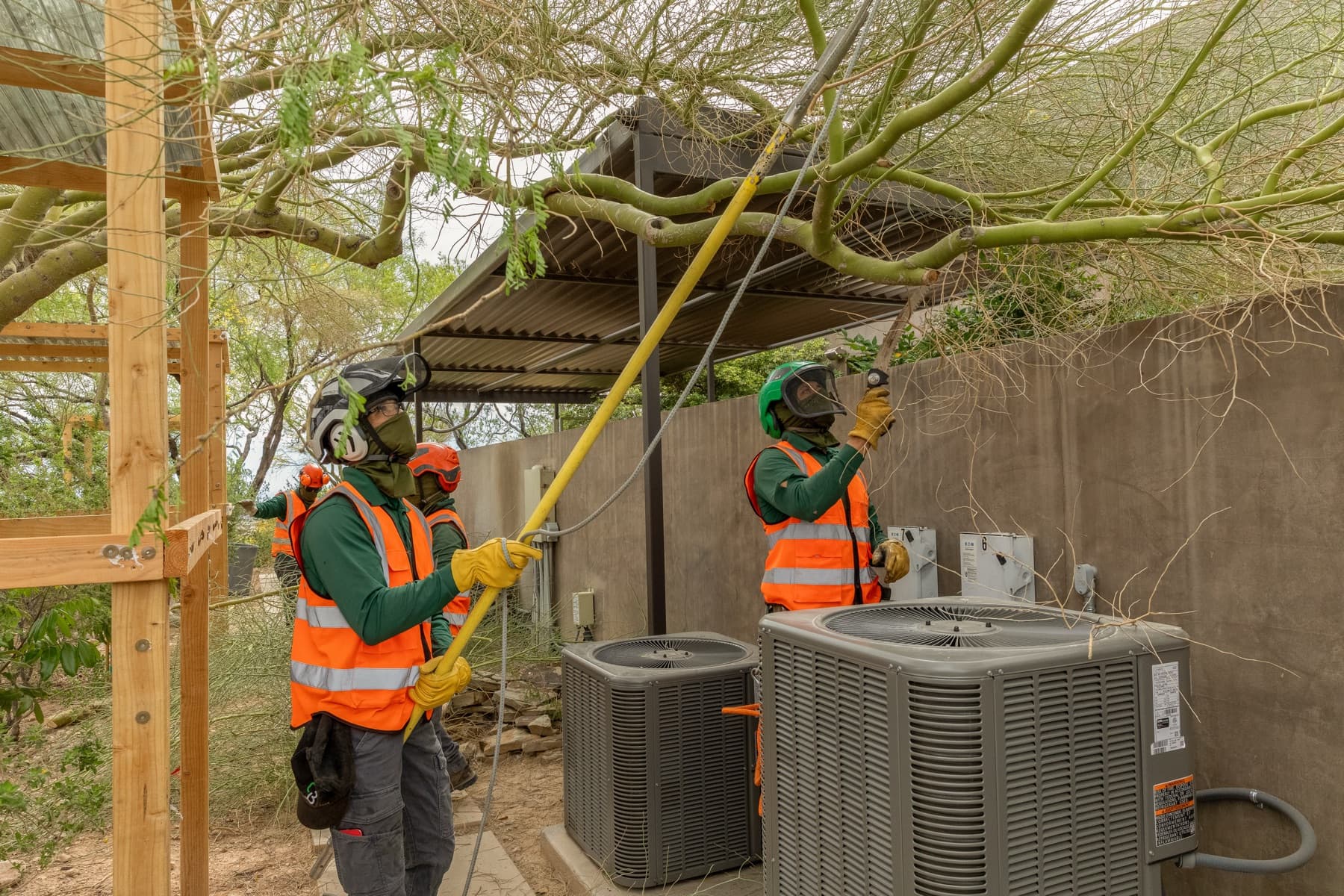
Learn how deep root feeding helps Las Vegas trees overcome caliche soil, extreme heat, and drought. ISA-certified arborist tips from Benjamin's Tree Service.
Deep root feeding in Las Vegas gives trees direct access to water and nutrients below the surface — past the caliche layer, past compacted desert soil, and into the active root zone where absorption actually happens. For trees growing in Clark County's extreme conditions, surface-applied fertilizer often fails to reach the roots that need it most.
Benjamin's Tree Service has been helping Las Vegas homeowners and businesses maintain healthier trees since 2001. Our ISA Certified Arborist (ISA Cert. WE-15785A) evaluates each tree's condition, soil environment, and nutritional needs before recommending a deep root feeding program tailored to your property.
> Quick Summary
> - Deep root feeding delivers liquid nutrients directly into the root zone, typically 8 to 12 inches below the surface
> - Las Vegas caliche soil and extreme heat make surface fertilization less effective for most established trees
> - Trees showing yellowing leaves, slow growth, thin canopies, or branch dieback often benefit from deep feeding
> - Timing matters — fall and early spring are the most effective seasons in our climate
> - A professional tree assessment ensures the right nutrients reach the right depth for your specific trees
What Is Deep Root Feeding?
Deep root feeding is a professional tree care technique where a specialized probe is inserted into the soil around a tree's drip line. The probe delivers a liquid fertilizer solution directly into the root zone under pressure. This method bypasses the soil surface, mulch, rock, and compacted layers that can prevent nutrients from reaching the roots through conventional fertilization.
The process targets the area beneath the tree's canopy where feeder roots are most active — generally 8 to 12 inches below the surface. A trained arborist creates an injection pattern around the tree, spacing insertion points evenly to distribute nutrients throughout the root zone. The liquid formulation is absorbed more readily than granular fertilizer sitting on the soil surface.
Unlike broadcast spreading, deep root feeding concentrates nutrients where trees can use them. This is especially relevant in the Las Vegas Valley, where rocky desert soils, extreme temperatures, and water restrictions work against surface-applied products.
Why Las Vegas Trees Need Deep Root Feeding
Trees in the Las Vegas Valley face a combination of soil and climate challenges that most trees in other parts of the country do not encounter.
Caliche Soil Blocks Root Growth
Caliche — a concrete-like layer of calcium carbonate — sits beneath much of Clark County's surface soil. This hardpan can be inches thick or several feet deep. It restricts root penetration, prevents proper drainage, and limits the soil volume available to tree roots. Trees growing above caliche often develop shallow, lateral root systems instead of deep anchor roots.
Surface fertilizer applied above a caliche layer may never reach the active roots below. Deep root feeding bypasses this barrier by delivering nutrients directly into the soil pockets where roots are growing.
Extreme Heat Increases Nutrient Demand
Summer temperatures in Las Vegas regularly exceed 110°F. Trees respond to this heat stress by consuming nutrients faster as they work to maintain cellular function, manage water loss, and produce protective compounds. A tree that receives adequate nutrition during spring may become deficient by midsummer if no supplemental feeding occurs.
Deep root feeding can provide a sustained nutrient source that helps trees handle the metabolic demands of desert summers. Trees across Henderson, Summerlin, North Las Vegas, and surrounding communities all face this same heat-driven stress cycle.
Surface Fertilizer Washes Away or Sits Unused
Las Vegas landscapes often use rock mulch, decorative stone, or bare soil rather than organic mulch. In these settings, granular fertilizer applied to the surface can wash off with irrigation, blow away in wind, or sit on top of compacted ground without penetrating. Drip irrigation systems — common in water-conscious Las Vegas yards — deliver water to specific points rather than saturating the entire root zone, which means surface fertilizer between emitters may never get wet enough to dissolve and move downward.
Deep root feeding eliminates this problem by placing the solution directly where roots can access it, regardless of the surface conditions above.
Signs Your Trees May Need Deep Root Feeding
Not every tree requires supplemental feeding. However, several visible symptoms can indicate that a tree is not getting the nutrients it needs from the soil alone:
- Yellowing leaves during the growing season, particularly between leaf veins (interveinal chlorosis), often signals iron or nitrogen deficiency
- Undersized leaves or noticeably thin canopy compared with the same tree in previous years
- Slow or stunted growth — shorter-than-normal new shoots and reduced overall canopy expansion
- Branch dieback starting at the tips and progressing inward, which can indicate root-zone stress
- Early leaf drop before fall temperatures arrive
- Poor fruit or flower production on trees that previously produced well
Our guide to common signs of nutrient deficiency in trees covers these symptoms in more detail. If you notice several of these signs, a professional tree assessment can determine whether deep root feeding, irrigation adjustment, or another intervention is the right solution.
How the Deep Root Feeding Process Works
When you schedule deep root feeding with Benjamin's Tree Service, here is what to expect:
Assessment
Our arborist begins with a visual evaluation of the tree's overall health, canopy condition, trunk integrity, and root zone. Soil conditions, irrigation patterns, and the surrounding landscape all factor into the treatment plan. Different tree species have different nutritional requirements, and a one-size-fits-all approach does not produce the best results.
Injection
Using a hydraulic soil probe attached to a tank of liquid fertilizer, the arborist inserts the probe at multiple points around the tree's drip line — the imaginary circle on the ground beneath the outer edge of the canopy. Each injection places nutrients 8 to 12 inches below the surface, within the primary feeder-root zone.
The injection points are spaced in a grid pattern to ensure even distribution. The number of injections depends on the tree's size and canopy spread. The liquid solution flows outward from each injection site, saturating the surrounding soil and making nutrients available to nearby roots.
Post-Treatment
After the feeding is complete, the arborist will typically recommend a watering schedule to help the nutrients integrate with the existing soil moisture. Deep root feeding works best when the soil has adequate moisture content, so proper irrigation practices are an important complement to any feeding program.
Results are not instant — most trees begin showing visible improvement within four to eight weeks as the root system absorbs the nutrients and the canopy responds with healthier growth, improved color, and stronger new shoots.
When to Schedule Deep Root Feeding in Las Vegas
Timing affects how well trees absorb and use supplemental nutrients. In the Las Vegas climate, the two most effective windows are:
Fall (October Through November)
As summer heat subsides, trees shift energy toward root growth. This makes fall an ideal time to deliver nutrients directly to the root zone. Trees can absorb and store nutrients during the cooler months, building reserves that support strong spring growth. Fall feeding also helps trees recover from summer heat stress before entering winter dormancy.
Early Spring (February Through March)
A spring feeding supports the burst of new growth that occurs as temperatures warm. Trees emerging from dormancy benefit from readily available nutrients as they produce new leaves, flowers, and extending branches. Feeding in early spring gives roots time to absorb nutrients before the high temperatures of summer increase metabolic demand.
Avoid Midsummer Feeding
Applying fertilizer during peak summer heat (June through August) can stress trees further. Roots are less efficient at nutrient uptake when soil temperatures are extremely high, and excess nitrogen during heat stress can cause more harm than good. If a tree shows distress during summer, a professional assessment should determine whether the issue is nutritional, water-related, or structural before any treatment is applied.
Our seasonal guide to preparing trees for Las Vegas summer explains how proactive care before the heat arrives makes a difference. Combining deep root feeding with proper trimming and pruning creates a well-rounded maintenance program that addresses both nutrition and structure.
Deep Root Feeding vs. Surface Fertilization
Understanding the difference helps you choose the right approach for your landscape:
Nutrient delivery depth — Deep root feeding reaches 8 to 12 inches below the surface, directly into the feeder-root zone. Surface fertilization only penetrates the top 1 to 2 inches of soil, if it penetrates at all.
Effectiveness in caliche soil — Deep feeding bypasses the hardpan layer. Surface products may sit above it indefinitely.
Wind and runoff loss — Injected nutrients stay in the root zone. Surface granules in exposed desert yards blow away or wash off with irrigation runoff.
Precision — Deep root feeding targets the active root zone around each tree. Broadcast spreading covers large areas but wastes product on non-root areas.
Best applications — Deep feeding is the better choice for established trees, especially those showing stress. Surface fertilization works well for lawns, shallow-rooted annuals, and newly seeded areas.
Frequently Asked Questions
How much does deep root feeding cost in Las Vegas?
Cost varies based on the number of trees, their size, and the formulation required. Benjamin's Tree Service provides free on-site estimates so you know exactly what to expect. In general, deep root feeding is one of the most cost-effective tree care investments because it can extend a tree's productive life and reduce the likelihood of decline or removal.
Can I do deep root feeding myself?
The equipment required for proper deep root feeding — a hydraulic probe and pressurized tank system — is specialized and not typically available at consumer garden centers. Consumer-grade root feeder attachments for garden hoses deliver water at low pressure but do not match the depth, distribution, or nutrient concentration of professional equipment. For the best results, work with a licensed arborist who understands your soil and tree species.
How often should trees be deep root fed?
For most established trees in the Las Vegas area, an annual or twice-annual feeding schedule is sufficient. Trees under significant stress or in particularly poor soil may benefit from more frequent treatment until their condition stabilizes. Your arborist will recommend a schedule based on the tree's current health and soil conditions.
Will deep root feeding save a dying tree?
Deep root feeding addresses nutritional deficiency — it is not a cure for every tree problem. If a tree is dying from disease, severe root damage, structural failure, or advanced decay, feeding alone will not reverse the decline. A professional assessment can determine whether the tree's problems are nutritional, structural, or something else entirely. In some cases, tree removal is the more responsible option.
Is deep root feeding safe for all tree species?
Yes, when performed by a trained arborist using the appropriate formulation and technique. Different species have different nutritional needs, and the fertilizer blend, injection depth, and volume are adjusted accordingly. Palms, for example, have distinct micronutrient requirements that differ from shade trees. Our palm tree service team understands these distinctions.
For a deeper understanding of tree nutrition in our region, the University of Nevada, Reno Extension horticulture program publishes research-based guidance specific to Nevada growing conditions. The International Society of Arboriculture also provides resources on proper tree care for homeowners looking to learn more.
Give Your Las Vegas Trees the Nutrients They Need
Trees are long-term investments in your property's value, comfort, and curb appeal. In the Las Vegas desert, they need more than water and sunshine to thrive — they need nutrients delivered where their roots can actually reach them.
Benjamin's Tree Service has been the trusted choice for Las Vegas homeowners and businesses since 2001. We are fully licensed and insured in Nevada, our team includes ISA Certified Arborists (WE-15785A), and we are proud to maintain a 5-star rating on Google.
Whether you need deep root feeding, a tree service plan for ongoing maintenance, or a professional evaluation of a tree that concerns you, we are here to help.
Call us today at 725-227-6160 or visit benjaminstreeservice.com/contact to schedule your free consultation. We serve Las Vegas, Henderson, North Las Vegas, Summerlin, Spring Valley, Enterprise, and all of Clark County.
Benjamin's Tree Service
ISA Certified Arborists serving Las Vegas & the surrounding areas since 2001.
Related Reading
Tree Care Tips
Common Tree Pests in Las Vegas: A Homeowner's Guide
Aphids, spider mites, and palo verde root borers are common tree pests in Las Vegas. Learn the warni…
10 min read
Tree Care Tips
Palo Verde Tree Care in Las Vegas: A Seasonal Guide
Learn palo verde tree care in Las Vegas, including watering, pruning, monsoon safety, warning signs,…
9 min read
Tree Care Tips
How to Mulch Trees the Right Way in Las Vegas
Learn the right way to mulch trees in the Las Vegas heat, plus the two mistakes — rock beds and mulc…
6 min read