
Tree removal near a pool in Las Vegas takes careful access planning and root protection. Here's what Las Vegas homeowners need to know before scheduling.
Tree removal near a pool in Las Vegas is one of the trickiest jobs our crews take on, and it has almost nothing to do with the tree itself. A healthy mesquite or palo verde comes down the same way whether it's planted next to a driveway or a few feet from a pool deck. What changes is everything around it: a pool shell that can crack under the wrong kind of ground pressure, decking that won't tolerate a dropped limb, buried plumbing that a root system may already be wrapped around, and water, equipment, and chemicals that a careless cleanup can ruin in minutes. At Benjamin's Tree Service, our ISA Certified Arborists (ISA Cert. WE-15785A) have removed trees in tight backyard pool settings across the Las Vegas Valley since 2001, and the access plan matters as much as the cut itself.
This guide covers what actually matters when a tree needs to come down near a backyard pool in Las Vegas: how root systems can already be damaging the shell, decking, or plumbing before removal even starts, why equipment access shapes the entire method, how to protect pool water and equipment during the job, and what debris handling and timing look like when there's a pool sitting a few feet from the work.
Quick Summary
- Tree roots growing toward a pool can crack decking, deform the shell, or intrude into buried plumbing long before the canopy shows any visible stress
- Tight backyard access often rules out a bucket truck, which means rigging and controlled-lowering techniques instead of a straightforward drop zone
- Pool water, covers, filtration equipment, and surrounding hardscape need active protection during removal, not just cleanup afterward
- Debris and wood chips should never go into pool water or skimmers, and stump grinding near a pool shell requires extra clearance
- Benjamin's Tree Service has served Las Vegas Valley homeowners since 2001, ISA Certified (WE-15785A), licensed, insured, and 5-star Google rated
Table of Contents
- Why tree removal near a pool in Las Vegas takes a different approach
- Root damage to pool shells, decking, and plumbing
- Why equipment access dictates the removal method
- Protecting pool water, covers, and equipment during the job
- Debris, rigging, and timing considerations
- Tree removal near pools across the Las Vegas Valley
- Frequently asked questions
Why Tree Removal Near a Pool in Las Vegas Takes a Different Approach
Most backyard pools in the Las Vegas Valley were installed after the landscaping, which means a tree that's now a removal candidate was often planted without much thought to where the pool shell, decking, and equipment pad would eventually sit. Years later, a root system has usually grown toward the pool rather than away from it, chasing the moisture that irrigation and splash-out provide in an otherwise dry yard. By the time a homeowner calls about removal, whether the reason is storm damage, disease, or a tree that's simply outgrown the space, that root system is frequently already intertwined with the hardscape it's sitting next to.
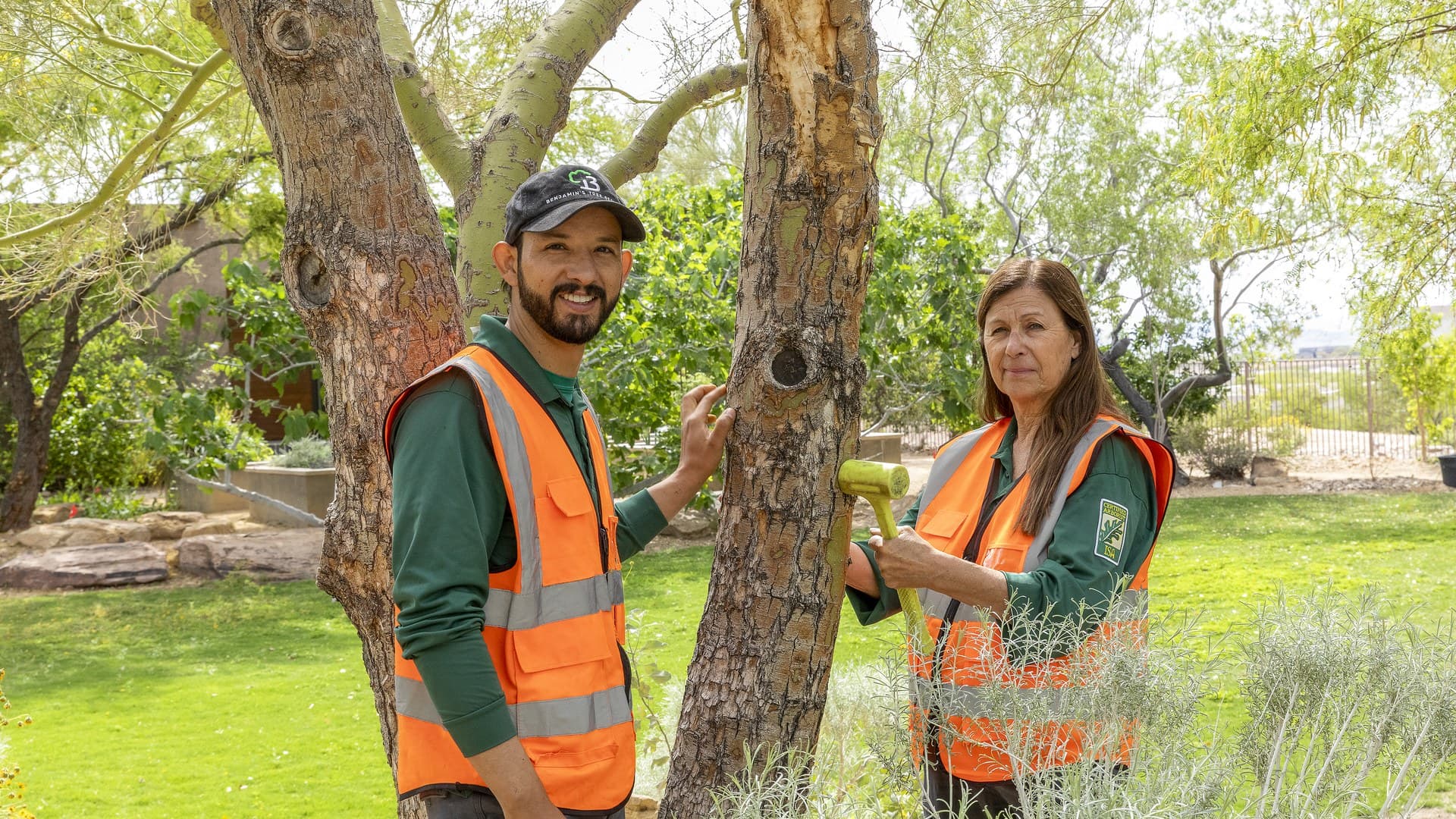
That changes the job from the moment our crew walks the site. A standard backyard removal focuses mainly on the tree: lean direction, canopy weight, and where the trunk can safely drop. A pool-adjacent removal adds a second set of questions before the first cut: what's under the soil toward the shell, how the stump will come out without disturbing bonded decking, and how the crew keeps tools and debris away from the water the entire time.
Root Damage to Pool Shells, Decking, and Plumbing
A tree growing within fifteen to twenty feet of a pool can cause problems well before removal becomes the topic of conversation. Shallow, aggressive roots, common in species like mesquite and some ash varieties once established in the Valley, tend to run along the surface where soil moisture is highest, which is exactly the zone around a pool deck. As those roots thicken, they can lift and crack poured concrete or paver decking, create uneven settling around the coping, and in older installations, intrude into underground plumbing lines running to the filter or equipment pad. According to the International Society of Arboriculture, construction and hardscape pressure on a root zone can cause physical injury to roots, soil compaction, and drainage stress that compounds over time, which is exactly the dynamic that plays out slowly around a backyard pool.
The tricky part is that root damage to a pool shell rarely announces itself clearly. A hairline crack in decking, a slow leak that shows up as unexplained water loss, or a section of coping that's started to separate can all have other causes, so it's worth getting a professional tree assessment specifically when a pool starts showing any of those signs, rather than assuming it's purely a pool-maintenance issue. If removal is already the plan, our crews map out visible surface roots and probe for major root development toward the shell before deciding how the stump will come out, since grinding or excavating a root system that's already partially under the decking needs a different approach than a stump sitting in open yard.
Why Equipment Access Dictates the Removal Method
A fenced backyard with a pool almost always rules out the most efficient removal equipment. A bucket truck or crane typically needs a clear path and a stable staging area, and most residential side yards and pool gates aren't built for either. That means a pool-adjacent removal usually comes down to climbing and rigging: an arborist climbs the tree directly, sections the canopy and trunk from the top down, and lowers each piece with a rope and rigging system rather than letting any part free-fall toward the deck or water.
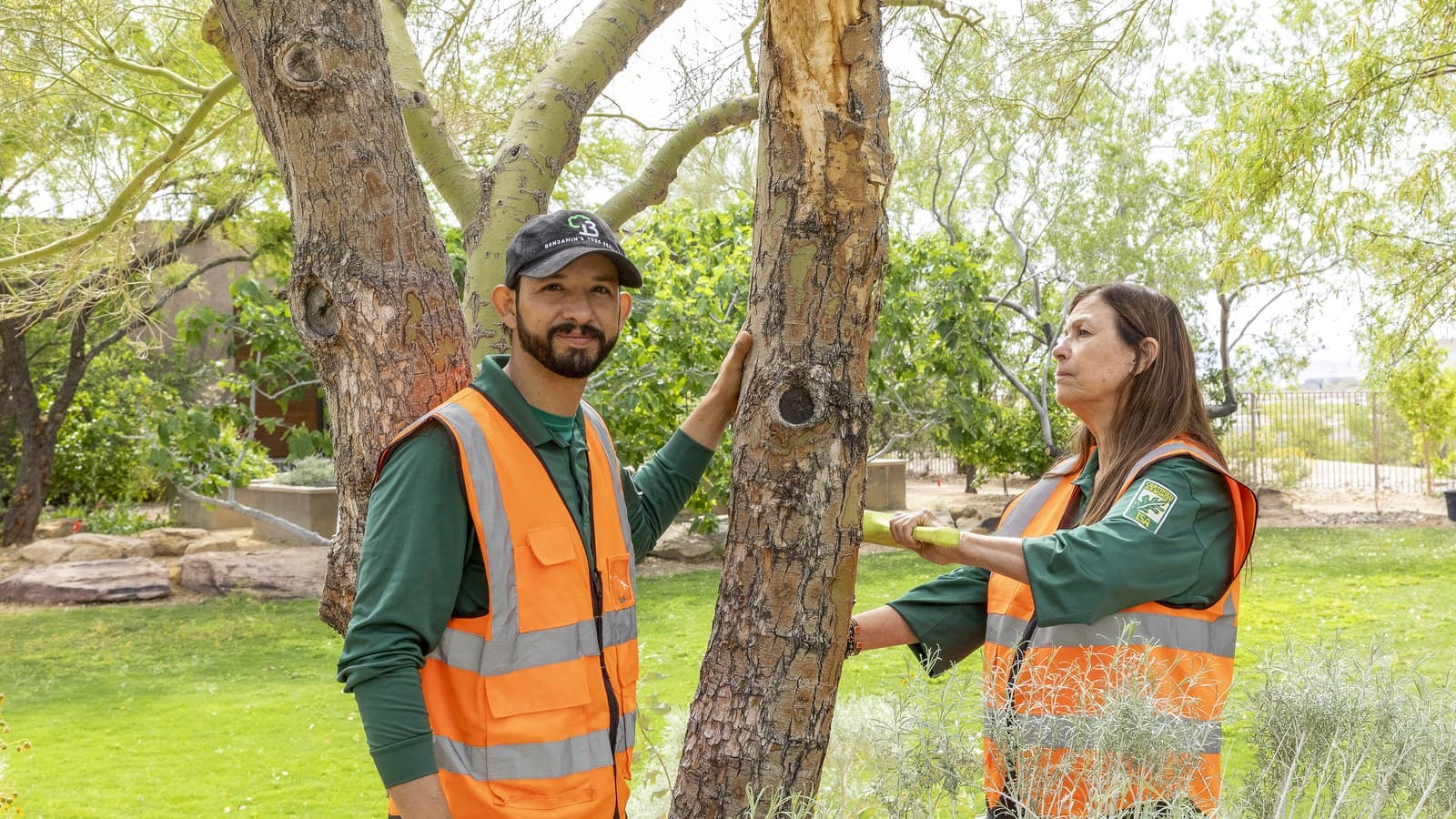
This is slower and costs more than a straightforward open-yard removal, but it's the only safe way to take a tree down when a pool, decking, glass fencing, or an equipment pad sits within the drop radius. Our crews plan rigging points and lowering paths before the first branch comes off, so nothing travels near the water or deck surface during the job. A tree leaning toward the pool, or one with significant deadwood overhanging it, gets an even more conservative sequence, since an unplanned shift in a compromised limb is what actually causes pool damage during removal.
Protecting Pool Water, Covers, and Equipment During the Job
Beyond the cut itself, a pool nearby changes how a crew stages the entire job. Wood chips, sawdust, and small debris can clog a skimmer or filter basket fast if they land in open water, and sap or bark fragments are difficult to fully clear out of a pool once they've been circulating. Our crews cover pools with tarps or protective netting before work begins whenever the drop zone is close enough for debris to realistically reach the water, and we shut down or protect filtration equipment and pumps rather than letting debris get pulled directly into the system.
Pool equipment pads deserve their own attention too. A fallen limb or dragged trunk section can crack a pump housing or damage plumbing fittings in a single mistake, and those repairs often cost more than the tree work itself. Before cutting starts, our crews mark exactly where the equipment pad sits and treat it as a no-go area, the same way we'd treat a structure that can't be moved off site.
Debris, Rigging, and Timing Considerations
Getting wood and debris out of a pool-adjacent yard is its own logistical problem. Standard removal plans often drop large sections into an open area for chipping or hauling, but that space frequently doesn't exist in a pool backyard. Sectioned wood usually has to be carried or lowered to a staging point away from the water, then moved out through a gate rather than across the deck, which takes more crew time and more careful footwork.
Stump removal adds a final consideration. Grinding a stump close to pool decking or coping needs extra clearance to avoid cracking the hardscape edge, and sometimes a shallower grind is the safer call than a full-depth one that risks undermining the decking's base. Timing matters less by season here than by pool use: scheduling work during a stretch when the pool isn't in active daily use keeps cleanup simpler and avoids days of unusable water after the crew leaves.
Tree Removal Near Pools Across the Las Vegas Valley
Backyard pools are the norm rather than the exception across Las Vegas, Henderson, and Summerlin, and our crews handle pool-adjacent removals in all three areas regularly, from older properties where a mesquite has grown up alongside the original pool installation to newer builds where landscaping and hardscape went in close together from the start. HOA-governed communities add a layer worth checking before scheduling a removal near a shared or highly visible pool area, since architectural review commonly applies to significant tree work even in a private backyard; our guide on HOA tree removal rules in Las Vegas covers what that approval process usually involves. If the tree in question is already showing signs of decline, our guide on when a tree needs emergency removal in Las Vegas is a useful companion read for deciding how quickly to act.
Wherever your pool sits, from a Henderson backyard with decades-old landscaping to a newer Summerlin build, the same approach applies: map the root system and access constraints before the first cut, not after.
Frequently Asked Questions
Can tree roots actually damage a pool?
Yes. Roots growing toward a pool can lift or crack decking, deform the coping, and in older installations intrude into buried plumbing. The damage usually develops gradually, so a slow leak, uneven decking, or separating coping is worth having an arborist evaluate for root involvement.
Why does tree removal cost more when a pool is nearby?
Most pool-adjacent yards don't have room for a bucket truck or crane, so the tree has to be climbed and rigged down in sections instead, which takes more time and more careful planning than an open-yard removal. The extra labor and protective staging, not the tree itself, is what drives the added cost.
Will debris or chemicals from the removal get into my pool?
A professional crew covers the pool and protects filtration equipment before cutting begins specifically to prevent wood chips, sawdust, and sap from reaching the water or clogging a skimmer. Ask about pool protection steps before work starts if a contractor doesn't bring it up first.
Can the stump be ground down if it's close to pool decking?
Usually, but it needs extra clearance and sometimes a shallower grind to avoid cracking or undermining the decking edge. An arborist should assess the stump's distance from the hardscape before deciding between a full grind and a more conservative approach.
Should I remove a tree near my pool before it causes damage, or wait until there's a problem?
If an arborist has flagged visible root development toward the pool, decking cracks, or canopy decline, addressing it proactively is almost always cheaper and safer than waiting for a root to compromise the shell or plumbing, or for a declining limb to drop near the water.
Get a Professional Pool-Adjacent Tree Removal Estimate in Las Vegas
Tree removal near a pool in Las Vegas takes more planning than a standard backyard job, from mapping root development near the shell and decking to rigging a safe path that keeps every cut section away from the water. An on-site visit from an ISA Certified Arborist is the best way to get an accurate plan and estimate before any equipment shows up.
Call 725-227-6160 or request a free tree removal estimate online. Benjamin's Tree Service has provided licensed, insured tree care throughout Las Vegas, Henderson, Summerlin, and the surrounding Valley since 2001, backed by ISA-certified expertise and 5-star Google reviews.
Benjamin's Tree Service
ISA Certified Arborists serving Las Vegas & the surrounding areas since 2001.
Related Reading
Tree Removal
Palm Tree Removal in Las Vegas: A Homeowner's Guide
Thinking about palm tree removal in Las Vegas? Learn the warning signs, what professional removal in…
8 min read
Tree Removal
HOA Tree Removal Rules in Las Vegas: What You Need to Know
Removing a tree in a Las Vegas HOA community involves more than county rules. Learn the approval pro…
10 min read
Tree Removal
Tree Removal Near a House in Las Vegas: Safety Guide
Learn how professionals plan tree removal near Las Vegas homes, pools, walls, and utilities—and what…
9 min read