
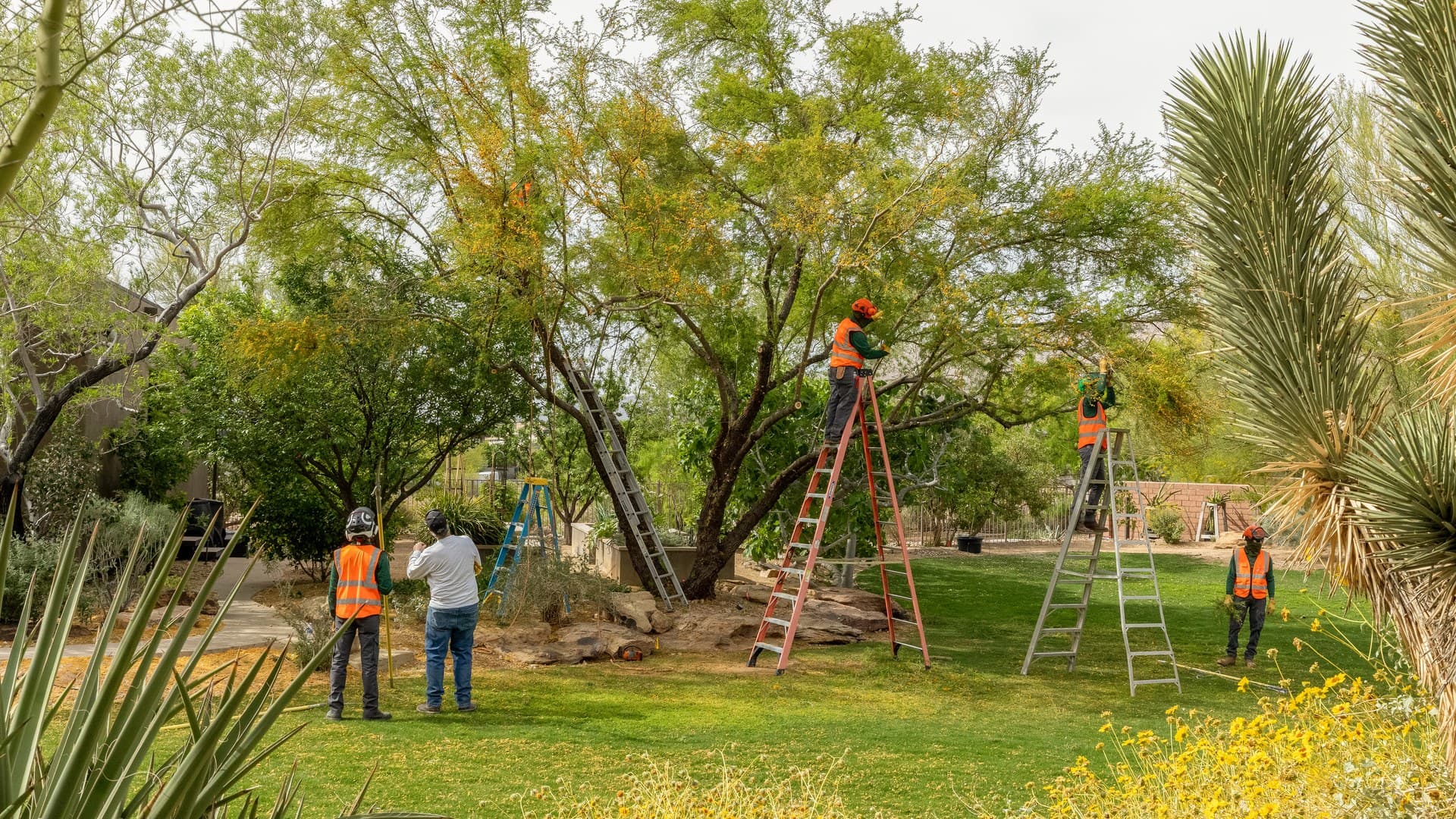
Removing a tree in a Las Vegas HOA community involves more than county rules. Learn the approval process, common restrictions, and what triggers fines.
When a homeowner in a master-planned Las Vegas Valley community decides to remove a tree, the first call is usually to a tree service, not the HOA office. That order causes more headaches than almost anything else we see. Clark County and the City of Las Vegas generally do not require a permit to remove a tree on private residential property, but HOA tree removal rules in Las Vegas are a separate system entirely, and they apply whether or not the county cares.
At Benjamin's Tree Service, our ISA Certified Arborists (ISA Cert. WE-15785A) have worked inside HOA communities throughout the Las Vegas Valley since 2001, submitting documentation to architectural review committees and helping homeowners get approval before a single branch comes down. This guide covers what most HOAs regulate, how approval works, and what happens if a tree comes down without it.
Quick Summary
- Clark County and the City of Las Vegas do not generally require a government permit for tree removal on private residential property, but your HOA's CC&Rs can still require approval
- Most master-planned communities regulate tree removal through an architectural review committee (ARC), not the HOA board directly
- Common area trees, street trees, and any tree visible from outside your lot are almost always subject to stricter rules than trees fully inside a private, fenced backyard
- Removing a tree without approval can mean a violation notice, a fine, mandatory replacement planting, or all three
- An ISA Certified Arborist's written report is often the single fastest way to get a hazard tree approved for removal
- Benjamin's Tree Service has helped Las Vegas Valley homeowners and HOAs navigate tree removal approval since 2001, ISA Certified (WE-15785A)
Table of Contents
- Why HOA tree removal rules in Las Vegas catch homeowners off guard
- What most Las Vegas Valley HOAs actually regulate
- The architectural review approval process, step by step
- Why documentation is the fastest path to approval
- What happens if you remove a tree without HOA approval
- When emergency removal bypasses the approval process
- Frequently asked questions
Why HOA Tree Removal Rules in Las Vegas Catch Homeowners Off Guard
Homeowners who have lived outside an HOA, or who are used to unincorporated Clark County's relatively light touch on tree removal, are often surprised to learn their community has its own layer of regulation entirely. Our guide to tree removal permits in Clark County covers the government side of this in detail: in most cases, unincorporated Clark County, Las Vegas, Henderson, and North Las Vegas don't require a formal permit to remove a tree on your own private residential lot.
HOA rules don't work the same way. A community's Covenants, Conditions & Restrictions (CC&Rs) and design guidelines are a private contract every owner agrees to at closing, and in Summerlin, Anthem, Green Valley, and dozens of other master-planned communities across the Valley, that contract usually gives the HOA authority over landscaping changes that's independent of anything the county requires. A tree removal that needs zero government paperwork can still require a completed architectural review request, and skipping that step is the single most common mistake we see.
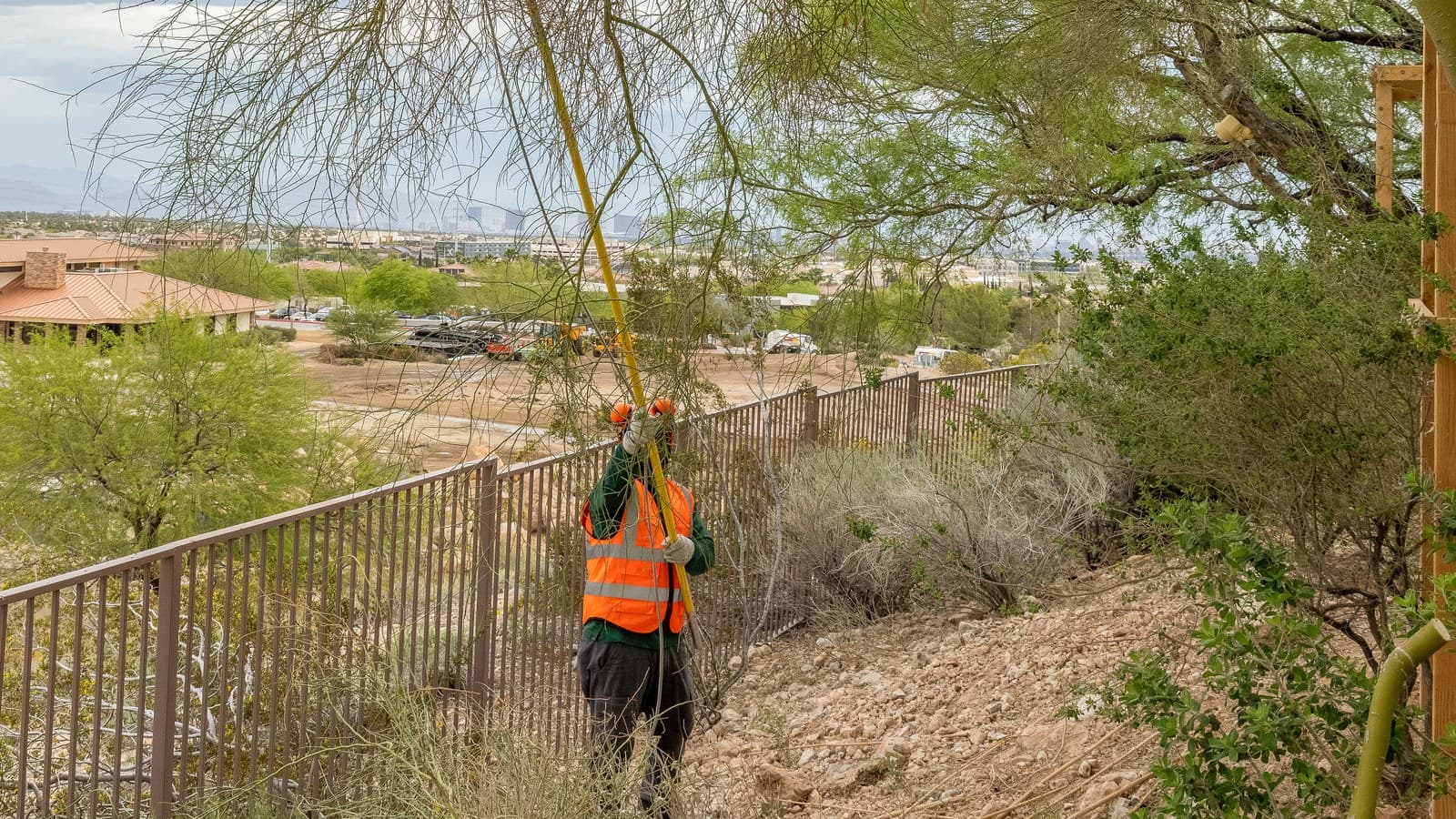
Most communities delegate this decision to an architectural review committee (ARC), a small group of volunteer homeowners or a management-company liaison, rather than the full HOA board. The board typically only gets involved if a homeowner appeals a denial, which usually means a faster turnaround than waiting on a monthly board meeting, as long as the request is submitted correctly the first time.
What Most Las Vegas Valley HOAs Actually Regulate
Not every tree on your property carries the same level of scrutiny. HOA tree rules generally fall into a few categories.
- Common area and greenbelt trees — Planted and maintained in shared spaces and walking paths, these are almost always the HOA's property, not yours, even if one grows against your back fence. Homeowners can't authorize removal on their own
- Street trees and front-yard trees — Anything visible from the street is typically held to a stricter design standard than a tree in a fenced backyard, since it affects the community's curb appeal
- View corridor and setback trees — Communities with view lots, especially in the Summerlin foothills and parts of Henderson's Green Valley Ranch and MacDonald Highlands, often restrict tree height or placement to protect a neighbor's mountain or Strip view
- Desert landscaping and xeriscape compliance — Many newer communities tie approved plant lists to Southern Nevada Water Authority water-efficient standards, so a removed tree sometimes has to be replaced with an approved low-water species
- Trees fully inside a private, fenced backyard — These usually carry the lightest regulation, though some CC&Rs still require notice above a certain trunk diameter
Your community's design guidelines, usually available through your management company or homeowner portal, will spell out which category applies. When in doubt, our arborists can help you read them during a free on-site assessment.
The Architectural Review Approval Process, Step by Step
The exact form changes from community to community, but the general path to approval looks similar across most Las Vegas Valley HOAs.
1. Review your CC&Rs and design guidelines first to confirm whether your tree falls under HOA jurisdiction at all
2. Submit a written architectural review request, usually through an online homeowner portal; a few older communities still require a paper form
3. Attach supporting documentation — a photo, a written reason, and, beyond a simple aesthetic preference, an arborist's assessment strengthens the request considerably
4. Wait for the review period. Many communities specify a response window, often 30 to 45 days, though hazard situations can sometimes be expedited
5. Get written approval before any work begins. A verbal "that should be fine" from an ARC member doesn't count; keep the written approval on file
6. Schedule the removal and, if required, the replacement planting within the timeframe your guidelines specify
Why Documentation Is the Fastest Path to Approval
Architectural review committees are homeowners and management staff, not arborists, and they're understandably cautious about approving removal, especially anything visible from a street or shared space. A vague request ("the tree is ugly" or "it drops too many leaves") is far more likely to get tabled than one backed by a professional assessment.
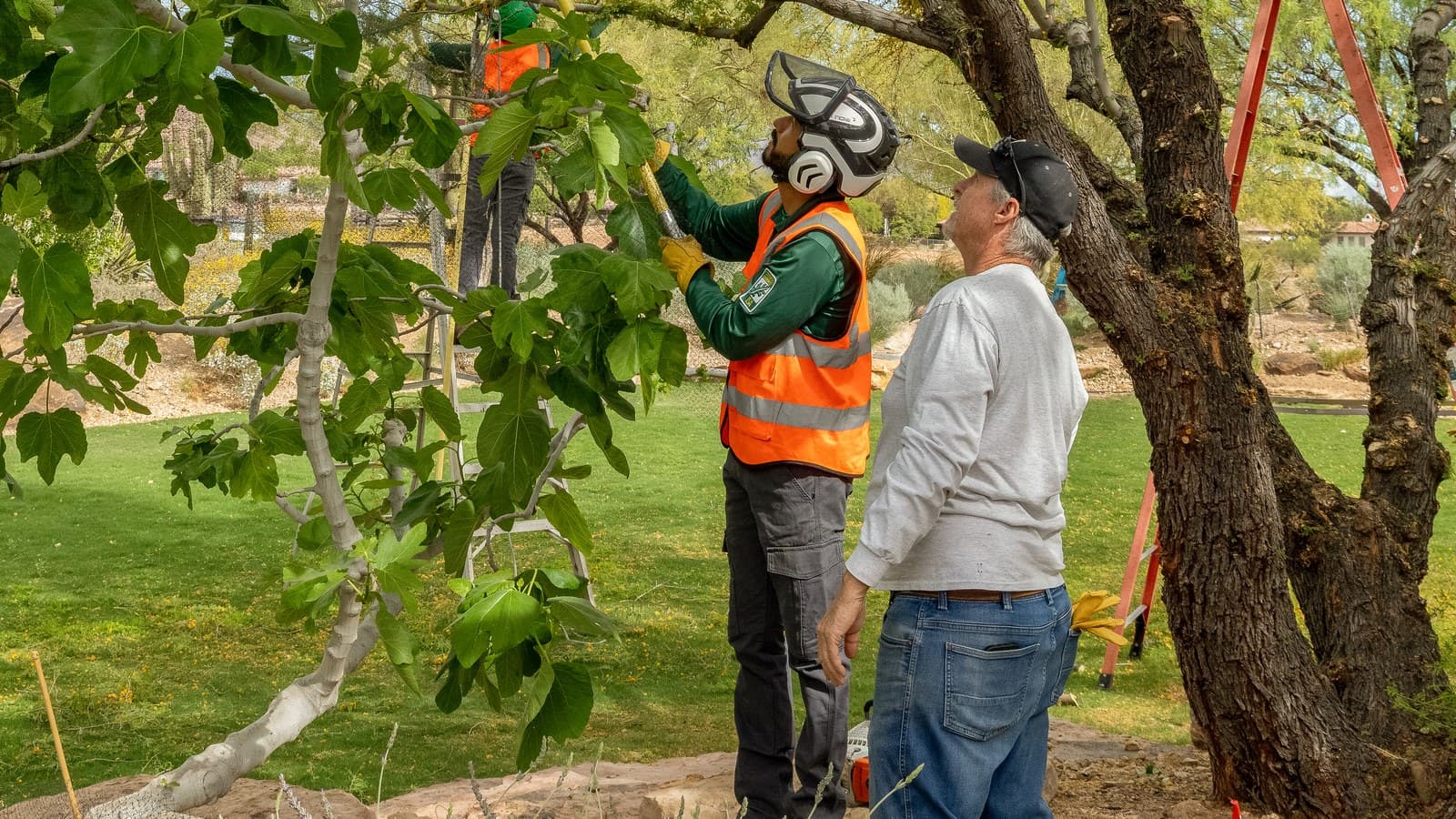
Our tree assessment reports document the tree's condition, any structural or health concerns, and a clear removal recommendation, formatted the way most ARCs and property managers expect. We provide the same documentation directly to HOAs and property managers through our HOA and property manager tree care program, built around the reporting needs of Las Vegas Valley communities. According to the International Society of Arboriculture, a certified arborist's written evaluation is one of the most effective ways to support a removal request, since it separates a documented hazard from a simple preference.
What a Strong Submission Includes
- Clear photos of the tree from at least two angles, including any visible damage, lean, or dieback
- A written explanation tied to a specific concern: root damage, disease, storm damage, or a documented safety hazard
- An ISA Certified Arborist's assessment for anything beyond routine trimming or a small, clearly dead tree
- A proposed replacement plan if your community's guidelines require one
What Happens If You Remove a Tree Without HOA Approval
Removing a regulated tree before getting approval puts you in violation of your CC&Rs, and the consequences follow a familiar pattern. Most HOAs issue a written violation notice first, often with a deadline to correct the issue or submit a retroactive application. Continued non-compliance can escalate to fines, which in some Nevada communities compound if left unresolved, and boards can require a specific, sometimes costly, replacement tree to resolve the violation.
Nevada regulates common-interest communities under its Common-Interest Communities and Condominium Hotels (CICCH) program, and homeowners who feel an HOA is enforcing rules unfairly have a formal dispute path through the Nevada Real Estate Division. Resolving a dispute after the fact is almost always slower than getting approval before the first cut, but if a removal already happened without approval, our team can still provide documentation that may help support a retroactive application.
When Emergency Removal Bypasses the Approval Process
Nearly every HOA's design guidelines carve out an exception for genuine hazards. A tree that's actively failing, leaning toward a structure, or damaged badly enough in a monsoon storm to threaten a home or shared walkway typically doesn't have to wait for architectural review. Our guide on fallen tree removal in Las Vegas walks through what to check in the first 30 minutes after a tree comes down, and our emergency tree service crews can document the hazard on-site so you have a record for the HOA even after the tree is gone.
The distinction that matters is documented urgency. A tree you've simply decided you no longer want is a routine ARC request; a cracked trunk or major storm damage is a hazard, and most communities accept an arborist's on-site assessment as sufficient justification even without a completed application first.
How Benjamin's Tree Service Helps Homeowners and HOAs Navigate Approval
Whether you're a homeowner preparing an architectural review request or a property manager overseeing several communities, the paperwork is usually the slowest part of removing a tree, not the removal itself. Our ISA Certified Arborists provide the written assessments and board-ready documentation Las Vegas Valley HOAs expect, and our tree removal crews are ready to schedule as soon as approval comes through.
We've served communities throughout Summerlin, Henderson, Green Valley, Anthem, and North Las Vegas since 2001, licensed, insured, and rated 5 stars on Google by the homeowners and property managers we've helped through exactly this process.
Frequently Asked Questions
Do I need HOA approval to remove a tree on my own property in Las Vegas?
It depends on your community and the tree's location. Many HOAs regulate any tree visible from a street or shared space, and some regulate trees anywhere on the lot, while trees fully inside a fenced backyard are often held to a lighter standard. Check your CC&Rs and design guidelines first, or ask your arborist to help you review them during a free assessment.
What documentation do I need for an HOA tree removal request?
Most committees want clear photos, a written reason, and, for anything beyond routine trimming, an ISA Certified Arborist's assessment. A proposed replacement plan is also common. Our tree assessment reports are formatted specifically for HOA and property manager submissions.
Can my HOA make me replace a tree I remove?
Yes, this is common, especially in communities with desert landscaping or xeriscape standards tied to approved plant lists. Some guidelines specify a minimum size or species for the replacement. Confirm this requirement before removal so it can be planned and budgeted at the same time.
What if my tree is a hazard and I can't wait for HOA approval?
Yes. Most communities allow safety hazards to skip the standard review timeline, and an arborist's on-site assessment is usually enough justification even before a completed application is filed. Our emergency tree service team can document the situation the same day so you have a record for the HOA.
What happens if I already removed a tree without HOA approval?
You may receive a violation notice, a fine, or a requirement to plant a replacement, depending on your community's rules. We can provide documentation after the fact that may help support a retroactive application, though approval isn't guaranteed. Nevada homeowners who believe an HOA is enforcing rules unfairly also have a formal complaint path through the Nevada Real Estate Division's CICCH program.
Schedule HOA-Compliant Tree Removal in Las Vegas Today
Getting a tree removed the right way starts with the right documentation. Benjamin's Tree Service has helped homeowners and HOAs throughout the Las Vegas Valley navigate architectural review since 2001 — licensed, insured, ISA Certified (WE-15785A), and rated 5 stars on Google.
Call us at 725-227-6160 or visit benjaminstreeservice.com/contact for a free on-site assessment and documentation you can submit with confidence.
Benjamin's Tree Service
ISA Certified Arborists serving Las Vegas & the surrounding areas since 2001.
Related Reading
Tree Removal
Tree Removal Near a Pool in Las Vegas: What to Know
Tree removal near a pool in Las Vegas takes careful access planning and root protection. Here's what…
9 min read
Tree Removal
Palm Tree Removal in Las Vegas: A Homeowner's Guide
Thinking about palm tree removal in Las Vegas? Learn the warning signs, what professional removal in…
8 min read
Tree Removal
Tree Removal Near a House in Las Vegas: Safety Guide
Learn how professionals plan tree removal near Las Vegas homes, pools, walls, and utilities—and what…
9 min read