
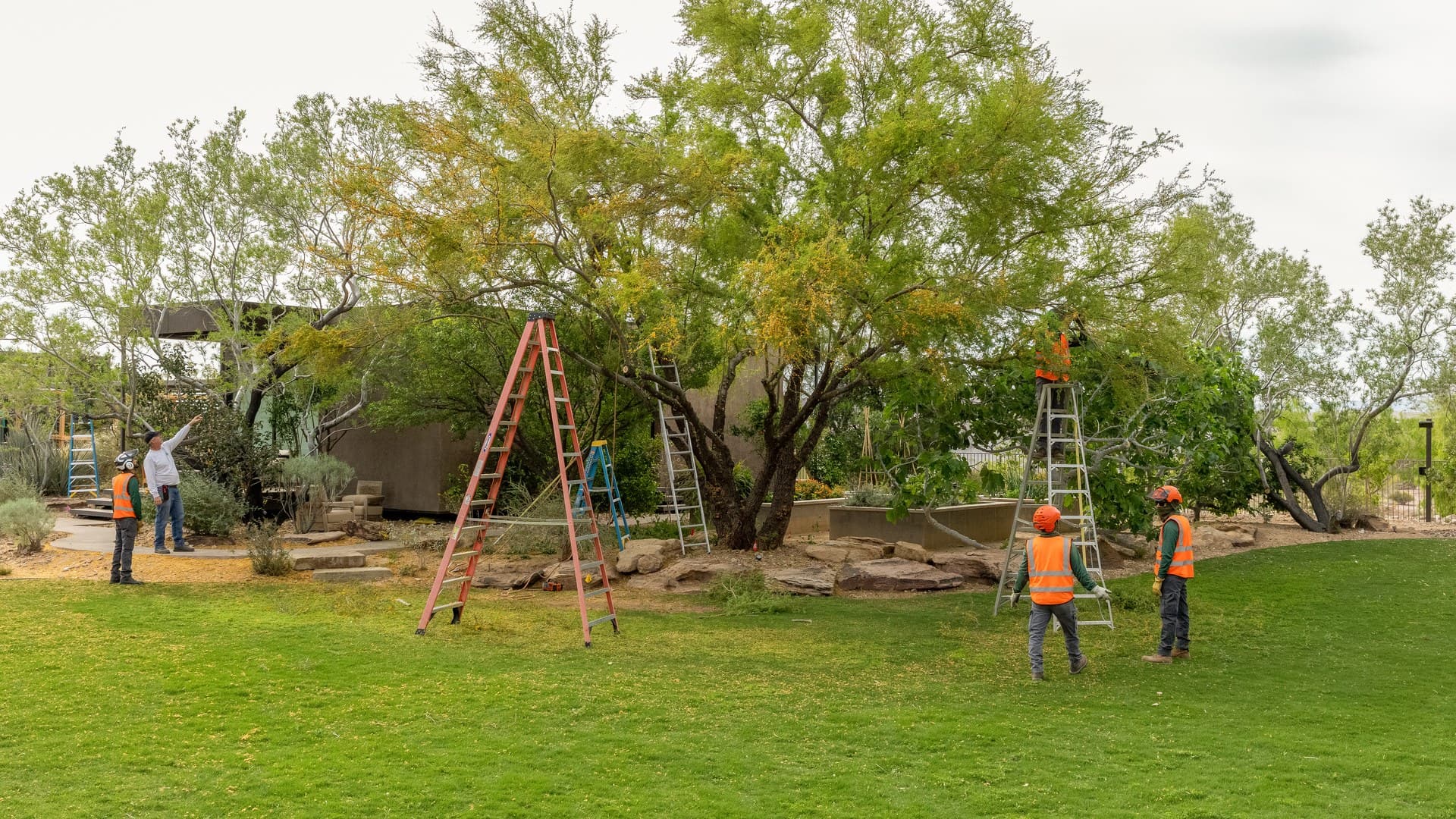
A tree just came down on your Las Vegas property. Here's what to check first, who to call, and how fallen tree removal in Las Vegas actually works.
When a tree comes down on your Las Vegas property after a monsoon microburst, a summer wind event, or years of unnoticed root decay, the first hour matters more than most homeowners realize. Before anyone touches a chainsaw, the immediate hazards have to be ruled out: severed power lines, a compromised gas meter, a root plate that could shift, or a second tree nearby that took hidden damage in the same storm.
At Benjamin's Tree Service, our ISA Certified Arborists (ISA Cert. WE-15785A) have handled fallen tree removal in Las Vegas since 2001. This guide covers exactly what to do in the first 30 minutes, what a professional removal actually involves, and the mistakes that turn a bad day into a dangerous one.
Quick Summary
- Stay back from a fallen tree until utility lines and structural hazards are ruled out. A tree that looks settled can still shift without warning
- Never attempt to cut a downed tree yourself; wood under tension or compression is one of the most dangerous conditions in tree work
- Photograph the damage from a safe distance before any cleanup begins, especially if you plan to file an insurance claim
- A fallen tree often signals a second hidden problem: root or canopy damage on trees still standing nearby
- Response time matters most when a tree is blocking a driveway, leaning on a structure, or resting across a shared fence line
- Benjamin's Tree Service has provided licensed, insured fallen tree removal in Las Vegas since 2001, ISA Certified (WE-15785A)
Table of Contents
- What to do in the first 30 minutes after a tree falls
- Why fallen tree removal in Las Vegas requires professional equipment
- What happens when our crew arrives
- Insurance, documentation, and who is responsible
- Preventing the next fallen tree before monsoon season
- Frequently asked questions
What to Do in the First 30 Minutes After a Tree Falls
The first priority is distance, not cleanup. If any part of the tree is touching a power line, a utility pole, or an electrical service drop to your house, keep everyone, including pets, away from the tree, the ground around it, and anything metal it may be resting against. Call 911 or NV Energy directly. Downed limbs can carry live current through wet soil or a chain-link fence even when the wire itself looks intact.
Once you've confirmed there's no utility hazard, check the area around the tree for a few other risks before deciding it's safe to approach. The ISA's guide to hazard trees is a useful reference for what to look for on any tree still standing nearby, not just the one already on the ground:
- A cracked or leaning gas meter, especially on older Las Vegas Valley homes where meters sit close to mature trees
- Standing water or irrigation lines running near the root ball, which can make the ground unstable
- Remaining limbs still caught in a neighboring tree's canopy can drop with no warning long after the original tree came down
- Damage to a roof, fence, vehicle, or pool enclosure that needs to be documented before anything is moved
If the tree fell away from structures and utilities and nobody was hurt, there's no need to rush. A tree that's already on the ground is not going anywhere in the next hour, and getting a licensed crew out safely is more important than getting it cleared quickly.
Why Fallen Tree Removal in Las Vegas Requires Professional Equipment
A fallen tree rarely behaves the way it looks. Trunks and branches that appear to be resting flat on the ground are frequently under tension or compression from the way they fell, the terrain, or what they're leaning against. Cutting into the wrong spot on a "spring pole" branch, one bent and holding stored energy, can release it violently toward whoever is holding the saw. OSHA identifies struck-by and caught-in hazards as leading causes of injury in tree care work generally, and fallen-tree cleanup is one of the higher-risk versions of that job. It's exactly why our crews approach every fallen tree as a load-bearing puzzle before the first cut is made.
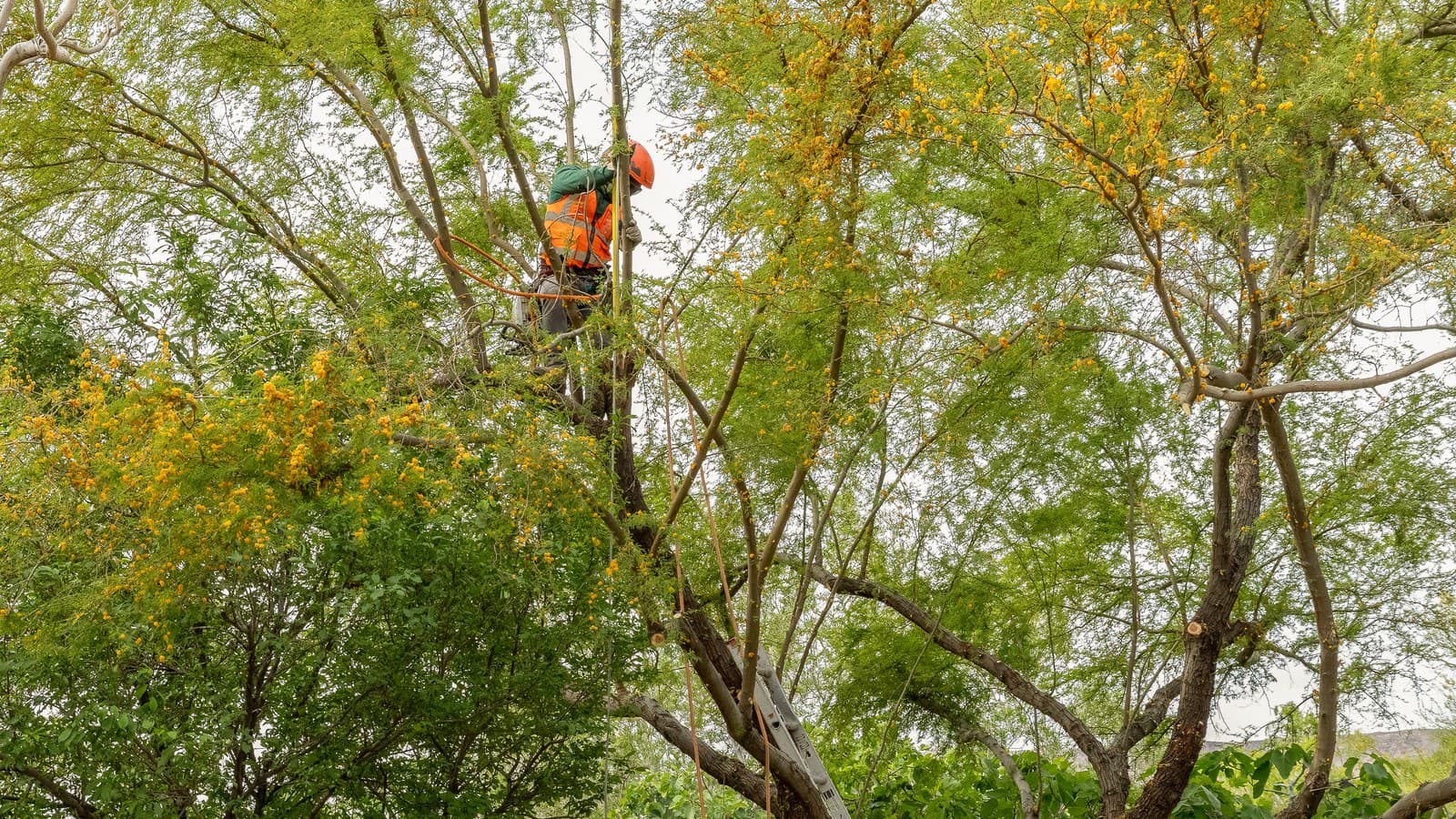
Las Vegas Valley's caliche soil adds another layer of risk. Because caliche forms a hardpan layer that restricts deep root growth, many mature trees here, especially mesquites and other fast-growing shade species, anchor with a shallower, wider root plate than the same species would develop in looser soil. When one of these trees fails, the root plate often tears free largely intact, leaving an unstable mass of soil and roots that can shift or settle further once weight is removed from the canopy. Homeowners who start cutting branches without understanding how the root plate is behaving can unintentionally destabilize it further.
Weight Is the Other Underestimated Factor
A mature mesquite or ash limb that looks manageable can weigh several hundred pounds once you account for green wood density. Rigging and sectional cutting exist because dropping a large section freehand generates enough force to damage a roof, fence, or vehicle it was never meant to touch. Our emergency tree service crews carry the rigging equipment and manpower to remove large sections safely.
What Happens When Our Crew Arrives
A professional fallen tree removal in Las Vegas starts with an assessment, not a chainsaw. Our arborist walks the site, confirms there are no live utility hazards, and identifies how the tree is loaded: what's under tension, what's supporting weight, and what will move once a cut is made. On jobs near a home, fence, or pool, we plan the cutting sequence and any rigging before touching the trunk.
From there, the tree is sectioned from the top down in manageable pieces, lowered or carried clear of structures, and hauled off-site. If the stump is a tripping hazard, blocks a rebuild, or the client simply wants a clean yard, our stump grinding crew can usually handle it the same visit or on a quick follow-up.
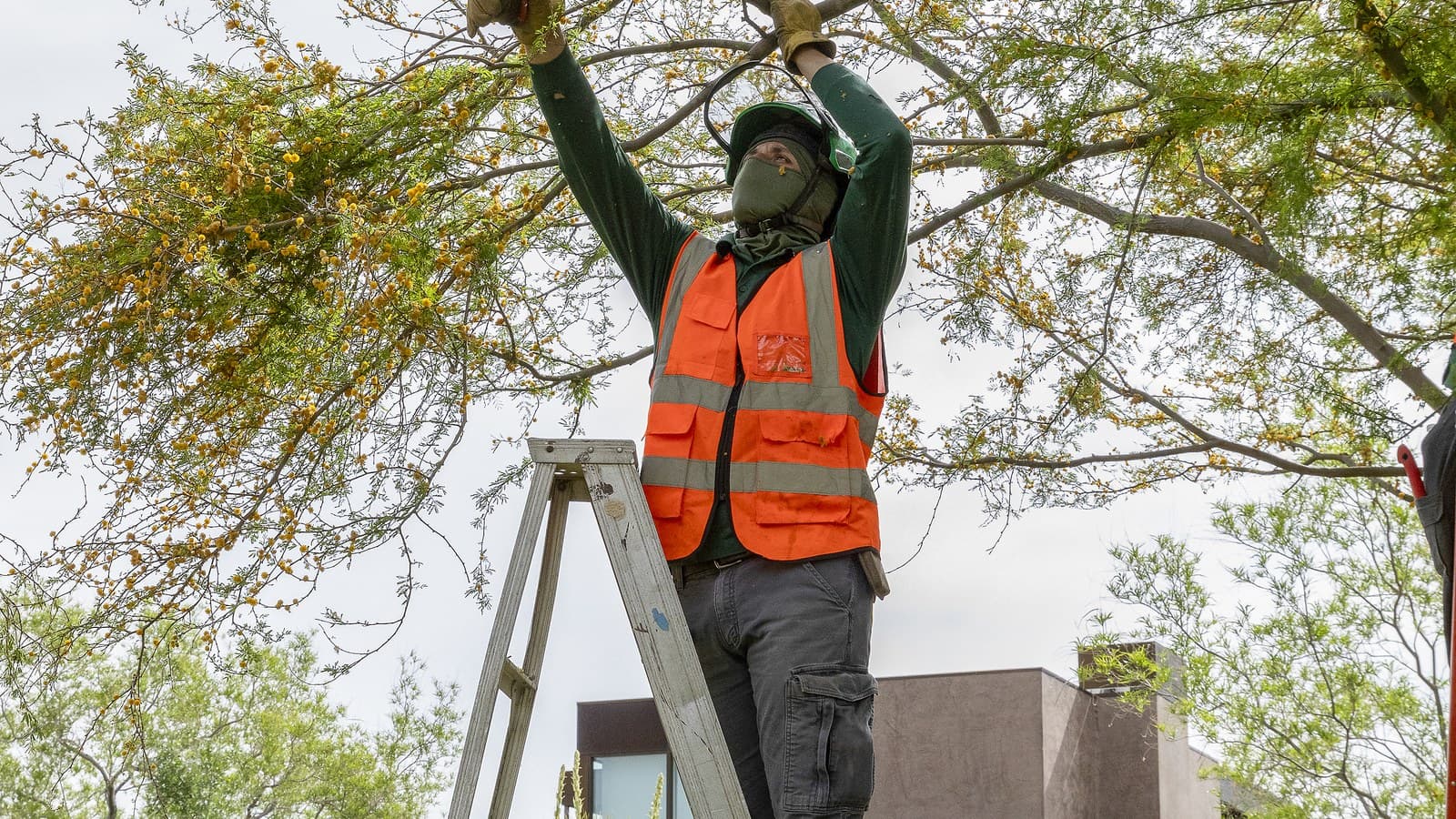
We also take a look at any trees still standing nearby. A storm strong enough to bring one tree down often stresses its neighbors, too: cracked co-dominant unions, partially lifted root plates, or hairline trunk fractures that aren't obvious from the ground. When we see signs of that kind of hidden damage, we'll flag it and, if the property needs documentation for an HOA or insurance purposes, our tree assessment reports service can put it in writing.
Sectional Removal vs. Full-Tree Rigging
Most residential fallen tree removals in open yard space are handled with straightforward sectional cuts. No rigging is required, since the tree is already down. Rigging becomes necessary when part of the tree is still elevated, tangled in a neighboring canopy, or leaning against a structure, so a controlled lower keeps the remaining weight from dropping unpredictably.
Insurance, Documentation, and Who Is Responsible
Every homeowners policy handles fallen trees a little differently, so this isn't a substitute for a call to your agent, but a few patterns hold true across most Las Vegas Valley policies. If a tree damages a covered structure — your roof, fence, garage, or a parked vehicle — removal of the tree itself is often covered as part of the structural claim, even if the tree originated on a neighbor's property. If a tree falls in open yard with no structural damage, removal is frequently the homeowner's responsibility regardless of whose property the tree grew on, unless negligence can be shown, like a property owner ignoring a documented hazard.
Before anything is moved, take wide photos showing the tree's position relative to your home, fence, and any damaged property, along with closer shots of specific damage. This documentation matters more than most homeowners expect once a claim is underway, and it's much harder to capture after debris has been cleared. If your situation involves root damage that's affecting a foundation, retaining wall, or hardscape, our guide to tree roots near foundations covers how that kind of damage typically develops and gets assessed.
Preventing the Next Fallen Tree Before Monsoon Season
Most of the fallen trees we remove in the Las Vegas Valley trace back to a warning sign that was visible weeks or months earlier: a lean that got worse, a cluster of dead branches, or a root plate that had already started lifting slightly at the soil line. Our guide on monsoon tree inspection warning signs walks through what to check on your own trees before the next storm rolls through Henderson, Summerlin, or North Las Vegas.
Regular structural trimming and pruning is the single most effective way to reduce fallen tree risk. Removing dead wood, correcting weak branch unions while they're small, and reducing sail area on top-heavy canopies all lower the load a tree has to withstand during a monsoon wind event. If a tree on your property has already shown signs of leaning or instability, our guide on when a tree needs emergency removal can help you decide whether it's time to call before the next storm makes the decision for you.
Frequently Asked Questions
How much does emergency fallen tree removal cost in Las Vegas?
Cost depends on the tree's size, how it fell, and whether rigging or stump grinding is needed, so every job gets an on-site written estimate before work begins. Our tree removal cost guide breaks down the main pricing factors in detail.
Who is responsible for a tree that falls on a neighbor's property?
In most cases, if a tree falls due to a storm or other act of nature, the property where the damage occurred handles the claim through their own insurance, regardless of whose yard the tree grew in, unless the tree's owner had ignored a known, documented hazard. Every policy is different, so confirming with your insurance agent is always the safest first step.
Can I remove a small fallen tree myself?
A small tree with no branches under tension and no proximity to power lines or structures can sometimes be handled safely with basic yard tools. Once a chainsaw, ladder work, or anything leaning against a fence or structure is involved, it's worth calling a licensed crew. The risk of a spring-loaded branch or an unstable root plate isn't always obvious just by looking.
How long does fallen tree removal take?
A straightforward residential removal with no rigging typically takes two to four hours from arrival to a cleared, hauled-off yard. Jobs requiring rigging near a structure, multiple trees, or stump grinding usually take longer, and we'll give you a time estimate on-site once the scope is clear.
Does homeowners insurance cover a fallen tree?
Often, yes, if the tree damaged a covered structure, but coverage for removal-only situations with no structural damage varies widely by policy. Documenting the damage with photos before cleanup and calling your agent early in the process gives you the clearest answer for your specific policy.
Schedule Fallen Tree Removal in Las Vegas Today
A fallen tree on your property is stressful, but it doesn't have to be dangerous. Benjamin's Tree Service has handled fallen tree removal throughout the Las Vegas Valley since 2001 — licensed, insured, ISA Certified (WE-15785A), and rated 5 stars on Google by the homeowners we've helped through exactly this situation.
Call us at 725-227-6160 or visit benjaminstreeservice.com/contact for a fast on-site assessment. We serve Henderson, Summerlin, North Las Vegas, and the rest of the Las Vegas Valley.
Benjamin's Tree Service
ISA Certified Arborists serving Las Vegas & the surrounding areas since 2001.
Related Reading
Emergency Tree Service
When a Tree Falls on Your Neighbor's Property in Las Vegas
When a tree falls on your neighbor's property in Las Vegas, who pays depends on health, negligence, …
9 min read
Emergency Tree Service
Tree Touching a Power Line in Las Vegas: What to Do
A tree touching a power line in Las Vegas is a real electrocution and fire risk. Learn the exact ste…
8 min read
Emergency Tree Service
Emergency Tree Service: What to Expect When You Call
Find out exactly what happens when you call for emergency tree service in Las Vegas — from the first…
8 min read