Tree branch removal in Las Vegas: learn which broken, dead or hanging limbs need a pro, what can wait, and what ISA says about DIY cutting. Free estimates.
Tree branch removal in Las Vegas is often a one-limb problem, and a cracked limb can look small from the ground yet be too heavy and too high to handle safely. Our trimming and pruning service covers the routine cases. This guide explains when to ask an arborist about a branch and when to contact emergency services or the utility.
Quick Summary
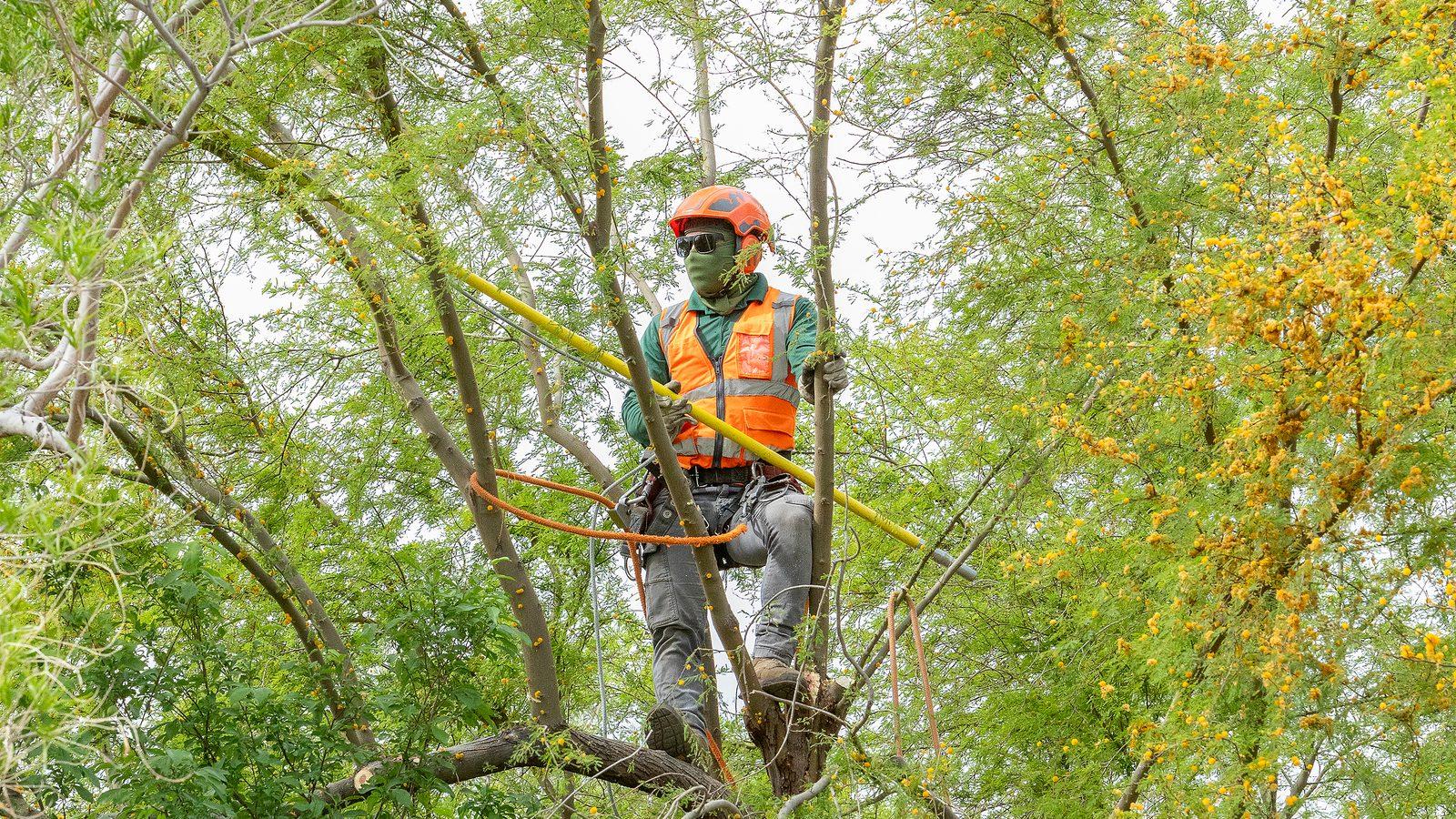
Call a professional for any branch that is large, broken, hanging, over a roof, walkway or car, or near a power line. The International Society of Arboriculture (ISA) tells homeowners to resist doing storm-related tree work themselves, because of the height, the weight and the cutting equipment involved. Location alone does not establish that a dead branch is safe, so keep clear of it and ask an arborist how urgently it needs to be assessed. Photograph any problem branch from a safe spot so a crew can plan the work.
Key takeaways
- A hanging or broken limb can still move after it stops. Stay out from under it.
- Call the utility if a branch is near a wire, and call 911 for contact, injury or fire; then call a tree service.
- Dead, cracked or poorly attached branches are the ones arborists look for when they check a tree for risk.
- Taking off one branch is different from trimming the whole tree and from removing the tree.
- A written scope tells you which branch is coming off, what happens to the debris and what stays.
When is a single branch a job for a pro?
A branch is a job for a pro when it is big, high, damaged or close to something that matters. ISA's storm guidance names the dangers that make homeowner cleanup risky: working at height, dealing with limbs that rest on buildings or utility lines, and operating tree-cutting equipment. If your branch involves any of those, treat it as professional work.
These situations point to a call:
- A limb that has cracked or split but not fallen
- A broken branch hanging in the canopy
- A dead branch over a roof, driveway, play area or parked car
- A branch resting on a fence, wall or another tree
- A branch near an electric service line or overhead wire
If a limb is cracked, hanging or resting on something, keep people and pets out from under it until someone qualified looks at it. ISA notes that broken limbs hanging overhead and fallen trees resting in other trees or on structures may continue to move.
Which branches should an arborist assess?
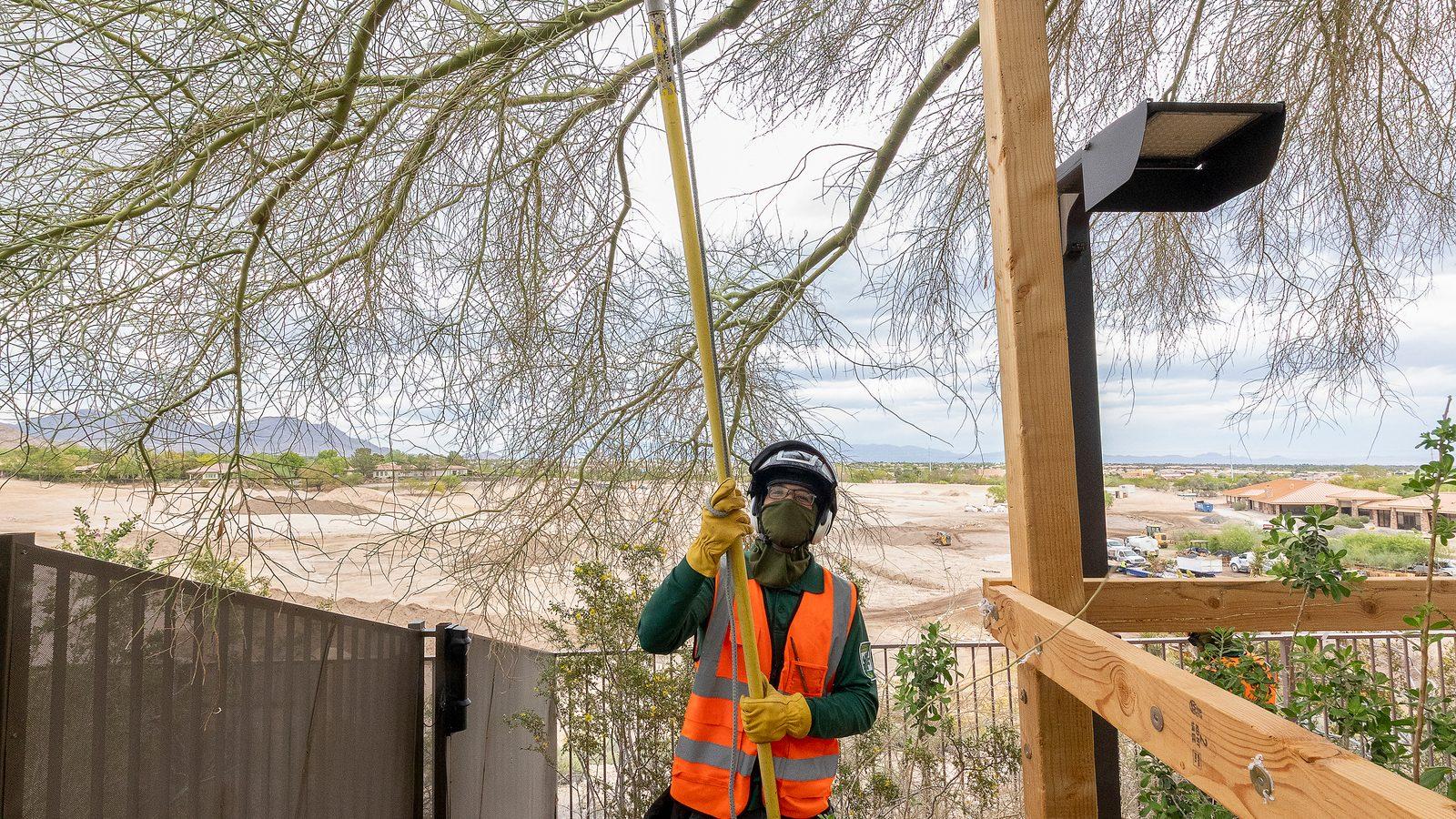
A dead or poorly shaped branch can look harmless, but location alone does not establish that it is safe. Keep clear of it and ask an arborist how urgently it needs to be assessed. It needs attention, because ISA lists dead or defective branches among the things preventive care removes. The goal is to schedule it before wind or weight makes the decision for you.
Ask an arborist to assess conditions such as:
- A branch appears dead, even if the ground below looks clear.
- A limb rubs against the roof line, a fence or a wall, without being cracked.
- You notice dieback, meaning twigs and small branches dying back from the tips.
- A branch grows into a walkway or gate and blocks access, but is not damaged.
Our dead or dormant tree guide explains how to tell whether a tree or a branch is truly dead. A quick photo of the branch and where it sits in the tree is enough to start the conversation.
What counts as an emergency branch?
A branch is an emergency when it is already causing damage or is likely to fall onto people or property right now. Our emergency tree service page lists storm-damaged trees with hanging limbs, branches fallen on houses, cars or fences, and trees blocking roads or driveways among the problems it handles around the clock.
Call 911 first for injuries, fire or contact with a utility line. Keep everyone away from the tree and from fallen limbs. Do not cut, pull or move large branches yourself, and take photos of the damage from a safe distance for your records. Our emergency tree service crews can then secure the area and remove failed limbs in a controlled sequence.
If the limb touches a wire, read what to do when a tree touches a power line first. Leave the question of line clearance to the utility.
Why is it risky to cut a big branch yourself?
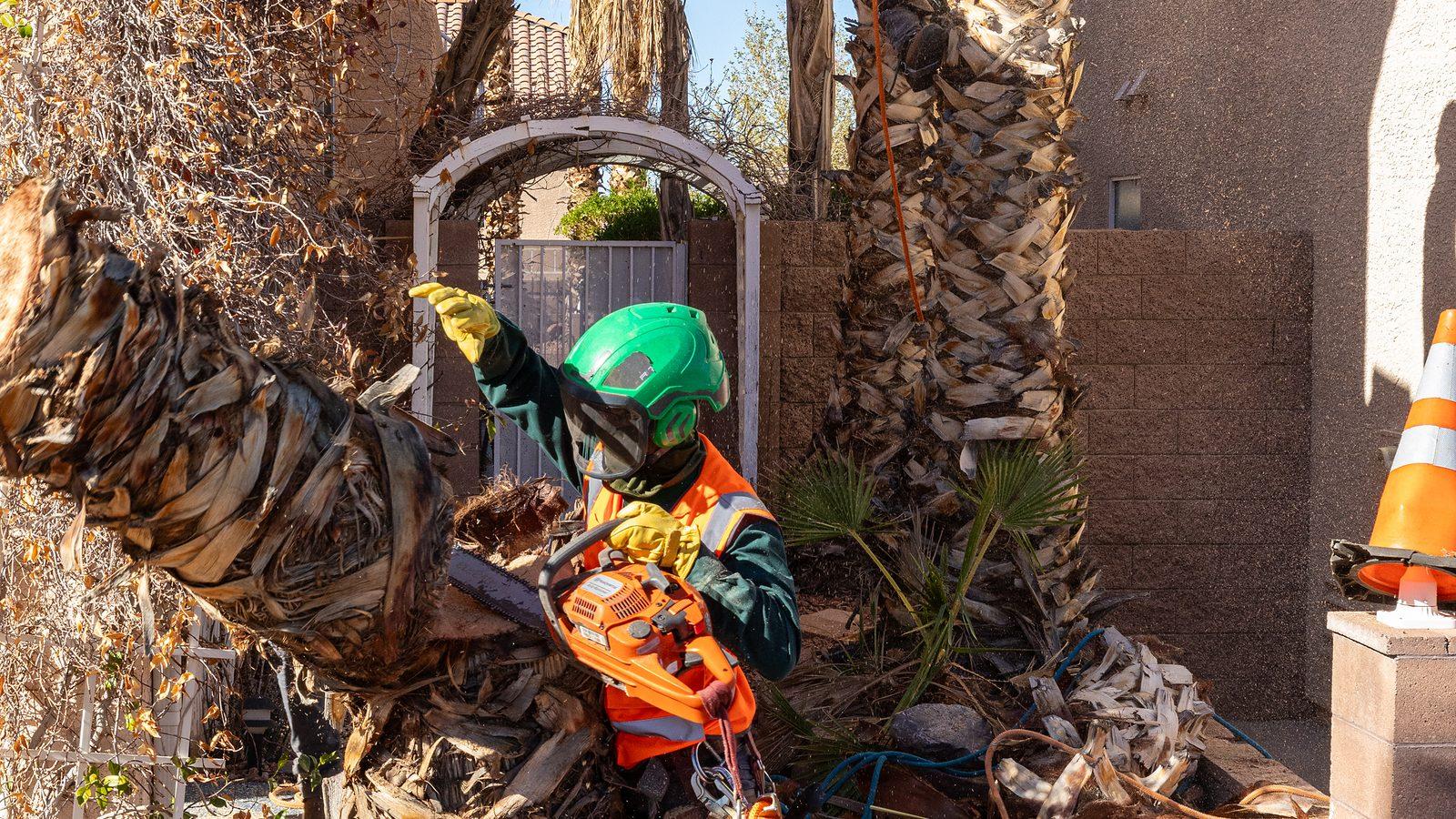
It is risky because the weight, height and tools all work against you. ISA's storm-damage guidance lists three hazards: working at height, retrieving tree parts from buildings or utility lines, and running tree-cutting machinery. It calls this kind of work, especially debris cleanup, inherently dangerous and best done by a professional arborist.
A large limb does not behave like the small ones you can handle from the ground. It can drop onto the roof or fence below or shift as it comes free. A crew plans where the branch will go and how to lower it before the first cut.
There is a tree health reason to hold back too. ISA says each cut can change a tree's growth, so no branch should be cut without a reason, and that improper pruning can leave lasting damage. A cut in the wrong place leaves a wound the tree has to grow over.
Is branch removal the same as trimming or tree removal?
No. They are three different jobs, and a quote should say which one you are buying.
- Branch removal takes off one or a few specific limbs, usually because they are dead, damaged or in the way.
- Trimming and pruning shapes or maintains the whole tree. ISA describes cleaning as removing dead, dying, diseased and weakly attached branches from the crown.
- Tree removal takes down the entire tree. ISA says some trees with unacceptable risk are best removed, and that is a bigger decision than one branch.
If one failed branch points to a bigger problem, such as cracks in the trunk or limbs, soil heaving or a lean, ISA advises having an arborist check the whole tree, not just the limb that fell. Our tree removal service page lists structural damage and dead or dying trees among the reasons a tree comes out entirely.
What should you check before you call?
Look from a safe distance and write down what you see. You are not diagnosing the tree. You are giving the crew enough to plan.
- Where is the branch, and what is under it: roof, car, walkway, fence, play area?
- Is the limb cracked, hanging, broken or dead, or does it just look too long?
- Is it touching another branch, a structure or any wire?
- Can a truck or equipment reach the area, through a gate or side yard?
- Has anything fallen already, and where did it land?
Take photos from the ground and from outside the drop zone. Never stand under the branch, climb the tree or go near wires to get a better angle. Our contact form has an optional photo upload, which is a good way to send what you have.
What happens after a storm?
Check trees that look fine, not only the one that dropped a limb. ISA says assessments after severe storms should include trees that seem undamaged, especially larger trees near people or property, and that an arborist should look for cracks in trunks or limbs, hanging branches and soil heaving.
Monsoon winds can break limbs in Las Vegas, and our monsoon tree inspection guide lists warning signs worth checking before the next wind event. If a whole tree came down, see our guide to fallen tree removal.
Frequently Asked Questions
How do I know if a tree branch needs to be removed?
Look for a branch that is dead, cracked, hanging or broken, or one that sits over a roof, car or walkway. ISA lists dead or defective branches among the problems preventive care removes. If you are unsure, send a photo and ask an ISA Certified Arborist to look.
Can I cut down a broken tree branch myself?
For a large, high or hanging branch, ISA says to resist doing the work yourself because of the height, the weight and the cutting equipment involved. Call a professional arborist, and stay clear of the area in the meantime.
What should I do if a branch is touching a power line?
Stay away from the tree and the branch, and call 911 if there is an injury, fire or contact with a utility line. Report the hazard to the utility, and call a tree service for the tree work once the line is made safe. Do not try to move the branch.
Is removing one branch the same as trimming the tree?
No. Removing a branch takes off a specific limb. Trimming and pruning shapes or maintains the whole tree. Ask for the scope in writing so you know which one is quoted.
Does Benjamin's Tree Service remove single branches?
Our emergency service removes failed limbs and tree sections, and our trimming and pruning service covers preventive pruning and structural corrections. Tell us where the branch is and what it looks like, and we will explain which service fits and give you a free, no-obligation estimate.
Get a Free Tree Branch Removal Estimate in Las Vegas
Benjamin's Tree Service has served Las Vegas since 2001, and our work is led by Benjamin Garcia, ISA Certified Arborist (WE-15785A). Describe the branch, send a photo if you can do it from a safe spot, and we will tell you what we would remove and what we would leave.
Schedule Service or call 725-227-6160.
Sources
- ISA TreesAreGood: Storm-Related Tree Damage
- ISA TreesAreGood: Managing Hazards and Risk
- ISA TreesAreGood: Pruning Your Trees
- Benjamin's Tree Service: Emergency Tree Service
Sources checked November 10, 2026.
Related Reading
Benjamin's Tree Service
ISA Certified Arborists serving Las Vegas & the surrounding areas since 2001.
Related Reading
Tree Care Tips
Deep Root Watering for Trees in Las Vegas: A Practical Guide
Learn how deep root watering works for Las Vegas trees: where the water should go, how to check soil…
8 min read
Tree Care Tips
When Do You Need a Tree Risk Assessment in Las Vegas?
Learn when a tree risk assessment is worth ordering in Las Vegas, how it differs from a free estimat…
8 min read
Tree Care Tips
ISA Certified Arborist in Las Vegas: When You Need One
Not sure you need an ISA Certified Arborist in Las Vegas? Learn which tree jobs need one, how to ver…
8 min read