
Tree service in Centennial Hills, NV means newer builder trees, HOA rules, and wind-exposed corridors. See what homeowners should know before hiring.
Tree service in Centennial Hills, NV comes with a different set of questions than older parts of the valley: most trees here are still young, builders often planted the same handful of species on every lot, and HOA landscape committees have a say in what happens to them. Benjamin's Tree Service has worked throughout the Las Vegas Valley since 2001, and our ISA Certified Arborist team (ISA Cert. WE-15785A) spends plenty of time in Centennial Hills correcting the early-life training that a builder's landscape crew often skips.
This guide covers what actually matters for a Centennial Hills tree owner: why newer plantings need different care than a 30-year-old canopy, which species show up on nearly every street, how HOA rules shape what you can and can't do, and when wind exposure along the area's wide arterial corridors turns a routine trim into an urgent call.
Quick Summary
- Centennial Hills is one of the fastest-growing corners of the northwest valley, so most trees here are still in their first 5 to 15 years and need structural training, not just seasonal cleanup
- Palo verde, mesquite, acacia, fruitless olive, African sumac, and Mexican fan palm dominate builder landscaping across nearly every Centennial Hills subdivision
- HOA architectural review commonly applies before removal or major crown reduction, even on a homeowner's own lot
- Wide arterial corridors and open sightlines expose Centennial Hills trees to more direct wind than tighter, older neighborhoods closer to the valley floor
- Builder-grade planting holes and compacted fill soil are common culprits behind young trees that lean or struggle years after installation
- Benjamin's Tree Service has served Centennial Hills and the surrounding northwest valley since 2001, ISA Certified (WE-15785A), licensed, insured, and 5-star Google rated
Table of Contents
- Why tree service in Centennial Hills, NV looks different
- Common trees in Centennial Hills' newer landscapes
- HOA rules and builder-planted trees
- Wind, heat, and arterial corridor exposure
- Root space and caliche soil in newer developments
- When a young tree problem becomes an emergency
- Tree service across the Las Vegas Valley
- Frequently asked questions
Why Tree Service in Centennial Hills, NV Looks Different
Most of Centennial Hills was built out over the last two to three decades, which means the area's tree canopy is still relatively young compared to established neighborhoods closer to downtown. That changes the kind of work a homeowner actually needs. A newly planted or five-year-old tree benefits most from structural training pruning: correcting a weak branch union, removing a competing leader, and shaping the canopy early so it doesn't need a major structural correction at year 20. Older neighborhoods, by contrast, are usually managing decades of accumulated growth, deadwood, and storm damage.
Because builders often installed the same tree package across an entire subdivision at once, whole blocks tend to hit the same growth stage together. That's why our crews often see clusters of similar service calls within the same HOA phase: a batch of trees planted together tends to need its first structural trim, or shows its first sign of stress, around the same time.
Common Trees in Centennial Hills' Newer Landscapes
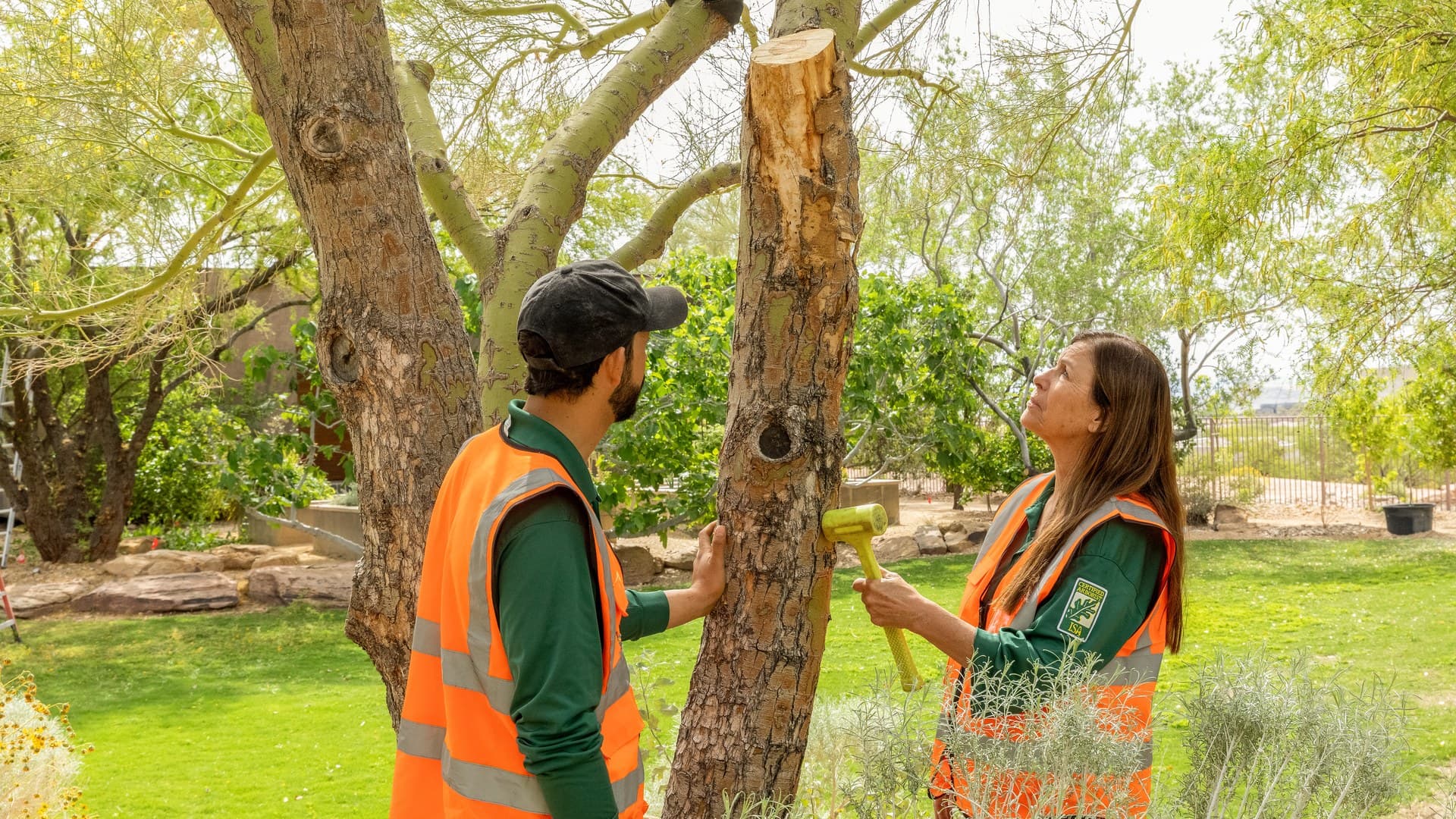
Builder landscaping across Centennial Hills leans heavily on a short list of desert-adapted species chosen for fast establishment and low water use. On a typical week, our crews are working on:
- Palo verde — the most common builder shade tree in the area; grows quickly but needs early structural thinning to avoid weak, wind-prone branch unions later
- Mesquite — planted throughout newer subdivisions; vigorous growth means it needs more frequent shaping in its first decade than most homeowners expect
- Acacia varieties — fast-growing and popular for quick canopy coverage, but prone to splitting at branch unions if left untrained
- Fruitless olive — common in HOA common-area landscaping and front-yard plantings; needs regular thinning to manage dense, wind-catching canopies
- African sumac — a frequent screening and shade tree along property lines; needs controlled reduction cuts to avoid overgrowing tight side yards
- Mexican fan palm — lines many Centennial Hills community entrances and arterial medians; needs routine frond and seed-pod cleanup rather than structural pruning
Because so many of these trees were installed at the same time as the surrounding home, a lot of what we do in Centennial Hills is proactive: catching a weak branch union or a girdling root wrap while it's still an easy fix, rather than waiting for it to become a bigger problem.
HOA Rules and Builder-Planted Trees
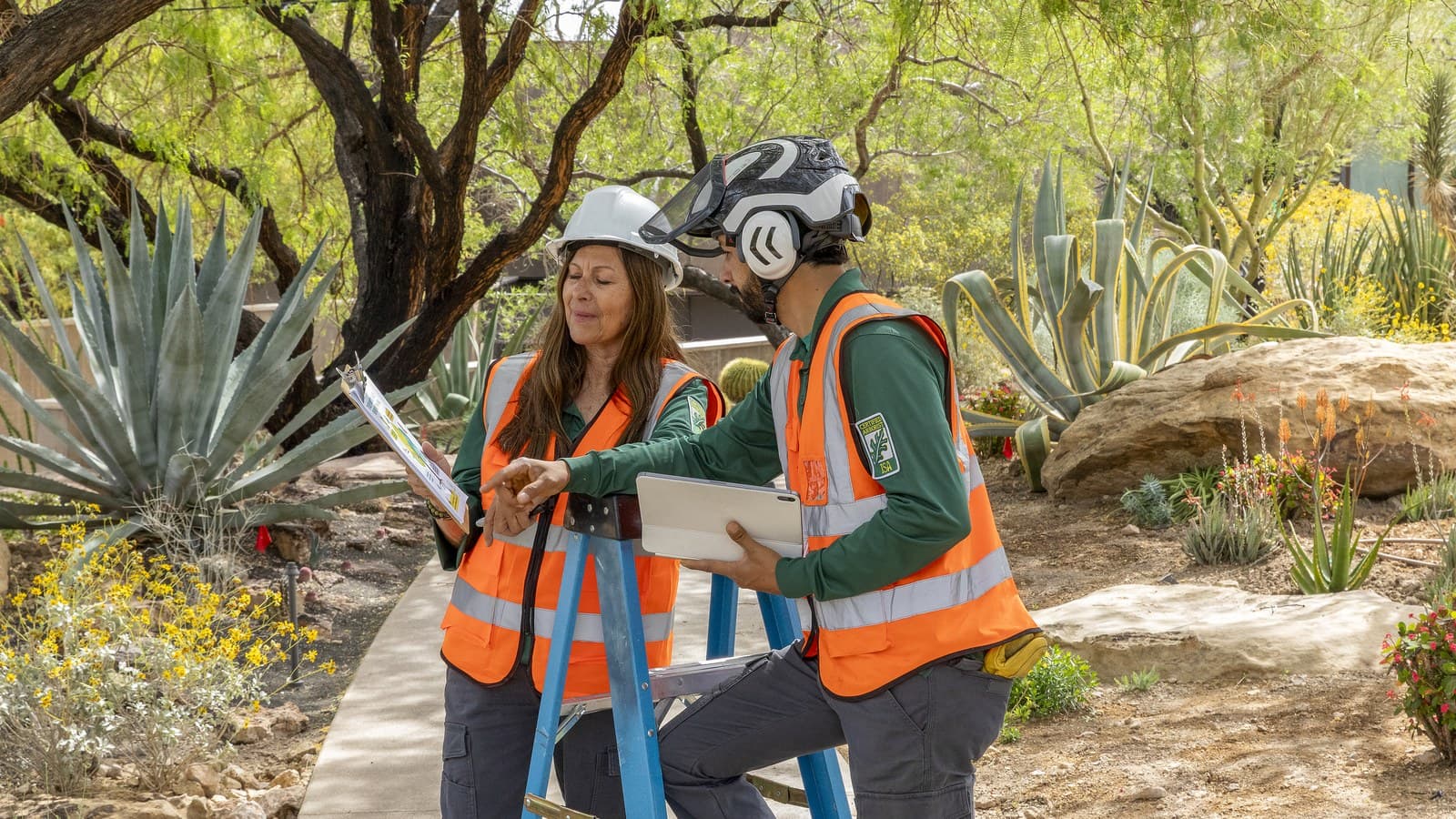
A large share of Centennial Hills sits under HOA governance, spanning communities in and around Tule Springs, the Skye Canyon edge, Providence-adjacent developments, and the Durango Hills and Centennial Parkway corridors. Nearly every one of those HOAs requires some form of architectural review before a homeowner removes a tree or performs significant crown reduction, even on their own lot. Our guide to HOA tree removal rules in Las Vegas walks through what that documentation process typically involves, and in many cases the same rules apply to trees that came with the home at closing, not just ones a homeowner planted afterward.
Builder-planted trees raise a question homeowners don't always think about: whether a struggling tree is a warranty issue rather than a maintenance one. A tree that's leaning or declining within the first year or two of a new build is sometimes still covered under a builder or landscape warranty, worth checking before paying out of pocket. Our tree assessment reports give homeowners and HOA boards a certified opinion on whether a young tree's problem stems from installation error, a species mismatch, or something routine maintenance can correct.
HOA and property management work is also a large part of what we do here. Benjamin's HOA and property manager tree care handles scheduled maintenance for common areas, entrances, and shared landscaping across Centennial Hills communities, with the photo documentation boards typically want on file.
Wind, Heat, and Arterial Corridor Exposure
Centennial Hills sits along some of the widest, most open arterial corridors in the northwest valley, and that open exposure matters more for tree health than it might in a tighter, older neighborhood. Wide streets and large retention areas mean less windbreak from surrounding structures and mature trees, so a Centennial Hills tree often takes more direct wind load than a comparable tree planted in a denser, more established part of the valley.
That exposure compounds a structural problem that's common in young, fast-growing species like palo verde and acacia: a canopy that's allowed to grow unchecked develops multiple co-dominant stems with weak, included-bark unions, and those unions are exactly where wind failure happens first. Regular trimming and pruning that reduces canopy density and corrects weak unions while a tree is still young is far cheaper, and far less risky, than waiting until a full limb comes down across a driveway or a neighbor's fence during a summer wind event.
Root Space and Caliche Soil in Newer Developments
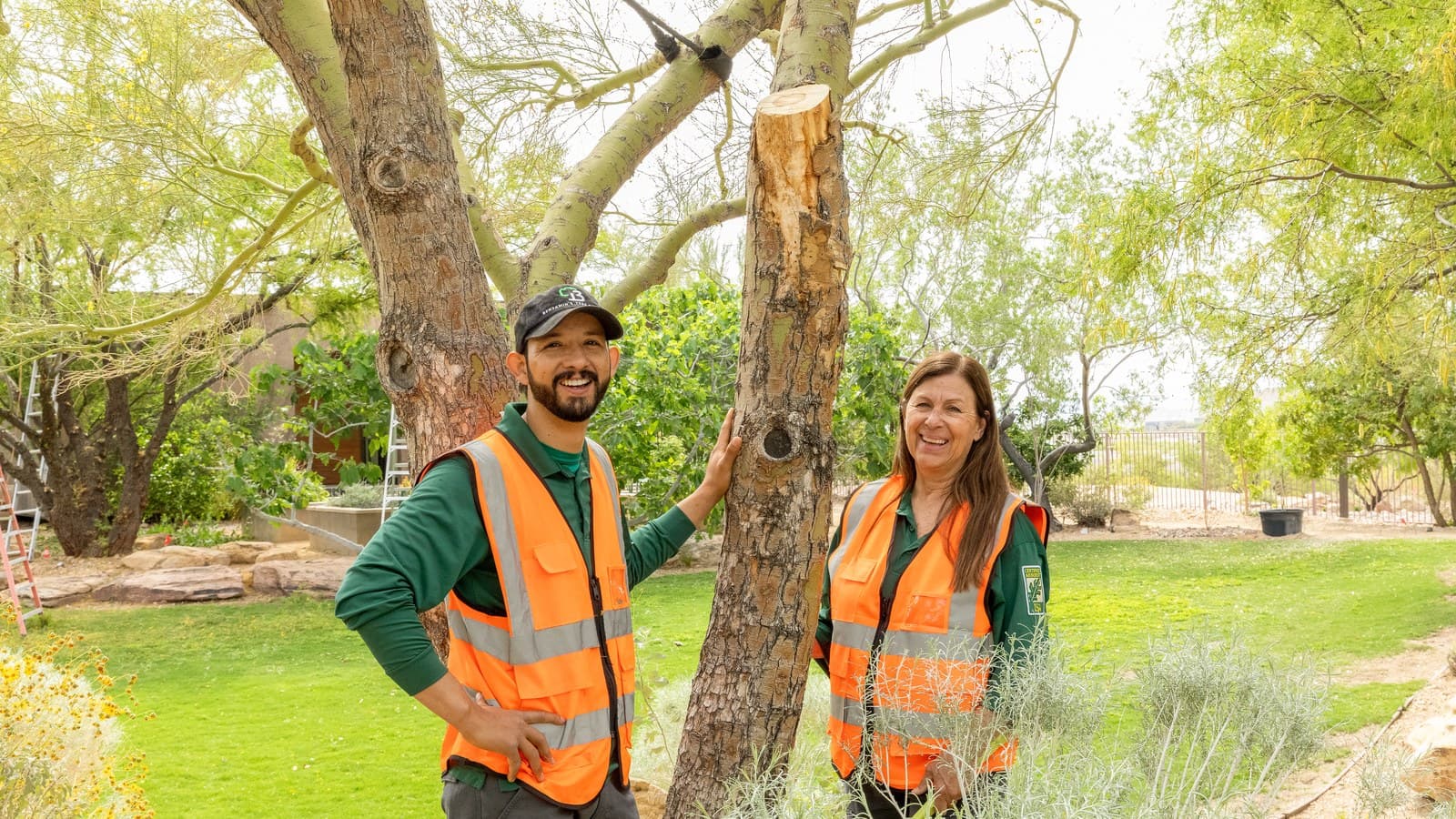
New-construction sites across the northwest valley are graded and compacted before landscaping ever goes in, and that compaction, combined with the shallow caliche hardpan common throughout Clark County, limits how deep a young tree's root system can establish. The Nevada Division of Forestry's guide to selecting and maintaining trees in desert landscapes covers how compacted, caliche-heavy soil pushes root growth sideways instead of down, which is exactly the pattern we see in Centennial Hills front yards where a tree was planted into a narrow, machine-dug hole surrounded by compacted fill.
A tree with a restricted root plate is more likely to lean, especially in its first five to ten years before roots have had time to spread. The International Society of Arboriculture's guide to planting a new tree recommends loosening soil well beyond the planting hole itself, a step that's easy to skip on a production build where dozens of trees go in on a tight schedule. A builder-planted tree that's never straightened out, or still needs staking years later, usually needs an arborist's evaluation, not just a tighter stake.
When a Young Tree Problem Becomes an Emergency
Young trees fail differently than old ones, and that catches some Centennial Hills homeowners off guard. A mature, well-established tree usually gives warning signs over months or years before a real failure. A young palo verde or acacia with a poor branch structure and a restricted root plate can fail suddenly in a single monsoon wind event, with little advance warning beyond a slight lean that seemed minor the week before.
A leaning young tree after a storm, a split branch union, or a Mexican fan palm with a heavy, untrimmed frond skirt near a walkway all warrant a same-day look rather than a routine appointment. Our emergency tree service responds throughout Centennial Hills and the broader northwest valley, and our guide on tree removal permits in Clark County is worth a read if a young tree's damage turns out to be severe enough that removal, rather than repair, is the right call.
Tree Service Across the Las Vegas Valley
The same pattern that shows up in Centennial Hills, young trees needing structural training, HOA documentation requirements, and wind exposure along open corridors, plays out differently elsewhere in the valley. Older, established canopies in Summerlin and parts of Henderson are more often managing decades of growth, while North Las Vegas shares Centennial Hills' newer-construction growing pains; our guide on why North Las Vegas desert trees need extra attention covers a lot of the same early-life care questions from a slightly different angle.
Wherever a Centennial Hills property sits, from the Elkhorn and Farm Road neighborhoods to the US-95 frontage communities, the same standard applies: an on-site look from an ISA Certified Arborist is the only reliable way to tell whether a young tree needs a light structural trim now or is already headed toward a bigger problem.
Frequently Asked Questions
Do I need HOA approval to remove a tree in Centennial Hills?
In most Centennial Hills communities, yes. HOA architectural review typically applies to tree removal and significant crown reduction, even for trees that came with the home at closing. Check your community's CC&Rs or contact the HOA office before scheduling removal work.
Why do so many Centennial Hills trees need structural pruning while they're still young?
Builder landscaping often skips the early training pruning that prevents weak branch unions from forming. Because palo verde, mesquite, and acacia are fast-growing species, a few years without a structural trim can lock in a weak union that's harder and more expensive to correct later.
Is a leaning young tree covered under a builder warranty?
It depends on your builder's specific warranty terms and how long ago the home was completed. A tree that's leaning or declining within the first year or two after installation is sometimes covered, which is worth checking before paying out of pocket for removal or replacement.
What trees are most common in Centennial Hills, and do they need different care?
Palo verde, mesquite, acacia varieties, fruitless olive, African sumac, and Mexican fan palm are the most common species. Each has a different growth habit and risk profile, so a single generic maintenance plan doesn't serve all of them equally well.
Does Benjamin's Tree Service work directly with Centennial Hills HOAs?
Yes. Our HOA and property manager tree care service handles common-area maintenance and the photo documentation that HOA boards and management companies typically require for approval and liability records.
Get a Free Tree Service Estimate in Centennial Hills
Tree service in Centennial Hills, NV comes down to catching structural issues while a tree is still young and easy to correct, not waiting until a weak branch union fails in a summer wind event. An on-site visit from an ISA Certified Arborist is the only way to get that timing right.
Call 725-227-6160 or request a free estimate online. Benjamin's Tree Service has provided licensed, insured tree care throughout Centennial Hills, Las Vegas, and the surrounding northwest valley since 2001, backed by ISA-certified expertise and 5-star Google reviews.
Benjamin's Tree Service
ISA Certified Arborists serving Las Vegas & the surrounding areas since 2001.
Related Reading
Local Guides
Tree Service in Spring Valley, NV: A Homeowner's Guide
Tree service in Spring Valley, NV means caliche soil, tight lots, and HOA rules. See what local home…
9 min read
Local Guides
Tree Service in Green Valley, NV: A Homeowner's Guide
Find trusted tree service in Green Valley, NV — trimming, removal, and storm prep from ISA Certified…
9 min read
Local Guides
Tree Service in Summerlin NV — Your Homeowner's Guide
Explore tree service in Summerlin NV with this homeowner's guide to trimming, removal, storm prep, a…
7 min read