
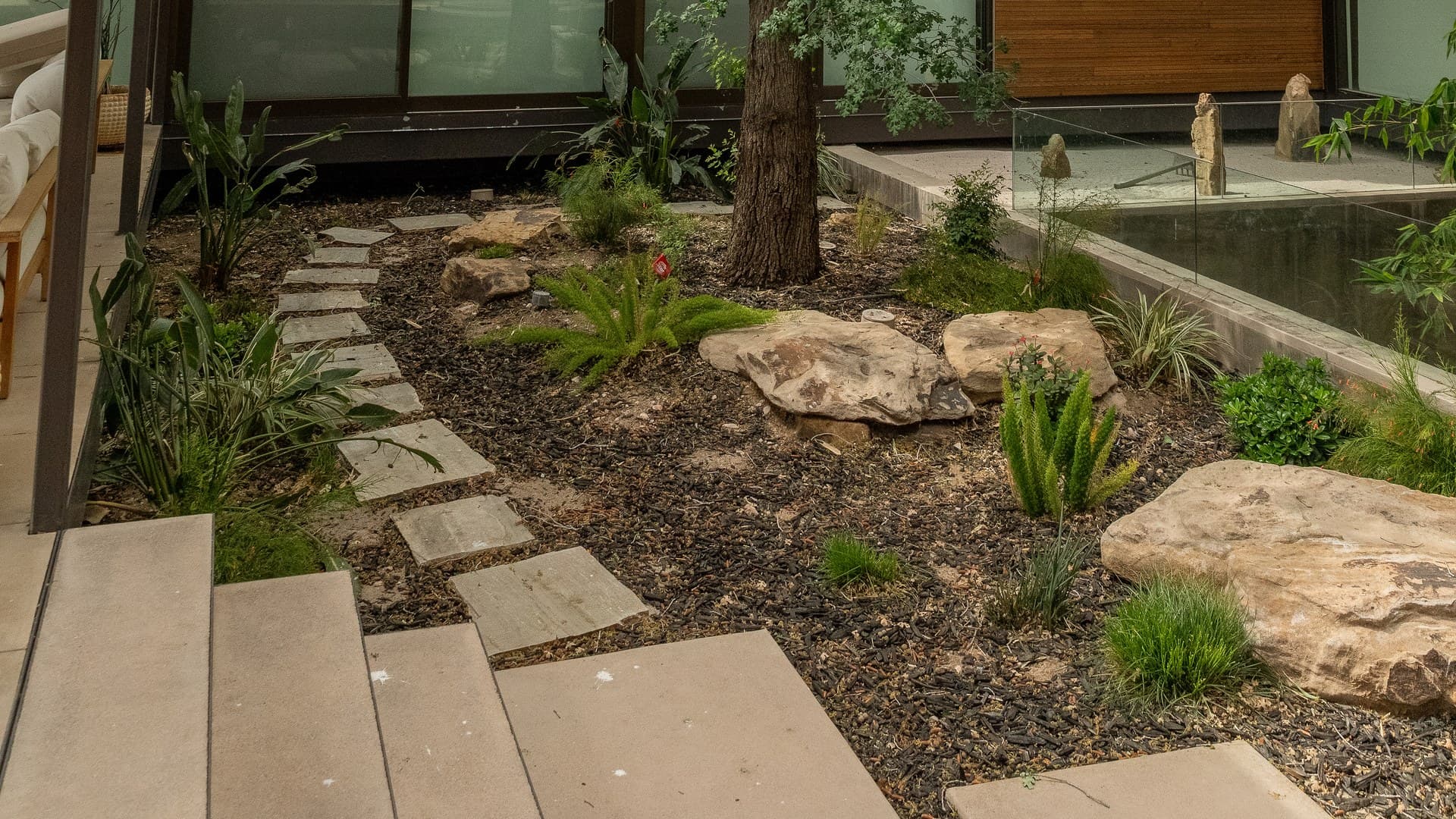
Tree service in Spring Valley, NV means caliche soil, tight lots, and HOA rules. See what local homeowners should know before hiring an arborist.
Tree service in Spring Valley, NV comes with its own set of quirks: a dense mix of mature 1980s-and-90s subdivisions next to newer infill construction, caliche hardpan a foot or two below the surface, and lots that sit close enough together that a bad limb can reach the neighbor's roof as easily as your own. Benjamin's Tree Service has worked on the west side of the Las Vegas Valley since 2001, and our ISA Certified Arborist team (ISA Cert. WE-15785A) knows Spring Valley's older canopy and its HOA rulebooks about as well as anyone in town.
This guide covers what actually matters if you own a tree in Spring Valley: which species show up most, what makes access harder here than in newer master-planned communities, how HOAs and property managers fit into the picture, and when a root or storm problem crosses the line from routine to urgent.
Quick Summary
- Spring Valley's older subdivisions (Peccole Ranch, The Lakes, Spanish Trail) carry decades-old mesquites, olives, and ash that need more structural attention than younger plantings in Desert Shores or Westland
- Caliche hardpan a foot or two down forces roots sideways, which is why so many Spring Valley root problems show up under sidewalks, driveways, and pool decks instead of straight down
- Compact lot lines mean trees here more often crowd block walls, patio covers, and neighboring rooflines than in newer, wider-lot developments
- HOAs and property managers across Spring Valley commonly require documentation and pre-approval before any tree removal or major trim
- Willow acacia and untrimmed palms are the two biggest monsoon-season liability risks in the area
- Benjamin's Tree Service has served Spring Valley homeowners and HOAs since 2001, ISA Certified (WE-15785A), 5-star Google rated
Table of Contents
- Why tree service in Spring Valley, NV looks different
- Common trees across Spring Valley's neighborhoods
- Tight lots, block walls, and access challenges
- Working with HOAs, apartment communities, and commercial properties
- Root intrusion near sidewalks, driveways, and pool decks
- When a tree problem becomes an emergency
- Tree service across the Las Vegas Valley
- Frequently asked questions
Why Tree Service in Spring Valley, NV Looks Different
Spring Valley isn't one uniform neighborhood — it's a patchwork of eras. Established sections like Peccole Ranch and Spanish Trail were built out with mature landscaping decades ago, so their olives, ash, and mesquites have had 20 to 30 years to grow into the kind of size and root spread that needs an arborist's judgment, not just a pole saw. Newer pockets around Desert Shores and Westland have younger trees that are still being trained into their mature shape, where an early, correctly placed trim now prevents an expensive structural correction later.
That mix means a one-size-fits-all trimming schedule doesn't work well here. A 25-year-old mesquite in an older section of the neighborhood and a five-year-old African sumac a few blocks away are at completely different points in their life cycle, and treating them the same way either wastes money or leaves a real hazard unaddressed.
Common Trees Across Spring Valley's Neighborhoods
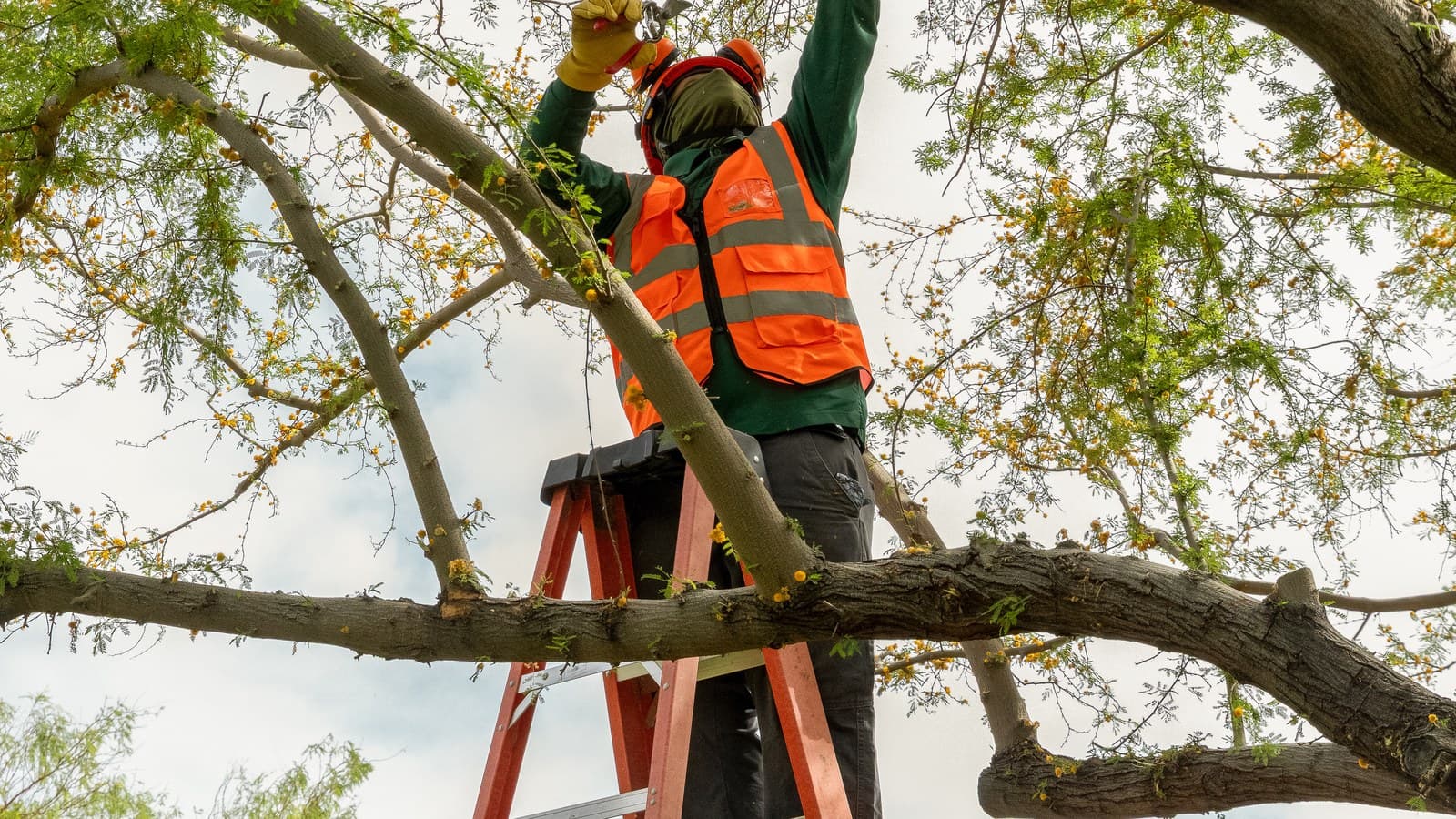
Spring Valley's tree mix leans heavily on desert-adapted species alongside a handful of thirstier ornamentals that were popular with builders in past decades. On a typical week, our crews are working on:
- Fruitless olive — extremely common in Spring Valley HOA landscaping and front yards; needs regular thinning to manage the dense canopy and reduce wind resistance
- Palo verde — a low-water desert native with a naturally sparse, graceful form, but branches break easily in high wind if the structure hasn't been maintained
- Mesquite — a vigorous grower found throughout older sections of the neighborhood; needs consistent thinning to avoid the dense, whip-like regrowth that follows an improper cut
- African sumac — widely planted in tract-home developments; produces heavy seasonal leaf and berry debris that clogs gutters and drains if left unmanaged
- Queen palm and Mexican fan palm — common along Spring Valley's older streetscapes; need attention more often than shade trees, priced by height and frond count rather than trunk size
- Willow acacia — fast-growing and prone to limb failure in monsoon winds without regular structural trimming
Because so much of Spring Valley's canopy dates back to the 1980s and 90s, a lot of what we see is corrective work: bringing a tree's structure back into shape after years without a professional trim, not a quick seasonal touch-up.
Tight Lots, Block Walls, and Access Challenges
One thing that sets Spring Valley apart from newer, wider-lot Las Vegas Valley communities is how close everything sits together. Block walls run right along property lines, patio covers extend close to the house, and side-yard gates are often too narrow for a chipper or truck, so crews carry brush out by hand instead. Tree removal on a Spring Valley lot regularly means protecting a neighbor's fence, a pool enclosure, or a shared wall as much as it means taking the tree down safely.
That same tight spacing is also why trimming and pruning tends to happen more frequently here than in newer subdivisions with bigger setbacks. A canopy that's allowed to grow unchecked in Spring Valley reaches a block wall, a rooftop, or a neighboring yard faster than it would on a larger lot, which turns a routine trim into a boundary-line issue if it's put off too long.
Stump grinding after a removal is worth planning for up front in these tighter yards too — a stump left behind on a small residential lot eats into usable space that homeowners here often can't spare.
Working with HOAs, Apartment Communities, and Commercial Properties
A large share of Spring Valley sits under HOA governance, and the community also has a substantial mix of apartment complexes and commercial corridors along Sahara, Flamingo, and Rainbow. Each of those property types comes with its own version of the same rule: get sign-off before major tree work happens.
Homeowners inside an HOA typically need architectural review approval before removing a tree or doing significant crown reduction, even on their own lot — our guide to HOA tree removal rules in Las Vegas walks through what that documentation process usually looks like. Property managers overseeing apartment communities or retail centers face a similar need for photo documentation and a paper trail, both for the HOA or ownership group and for liability purposes if a tree ever causes damage. Benjamin's commercial tree service and HOA and property manager tree care both build that documentation into the estimate from the start, so approval isn't a separate scramble after the fact.
Root Intrusion Near Sidewalks, Driveways, and Pool Decks
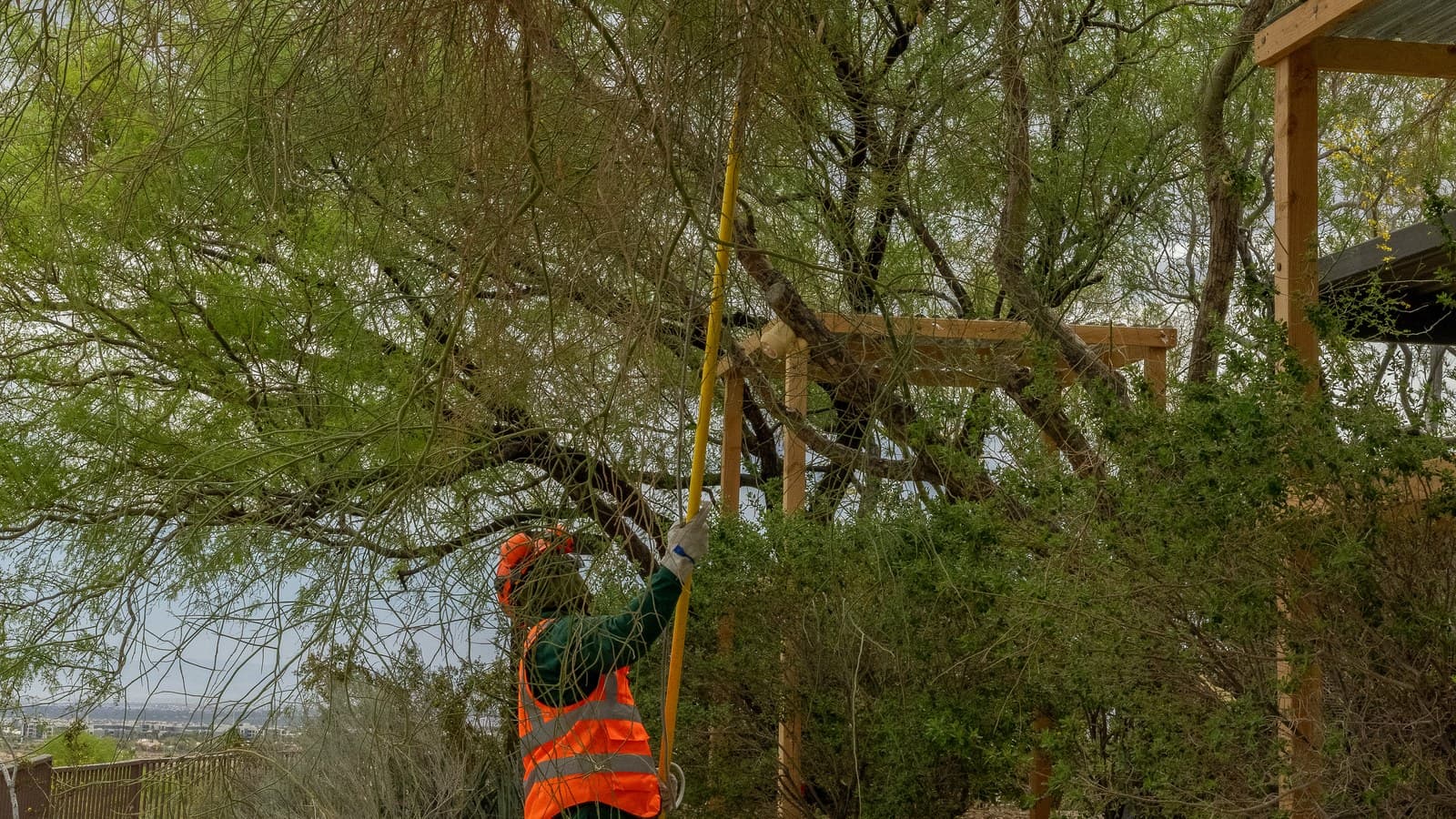
Spring Valley sits on the same caliche hardpan that runs under much of the west side of the valley. According to the Nevada Division of Forestry's guide to desert landscape trees, caliche layers a foot or two below the surface stop a taproot cold and push root growth sideways instead — straight toward the loosened, irrigated soil under a sidewalk, driveway, or pool deck.
That lateral root behavior is a bigger deal on Spring Valley's tighter lots than it would be somewhere with more open yard space. A mesquite or olive planted a reasonable distance from a driveway can still end up lifting the concrete within a decade or two, since the root has nowhere else productive to go once it hits the hardpan. Our tree roots near foundations guide covers the warning signs in more detail, and a tree assessment report from an ISA Certified Arborist can flag which specific roots pose a real risk to hardscape versus which are simply following a normal, harmless path.
When a Tree Problem Becomes an Emergency
Spring Valley's older, larger canopy trees are more exposed to monsoon-season wind damage than younger plantings, especially where willow acacia or an over-mature palo verde hasn't been trimmed on a regular schedule. A cracked limb hanging over a walkway, a leaning trunk after a storm, or a palm frond skirt that's become a fire hazard all warrant a same-day call rather than waiting for a routine appointment.
Our emergency tree service responds throughout Spring Valley and the surrounding west side, and our guide on what to do after a tree falls covers the first steps to take while you're waiting for a crew, including what to document for insurance before anything gets moved.
Tree Service Across the Las Vegas Valley
The same principles that apply in Spring Valley — caliche-driven root behavior, HOA documentation, and the value of a trim schedule that matches a tree's actual age — hold true across the rest of the Las Vegas Valley. Older, established canopies in Summerlin and parts of Henderson face similar structural-correction needs, while newer developments in North Las Vegas and Green Valley tend to need the lighter, early-training trims that keep a young tree from needing that correction later.
Wherever your property sits in the valley, the same standard applies: an on-site look from an ISA Certified Arborist is the only way to price the work accurately, since lot size, access, and species vary so much block to block.
Frequently Asked Questions
Do I need HOA approval before trimming a tree in Spring Valley?
It depends on the scope of work and your specific HOA's rules, but many Spring Valley HOAs require approval for tree removal and significant crown reduction, even on a homeowner's own lot. Routine trimming that doesn't change the tree's overall shape is less often restricted, but it's worth checking your CC&Rs before scheduling major work.
Why do so many Spring Valley yards have root problems near the driveway or pool deck?
Caliche hardpan below the surface pushes roots to grow sideways instead of down, and they tend to follow the loosened, irrigated soil under hardscape. Older trees on tighter Spring Valley lots are more likely to have a driveway, sidewalk, or pool deck within reach of that lateral root growth.
What trees are most common in Spring Valley, and do they need different care?
Fruitless olive, palo verde, mesquite, African sumac, queen and Mexican fan palms, and willow acacia are the most common species. Each has a different growth habit and risk profile, from the palo verde's storm-prone branches to the palm's height-based trimming schedule, so a single generic maintenance plan usually doesn't serve all of them well.
How often should trees in Spring Valley be trimmed?
Most desert-adapted shade trees do well on a trim every one to three years, while palms typically need attention more often. Older, established trees that have gone years without a professional trim usually need a more involved first visit to correct structural issues before settling into a lighter routine schedule.
Does Benjamin's Tree Service work with HOAs and property managers directly?
Yes. Our HOA and property manager tree care and commercial tree service both include the photo documentation and reporting that HOA boards, management companies, and ownership groups typically need for approval and liability records.
Get a Free Tree Service Estimate in Spring Valley
Tree service in Spring Valley, NV comes down to details a phone call can't fully capture — a tree's age, its species, how close it sits to a wall or a pool deck, and what your HOA or property manager needs documented before work begins. An on-site visit from an ISA Certified Arborist is the only way to get all of that right.
Call 725-227-6160 or request a free estimate online. Benjamin's Tree Service has provided licensed, insured tree care throughout Spring Valley, Las Vegas, Henderson, and Summerlin since 2001, backed by ISA-certified expertise and 5-star Google reviews.
Benjamin's Tree Service
ISA Certified Arborists serving Las Vegas & the surrounding areas since 2001.
Related Reading
Local Guides
Tree Service in Green Valley, NV: A Homeowner's Guide
Find trusted tree service in Green Valley, NV — trimming, removal, and storm prep from ISA Certified…
9 min read
Local Guides
Tree Service in Summerlin NV — Your Homeowner's Guide
Explore tree service in Summerlin NV with this homeowner's guide to trimming, removal, storm prep, a…
7 min read
Local Guides
North Las Vegas Tree Care: Why Desert Trees Need Extra Help
North Las Vegas desert trees face unique challenges from extreme heat, alkaline soil, and low rainfa…
8 min read