
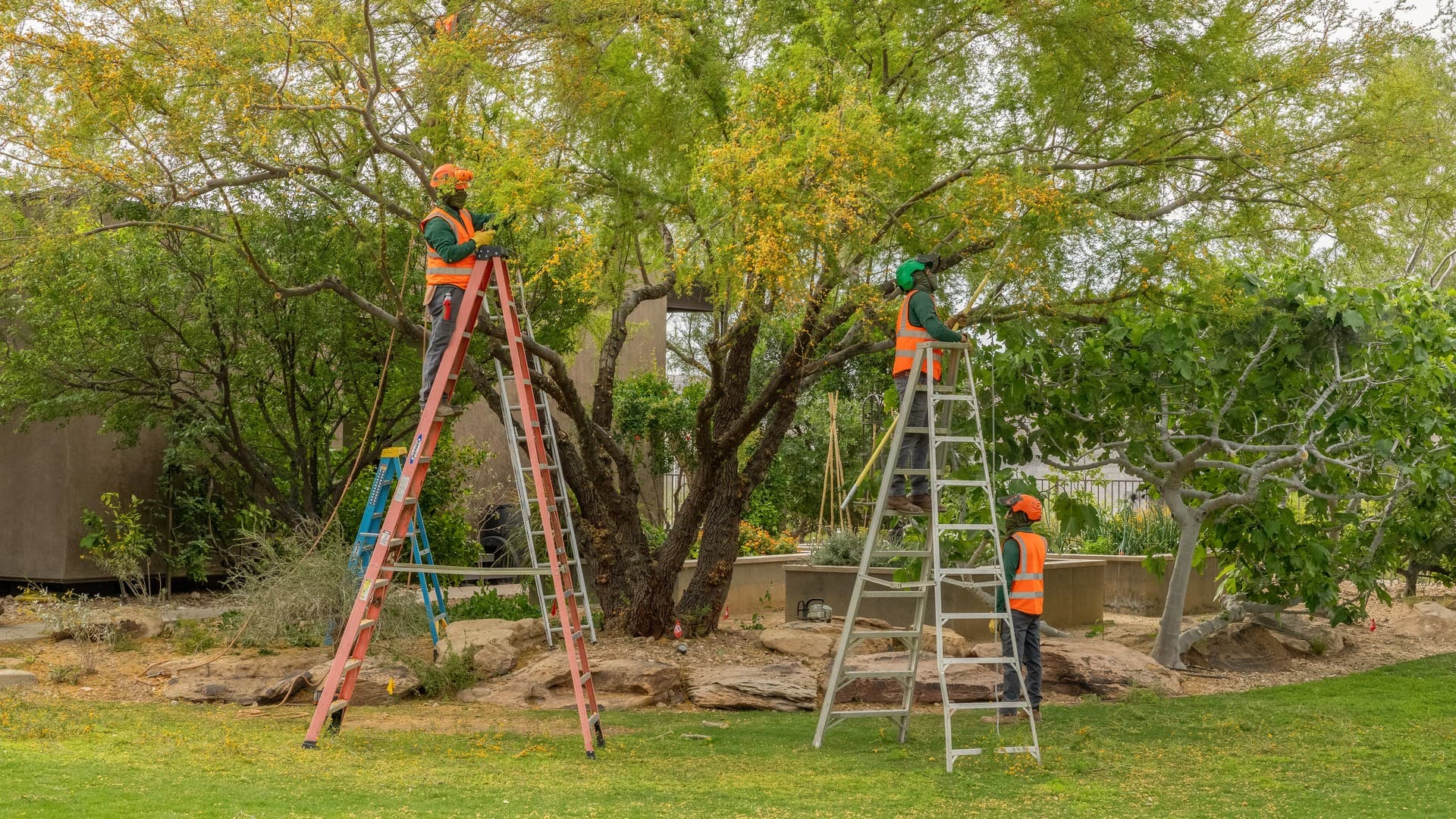
Aphids, spider mites, and palo verde root borers are common tree pests in Las Vegas. Learn the warning signs and when to call a certified arborist.
Not every problem in a Las Vegas Valley tree comes from heat or bad watering. Common tree pests in Las Vegas — aphids, spider mites, scale insects, and the palo verde root borer among them — show up every year on properties across the Valley, and most homeowners don't recognize the early signs until a tree is already struggling. At Benjamin's Tree Service, our ISA Certified Arborists (ISA Cert. WE-15785A) have been diagnosing and treating pest damage on Las Vegas trees since 2001, and the pattern is consistent: the earlier a pest problem is caught, the easier it is to fix.
Quick Summary
- Aphids and scale insects leave sticky honeydew and black sooty mold on leaves — usually a sign the tree is already stressed
- Spider mites thrive in hot, dry desert conditions and cause a fine stippled or bronze look on foliage, often before webbing is visible
- The palo verde root borer feeds on roots for years before an adult beetle is ever seen above ground, and can go unnoticed until a tree suddenly declines
- Pest problems on Las Vegas trees are frequently a symptom of an underlying issue: drought stress, over-pruning, or poor soil
- Integrated pest management favors treating the underlying tree health issue first, not reaching for a pesticide as the default first step
- Benjamin's Tree Service has diagnosed pest and health issues on Las Vegas Valley trees since 2001, ISA Certified (WE-15785A)
Table of Contents
- Why common tree pests in Las Vegas look different from other climates
- Aphids and scale insects: sticky leaves and sooty mold
- Spider mites: the desert's most common tree pest
- Palo verde root borers: the pest you usually can't see
- When pest damage signals a bigger health problem
- DIY treatment vs. calling a certified arborist
- Tree pest prevention across the Las Vegas Valley
- Frequently asked questions
Why Common Tree Pests in Las Vegas Look Different From Other Climates
Homeowners who moved to Nevada from a wetter climate often bring pest expectations that don't quite apply here. Fungal diseases that thrive in humidity are much less common in the Mojave Desert. What replaces them is a smaller set of insects that are specifically suited to heat, low humidity, and drought-stressed trees — and a soil environment, caliche included, that puts root systems under pressure most trees never face in other parts of the country.
That combination matters because in Las Vegas, a pest problem is rarely the whole story. Insects tend to target trees that are already weakened by heat stress, underwatering, overwatering, or improper pruning. Seeing pest damage on a tree is often the first visible clue that something else needs attention, not just a signal to spray.
Aphids and Scale Insects: Sticky Leaves and Sooty Mold
Aphids and scale insects are the pests we get the most calls about across the Valley, usually because homeowners notice the mess before they notice the bug. Both insects feed on plant sap and excrete a sugary substance called honeydew, which coats leaves, patio furniture, and pavement below the canopy. A black fungus called sooty mold grows on that honeydew, giving affected leaves a dirty, blackened look that many homeowners mistake for a disease.
- Aphids — small, soft-bodied insects that cluster on new growth and the undersides of leaves, most active in spring and again in fall
- Scale insects — tiny, shell-like bumps on stems and branches that barely move and are easy to miss until a heavy infestation builds up
- Sooty mold — the black, sticky coating that grows on leftover honeydew; it rarely kills a tree outright but blocks light from reaching the leaf surface
Both pests are usually manageable once identified, but treatment approach matters. Overusing broad pesticides can also kill the natural predators, like ladybugs and lacewings, that keep aphid populations in check on their own.
Spider Mites: The Desert's Most Common Tree Pest
Spider mites are arguably the single most common tree pest in the Las Vegas Valley, precisely because they favor the conditions we have in abundance: heat, dust, and low humidity. Unlike most insects, spider mite populations tend to explode during the hottest, driest stretches of summer rather than slowing down.
The early signs are easy to miss. Affected leaves develop a fine, stippled, almost sandpapery texture, sometimes with a bronze or yellow cast, well before the fine webbing that gives spider mites their name becomes obvious. By the time webbing is visible on the undersides of leaves and between small branches, the infestation is usually well established.
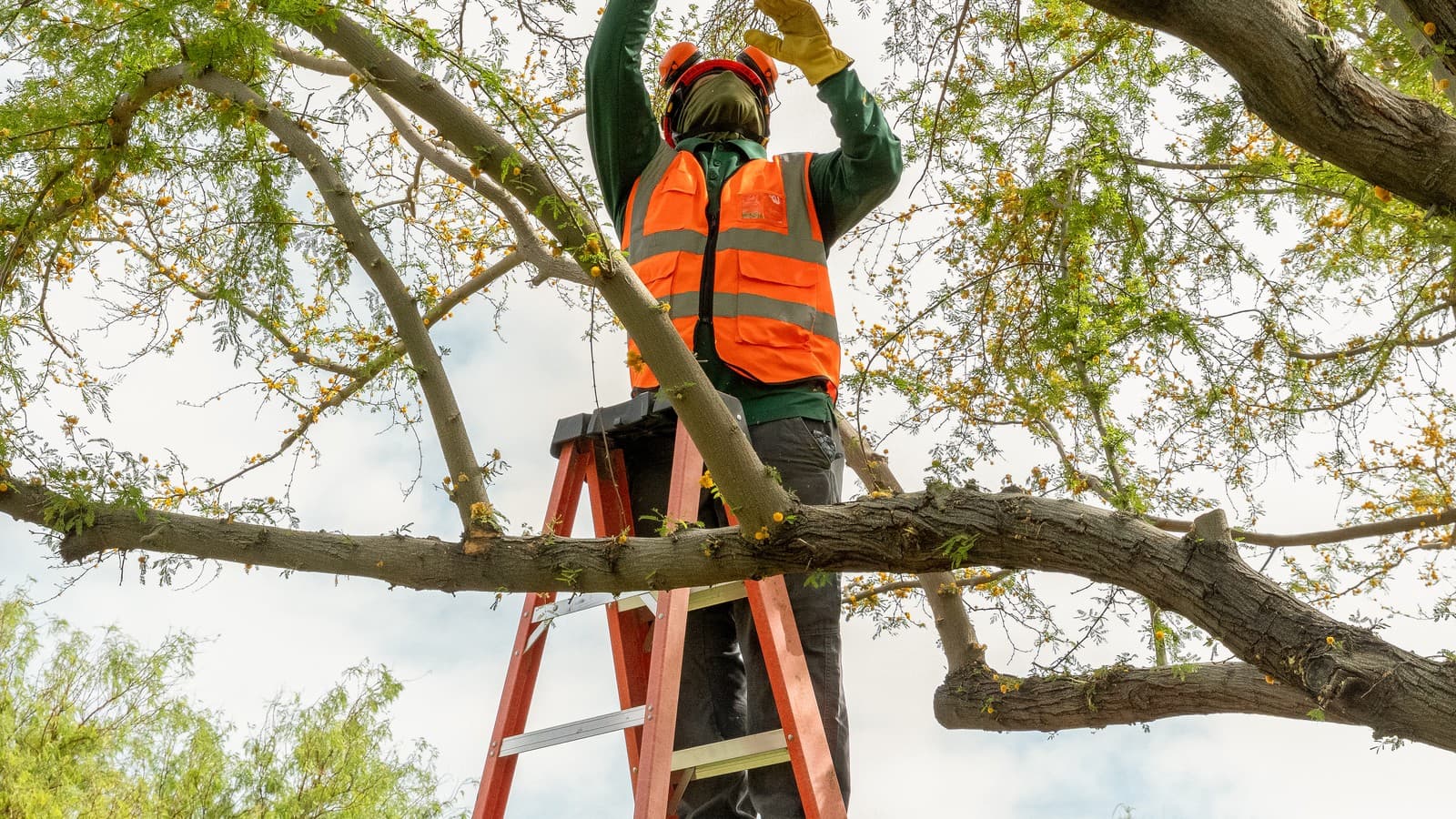
Dusty, water-stressed trees are far more vulnerable to spider mites than trees that are properly irrigated. Our guide on watering trees in the desert covers how to judge the right amount for your soil and tree size, and periodically rinsing dust off a tree's foliage with a hose can make a meaningful difference during peak mite season.
Palo Verde Root Borers: The Pest You Usually Can't See
The palo verde root borer is the pest that surprises the most homeowners, because the actual damage happens almost entirely out of sight. The larvae, thick white grubs that can grow several inches long, feed on tree roots for up to three years underground before pupating into the large, flying adult beetles some Valley residents spot around early summer. According to the University of Nevada Cooperative Extension, the grubs primarily target palo verde and mesquite trees, though they aren't limited to those species.
By the time a homeowner notices anything wrong above ground, root damage may already be extensive. Warning signs include a tree that seems to decline for no obvious reason, unusual leaning, or exit holes roughly the size of a quarter near the base of the trunk where adult beetles have emerged. Because the damage is underground and progressive, it's one of the harder pest issues to diagnose without a trained eye.
- What to look for: gradual canopy thinning, a tree that leans more than it used to, or round exit holes at the soil line
- Who's most at risk: palo verde and mesquite trees that are already stressed from drought or poor root conditions
- Why it's hard to catch early: the larvae feed underground for years before any adult beetle is ever seen above ground
A tree assessment report from a certified arborist is the most reliable way to evaluate root-zone health on a palo verde or mesquite that looks like it's struggling, since root borer damage isn't something you can fully diagnose by looking at the canopy alone.
When Pest Damage Signals a Bigger Health Problem
Pest activity on a Las Vegas tree is frequently a downstream effect of a stress the tree was already dealing with, not an isolated problem. Trees that are underwatered, overwatered, recently over-pruned, or growing in compacted or poor soil are consistently more attractive to pests than a healthy, well-established tree in the same yard.
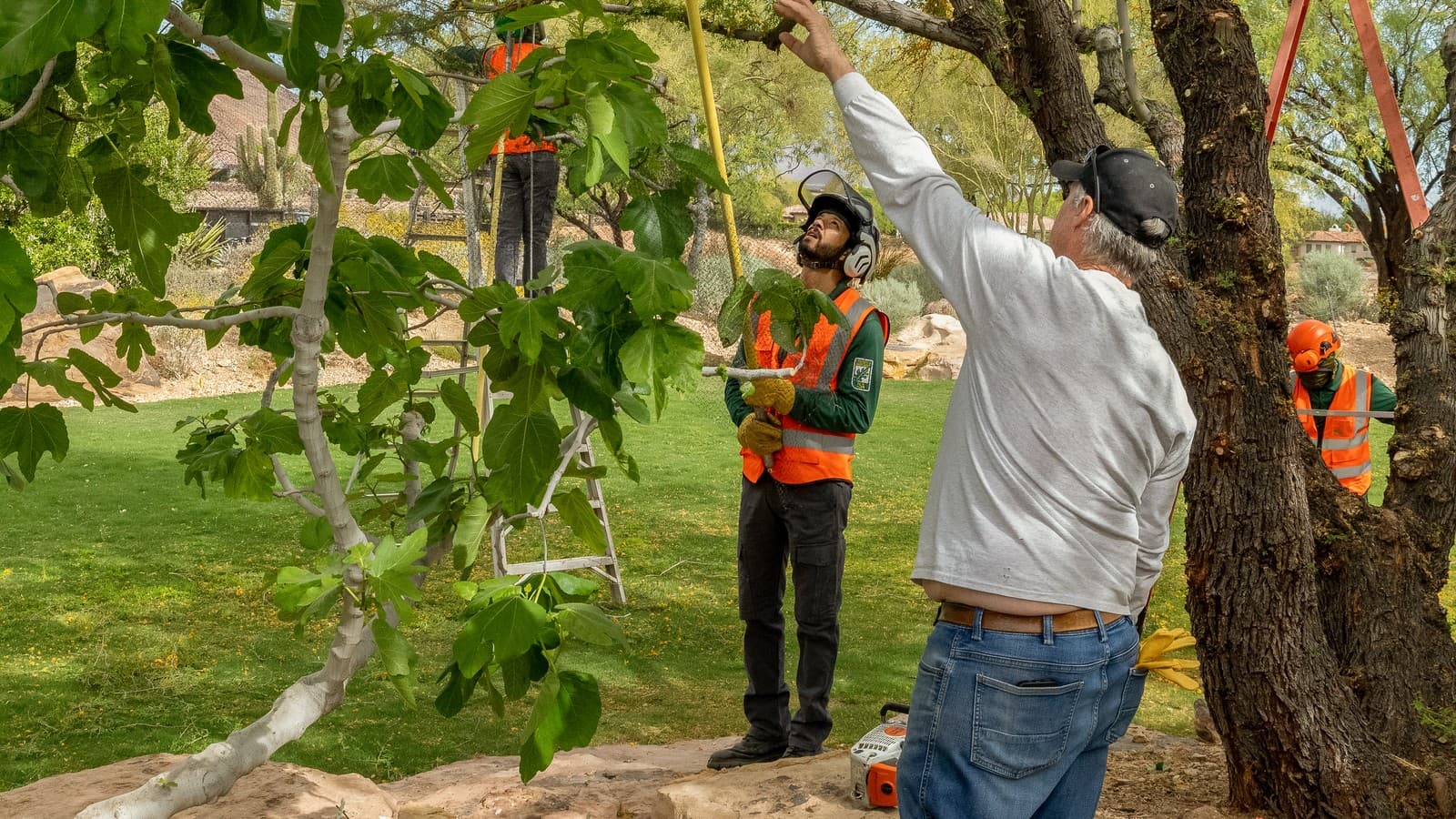
This is why we rarely treat a pest problem as a standalone issue. If a tree has visible pest damage, we also look at watering history, recent pruning, and whether the roots have access to enough soil volume to support the canopy above. Our guide on seven signs a Las Vegas tree is diseased or dying covers the broader set of warning signs worth tracking alongside pest activity, and deep root feeding is often part of the recovery plan for a tree that's been fighting both a pest issue and a root-zone deficiency at the same time. A tree that was recently topped or aggressively pruned is also more susceptible — our piece on why tree topping hurts Las Vegas trees explains how that kind of damage weakens a tree's natural defenses.
DIY Treatment vs. Calling a Certified Arborist
Not every pest sighting requires a service call. A light aphid cluster on a few branch tips, caught early, often responds to a strong spray of water from a hose or a targeted treatment on a small ornamental. The National Pesticide Information Center recommends an integrated pest management approach that starts with identifying the actual pest and addressing the conditions that invited it, rather than defaulting straight to a broad pesticide application.
That said, a few situations are worth a professional call rather than a DIY attempt:
- A large shade tree with heavy, spreading infestation rather than a localized cluster
- Any suspected root borer activity on a palo verde or mesquite, since root damage can't be assessed from the ground
- A tree that's declining and you can't tell whether pests, watering, or root health is the primary cause
- Anywhere a misapplied treatment could affect a large area of landscaping, pets, or a tree near a structure
Our tree service plan builds pest monitoring into regular seasonal visits, so issues like aphid buildup or early mite activity get caught before they require a bigger intervention. For a tree that's declined significantly or become structurally unsafe, our tree removal team can also evaluate whether the tree is a safe candidate for treatment and recovery in the first place.
Tree Pest Prevention Across the Las Vegas Valley
Pest pressure isn't identical everywhere in the Valley. Older, established landscapes in Summerlin tend to see more scale and aphid activity on ornamental trees planted decades ago, while newer developments in Henderson and Green Valley more often deal with spider mites on young trees whose irrigation systems haven't caught up to a growing root zone. In North Las Vegas, where rockier soil and drainage issues are common, root-stressed palo verdes and mesquites are more likely candidates for root borer damage.
Across every part of the Las Vegas Valley, the same underlying principle holds: a well-watered, properly pruned tree with healthy root access is far less attractive to pests than one that's already struggling. Preventing pest problems starts with tree health, long before a pest ever shows up.
Frequently Asked Questions
What are the most common tree pests in Las Vegas?
Aphids, scale insects, and spider mites are the pests we see most often across the Valley, along with palo verde root borers on palo verde and mesquite trees. Spider mites in particular thrive in our hot, dry summers.
Are palo verde root borers dangerous to my tree?
They can be. The larvae feed on roots for up to three years before becoming adult beetles, and by the time damage is visible above ground, a tree may already be significantly weakened. A tree assessment is the most reliable way to check root-zone health.
Can I treat tree pests myself?
For small, localized problems like a few aphid clusters, yes — a strong water spray or a targeted treatment is often enough. Larger infestations, suspected root borer activity, or a declining tree with an unclear cause are better handled by a certified arborist.
Do healthy trees get pests too?
Occasionally, but pest problems are far more common on trees already dealing with drought stress, poor pruning history, or root-zone issues. Improving overall tree health is one of the most effective long-term pest prevention strategies.
How can I tell if pest damage is from spider mites or something else?
Spider mite damage typically starts as a fine, stippled or bronze discoloration on leaves, later followed by fine webbing on the undersides of leaves and between small branches. If you're not sure what you're looking at, a photo sent to a certified arborist or an in-person assessment can usually confirm it quickly.
Get Tree Pest Issues Diagnosed in Las Vegas Today
Identifying common tree pests in Las Vegas correctly is the difference between a quick fix and a tree that keeps declining for reasons nobody addressed. Benjamin's Tree Service has been diagnosing and treating pest and health issues on Valley trees since 2001, licensed, insured, ISA Certified (WE-15785A), and rated 5 stars on Google.
Call us at 725-227-6160 or visit benjaminstreeservice.com/contact to schedule a tree health assessment before a pest problem becomes a bigger one.
Benjamin's Tree Service
ISA Certified Arborists serving Las Vegas & the surrounding areas since 2001.
Related Reading
Tree Care Tips
Dead or Dormant Tree in Las Vegas? 4 Easy Ways to Tell
Not sure if you have a dead or dormant tree in Las Vegas? Use the scratch test, bud check, and flex …
9 min read
Tree Care Tips
Palo Verde Tree Care in Las Vegas: A Seasonal Guide
Learn palo verde tree care in Las Vegas, including watering, pruning, monsoon safety, warning signs,…
9 min read
Tree Care Tips
Deep Root Feeding for Las Vegas Trees: A Complete Guide
Learn how deep root feeding helps Las Vegas trees overcome caliche soil, extreme heat, and drought. …
8 min read