Mulberry tree removal in Las Vegas: when to remove, prune or keep a mulberry, what roots and pollen mean, and what to ask first. Free estimates.
Mulberry tree removal in Las Vegas is usually a question about a fast-growing shade tree that has outgrown its spot: shallow roots near pavement, heavy pollen or fruit mess, or a limb structure that worries you. Removal is not automatically the answer. An on-site look from our tree removal team will tell you whether to remove, prune or keep the tree.
Quick Summary
University of California IPM describes mulberries as fast-growing trees that reach 20 to 60 feet, with shallow roots that spread near the soil surface, so they need room away from pavement and buildings. University of Nevada, Reno Extension's 2000 publication discusses allergy problems from fruitless mulberries in southern Nevada, and says male trees were often planted because they do not drop messy fruit. None of that means every mulberry has to come out. The ISA recommends an arborist when a tree is dead, dying or an unacceptable risk, or causes a problem pruning cannot fix. Everything else starts with an inspection.
Key takeaways
- People remove mulberries for different reasons: risk, roots near paving, pollen or fruit, or a crowded yard. Each points to a different answer.
- Shallow roots are a known trait of the species. A lifted driveway slab does not prove the tree must go, or that it can stay.
- Structural defects call for an assessment by an arborist. Removal is one option when the assessed risk is unacceptable.
- A written, on-site assessment is the way to separate a tree that can be managed from one that cannot.
- Ask about permits and HOA rules before the crew arrives, and ask what the quote includes for the stump and cleanup.
Why do Las Vegas homeowners remove mulberry trees?
Homeowners remove mulberries because of roots, mess and pollen, or because the tree has outgrown the yard.
- Size. University of California IPM says most mulberries grow from 20 to 60 feet tall and grow faster with adequate moisture and fertilizer.
- Roots. The same source says shallow roots grow extensively near the soil surface around the trunk, which makes it hard to garden under the tree, and recommends planting mulberries away from pavement or buildings.
- Fruit. Fruiting trees can stain walkways and get tracked indoors on carpets, according to UC IPM. Fruitless varieties are preferred for that reason.
- Pollen. University of Nevada, Reno Extension says fruitless mulberries have been known for years to cause allergy problems in southern Nevada. It explains that male trees were often chosen because they do not produce messy fruit, even though their pollen can be more of a problem for allergy sufferers.
Fruit mess or pollen alone does not establish structural risk. Ask an arborist which management options fit your tree and yard.
When is mulberry tree removal the right choice?
Removal may be appropriate when a tree is dead, dying or presents an unacceptable risk. For size, clearance or damaged limbs, an arborist can assess whether pruning would address the concern.
The ISA says to hire an arborist when a tree is:
- Dead, dying or considered an unacceptable risk.
- Causing an obstruction that is impossible to correct through pruning.
- Crowding and harming other, more desirable trees.
- Located where new construction requires removal.
The ISA's tree risk guidance adds a practical checklist. Large dead branches, hanging or fallen branches, loose bark, cracks or splits in the trunk or branch unions, cavities or rotten wood, and mushrooms at the base are all reasons to have the tree examined. It also lists recent changes to the site, such as soil level changes or new paving, and a history of topping or heavy pruning.
Whether or not these signs are visible, an arborist can assess your concerns and discuss pruning or removal. Our guide to tree topping in Las Vegas explains why cutting a large tree back to stubs is not a safe shortcut.
What do mulberry roots mean for driveways, walls and pipes?
Mulberry roots grow shallow and wide, so they often meet paved areas. UC IPM describes the roots as extending widely near the soil surface and advises giving the tree room away from pavement and buildings.
Lifted paving or a cracked slab near a mulberry is worth looking into, but have an arborist weigh in before anyone cuts roots, because the ISA lists root loss among the defects that can weaken a tree. It also lists cracks or separations in the soil, especially around a leaning tree, as a possible sign of root failure.
- For pavement, read our guide to tree roots cracking a Las Vegas driveway.
- For walls and slabs, read tree roots near foundations in Las Vegas.
If the damage is already done and the tree is mature, an arborist can tell you whether the tree can be managed or whether removal is the safer way to protect the structure.
What does a professional check before removing a mulberry?
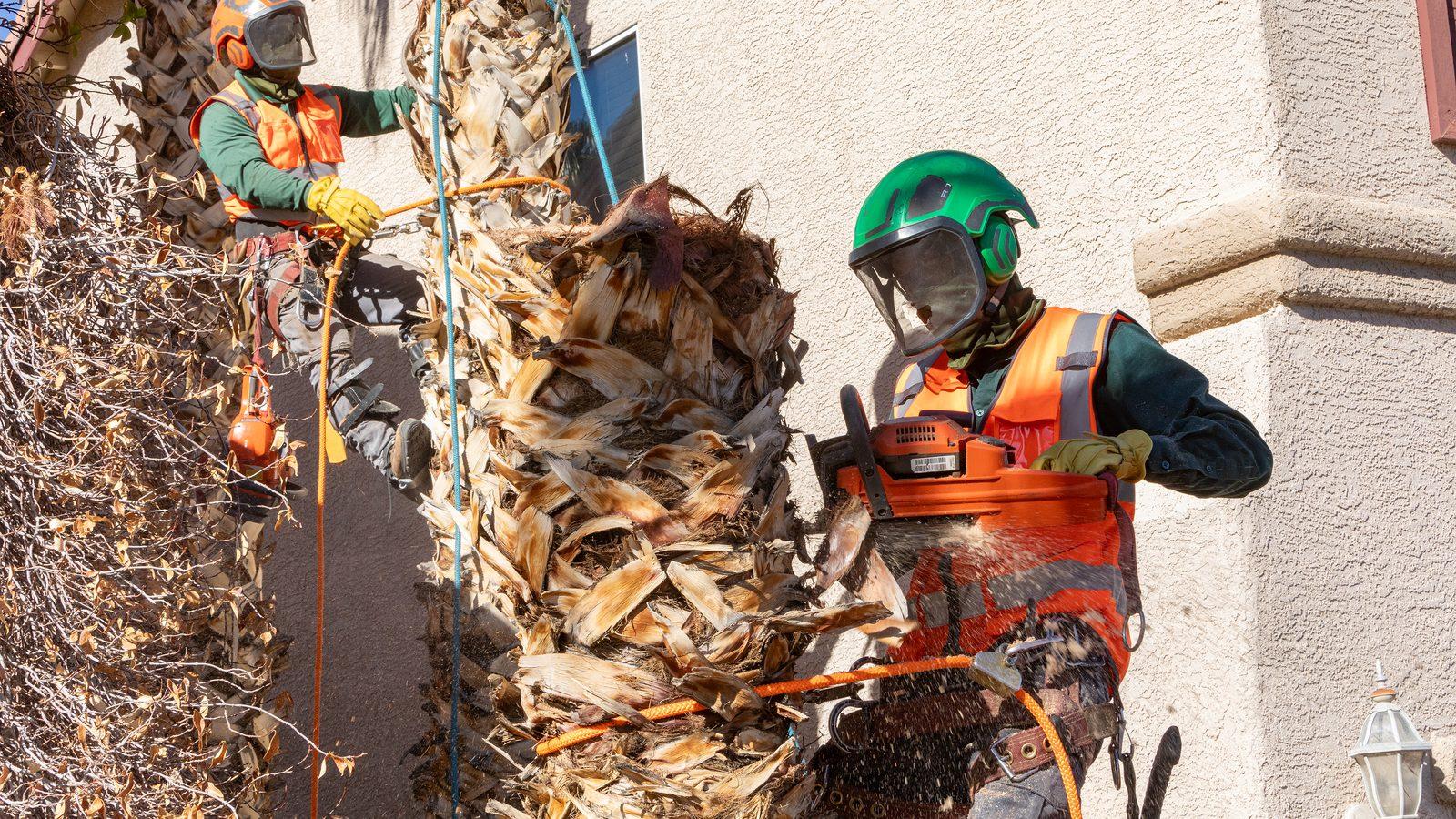
A professional looks at the tree's health and structure, then at what is around it. The ISA says evaluating how serious a defect is is best done by a professional arborist.
During an on-site visit, expect questions and observations about:
- Dead wood, cracks, decay and how the main stems are attached.
- Lean, soil movement and the condition of the root zone.
- What sits under and beside the tree: roofs, fences, pools, power lines and neighbors' yards.
- Access for the crew and equipment, including gates and side yards.
- Whether pruning, support or routine care would solve the problem instead.
The ISA lists pruning, cabling and bracing, routine care and removal as the options an arborist may suggest after a risk assessment. If you need a written record, for example for a sale, an insurance claim or an HOA file, a tree assessment report documents the tree's condition. Our post on when you need a tree risk assessment explains the difference between a report and a free estimate.
Do you need a permit or HOA approval to remove a mulberry?
Possibly. Rules differ by city, county and community, and an HOA may have its own. Ask before any cutting starts, because the answer depends on your address and your community's rules.
- Start with the city or county that governs your property, and read our overview of tree removal permits in Clark County.
- If you live in an HOA, read HOA tree removal rules in Las Vegas and check your own governing documents.
If you plan to plant a replacement, confirm the current planting requirements with your city, county or HOA first. Our post on the best trees to plant in Las Vegas for shade and privacy is a place to start.
What happens during a tree removal, and what about the stump?
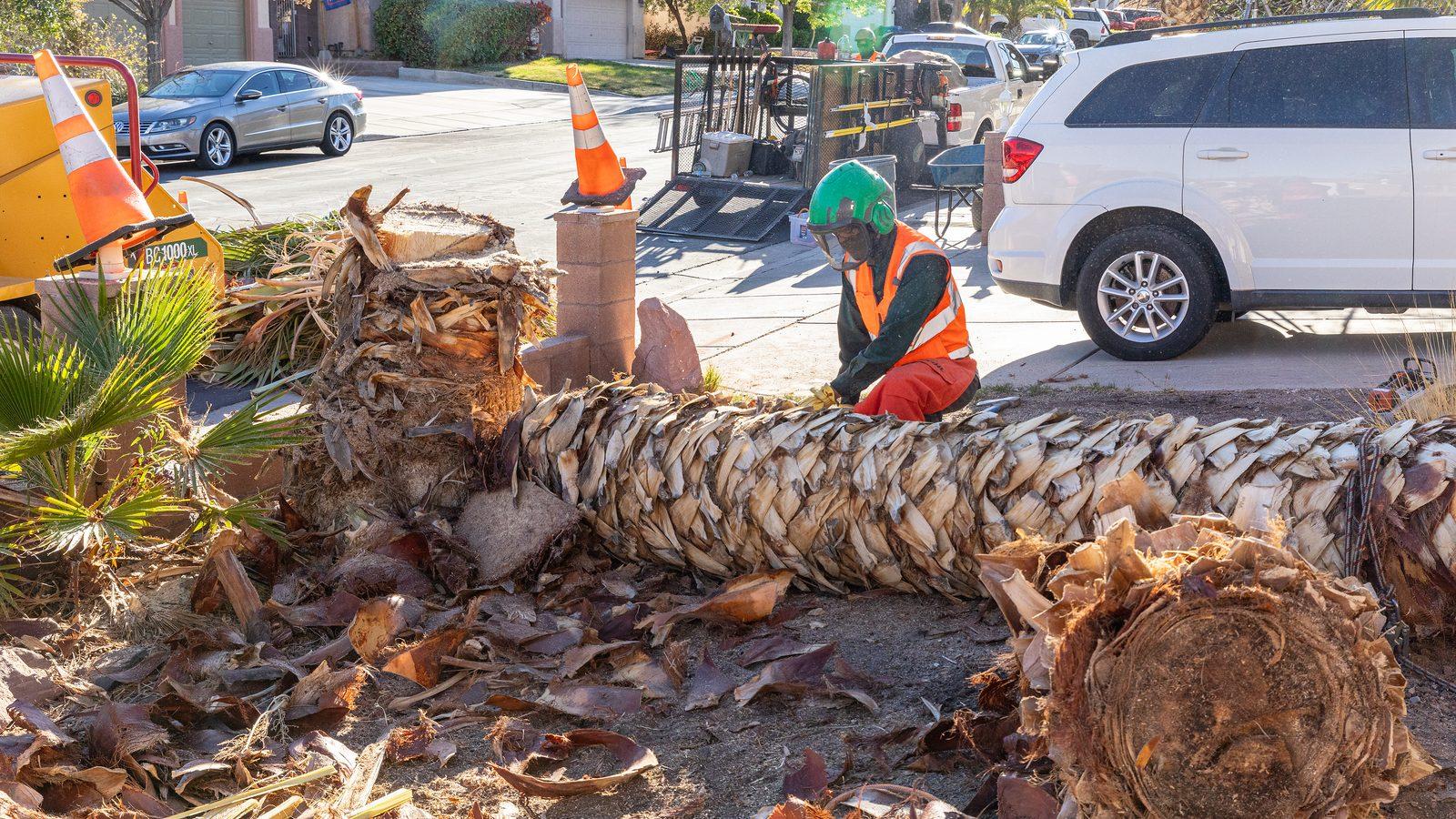
A professional removal follows a set order: assessment, a written quote, the removal and cleanup. That is how our tree removal page describes the process: we evaluate the tree and surroundings, give you a clear quote, remove the tree using safety techniques and haul away the debris. Our step-by-step guide to what happens during a professional tree removal in Las Vegas goes through it step by step.
Ask what the quote covers. Confirm whether stump work is included or quoted separately. Read stump removal in Las Vegas to compare grinding, digging out and leaving it. For how quotes are built, see our guide to tree removal cost in Las Vegas.
Can you remove a mulberry tree yourself?
A mature mulberry is not a do-it-yourself job. These trees can reach 20 to 60 feet, and a large tree near a roof, fence, pool or power line calls for trained crews and the right equipment. The ISA warns never to attempt to remove branches or any tree part from or near power lines. If a tree is touching a line, read what to do about a tree touching a power line in Las Vegas and call your electricity provider.
How do you choose a tree removal company?
Choose on credentials, insurance and a written estimate, not only on price. The ISA's guidance for choosing an arborist is to:
- Check for an ISA arborist credential, which you can verify on TreesAreGood.org.
- Ask for proof of insurance and call the insurance company.
- Check for local permits and licenses.
- Get more than one estimate and ask for references.
- Be wary of people who go door to door and offer bargains.
- Get it in writing and read the contract carefully.
Frequently Asked Questions
Do I have to remove a mulberry tree because of allergies?
For allergy concerns, talk to your doctor about symptoms and to an arborist about the tree. University of Nevada, Reno Extension's 2000 publication discusses allergy problems from fruitless mulberries and the pollen produced by male trees. Confirm any current local requirements before arranging work.
Are mulberry roots invasive?
UC IPM describes mulberry roots as shallow, growing extensively near the soil surface around the trunk, and recommends planting the tree away from pavement and buildings. How much a particular tree's roots affect your driveway or wall depends on its age, size and location, so have an arborist look at it.
Can a mulberry be pruned instead of removed?
Pruning may be an option if the tree is structurally sound and the concern is size or clearance. The ISA lists pruning as one of the options an arborist may suggest. If the tree has major defects, the arborist may advise removal instead.
How do I know if my mulberry is dangerous?
Look for large dead branches, cracks or splits, loose bark, cavities, mushrooms at the base, a new lean or cracked soil near the roots. The ISA says that if you see any of these signs, the tree should be examined by an ISA Certified Arborist.
Does Benjamin's Tree Service remove mulberry trees?
Our tree removal service covers trees of all sizes, and our work is led by an ISA Certified Arborist. Tell us about your tree and send a photo if you can. Estimates are free and no-obligation.
Get a Free Tree Removal Estimate in Las Vegas
Benjamin's Tree Service has served Las Vegas since 2001, and our work is led by Benjamin Garcia, ISA Certified Arborist (WE-15785A). Tell us about your mulberry and what worries you about it. We will look at the tree and tell you whether we would remove it, prune it or leave it.
Schedule Service or call 725-227-6160.
Sources
- UC Statewide IPM Program: Mulberry
- University of Nevada, Reno Extension: Allergenic Plants in Southern Nevada (SP-00-28)
- ISA TreesAreGood: Why Hire an Arborist?
- ISA TreesAreGood: Recognizing Tree Risk
- Benjamin's Tree Service: Tree Removal
Sources checked November 17, 2026.
Related Reading
Benjamin's Tree Service
ISA Certified Arborists serving Las Vegas & the surrounding areas since 2001.
Related Reading
Tree Care Tips
Fruit Tree Pruning in Las Vegas: Timing and What a Pro Cuts
Fruit tree pruning in Las Vegas: when to prune citrus and deciduous trees, what a pro cuts, and what…
9 min read
Tree Care Tips
Tree Branch Removal in Las Vegas: When to Call a Pro
Tree branch removal in Las Vegas: learn which broken, dead or hanging limbs need a pro, what can wai…
9 min read
Tree Care Tips
Deep Root Watering for Trees in Las Vegas: A Practical Guide
Learn how deep root watering works for Las Vegas trees: where the water should go, how to check soil…
8 min read