
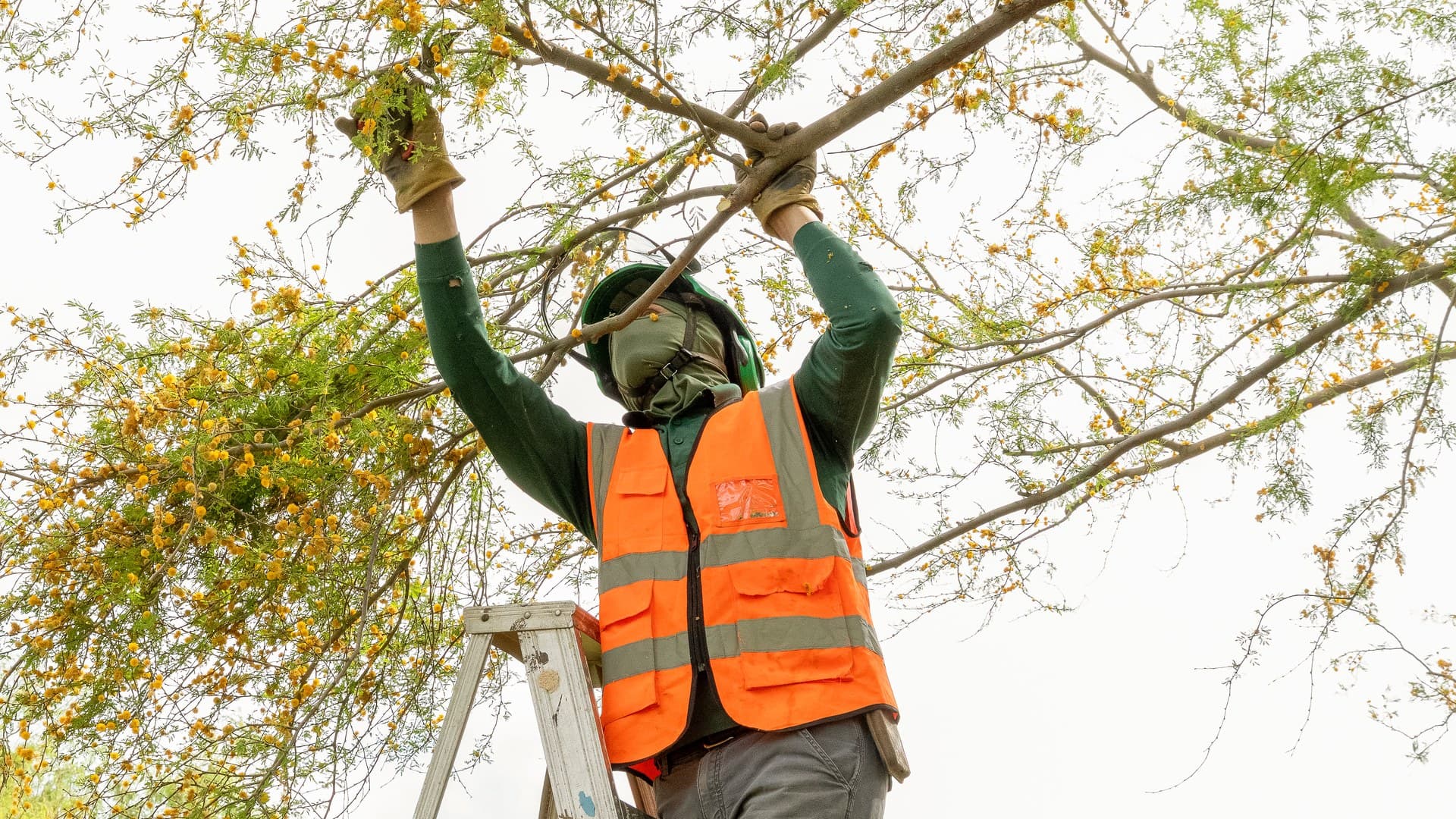
Crape myrtle pruning in Las Vegas done wrong causes crape murder and weak regrowth. Learn the right cuts, best timing, and how to protect your trees.
Crape myrtle pruning in Las Vegas has a bad reputation, and it's not the tree's fault. Drive through almost any established Summerlin or Henderson neighborhood in late winter and you'll spot crape myrtles hacked back to bare, knee-high stubs, a practice arborists everywhere call "crape murder." At Benjamin's Tree Service, our ISA Certified Arborists (ISA Cert. WE-15785A) have spent more than two decades correcting the damage those cuts do to this popular flowering tree across the Las Vegas Valley, and the good news is that proper technique isn't complicated once you understand what the tree actually needs.
This guide covers what matters for crape myrtle owners here: why the desert climate changes the timing, what crape murder really does to the tree's structure, the cuts that keep a crape myrtle healthy and full-blooming, and when a job is big enough to call in a professional.
Quick Summary
- Crape myrtles rarely need heavy pruning: most of what they need is light shaping, not the severe cutback known as "crape murder"
- Late winter, while the tree is fully dormant and before new growth starts, is the right window for Las Vegas crape myrtles
- Topping a crape myrtle triggers weak, whip-like regrowth that can't support its own blooms and rarely heals cleanly
- Thinning cuts that remove whole branches at their point of origin are almost always the better choice over heading cuts that leave stubs
- Structural training in a crape myrtle's first few years prevents most of the problems that later tempt homeowners to top the tree
- Benjamin's Tree Service has served Las Vegas Valley homeowners since 2001, ISA Certified (WE-15785A), 5-star Google rated
Table of Contents
- Why crape myrtle pruning in Las Vegas requires a different approach
- What "crape murder" actually does to the tree
- When to prune crape myrtles in the desert climate
- The right cuts: thinning versus heading
- Training a young crape myrtle for strong structure
- When a mature crape myrtle needs a certified arborist
- Crape myrtle care across the Las Vegas Valley
- Frequently asked questions
Why Crape Myrtle Pruning in Las Vegas Requires a Different Approach
Crape myrtles are planted everywhere in the valley for good reason: they tolerate our heat, need relatively little water once established, and reward homeowners with months of pink, white, red, or purple blooms through the hottest part of the year. That same toughness is part of why so many end up mutilated. A crape myrtle can survive years of being topped, so the damage rarely kills it outright, but it leaves a permanently disfigured tree that never reaches its natural vase-shaped form.
Our climate adds its own wrinkle. Many pruning guides are written for the Southeast, where crape myrtles are just as common but winters are longer and wetter. In Clark County's dry winters, a topped tree has less soil moisture to fuel the regrowth that follows, so the whippy new shoots crape murder produces tend to snap even more easily in our spring winds.
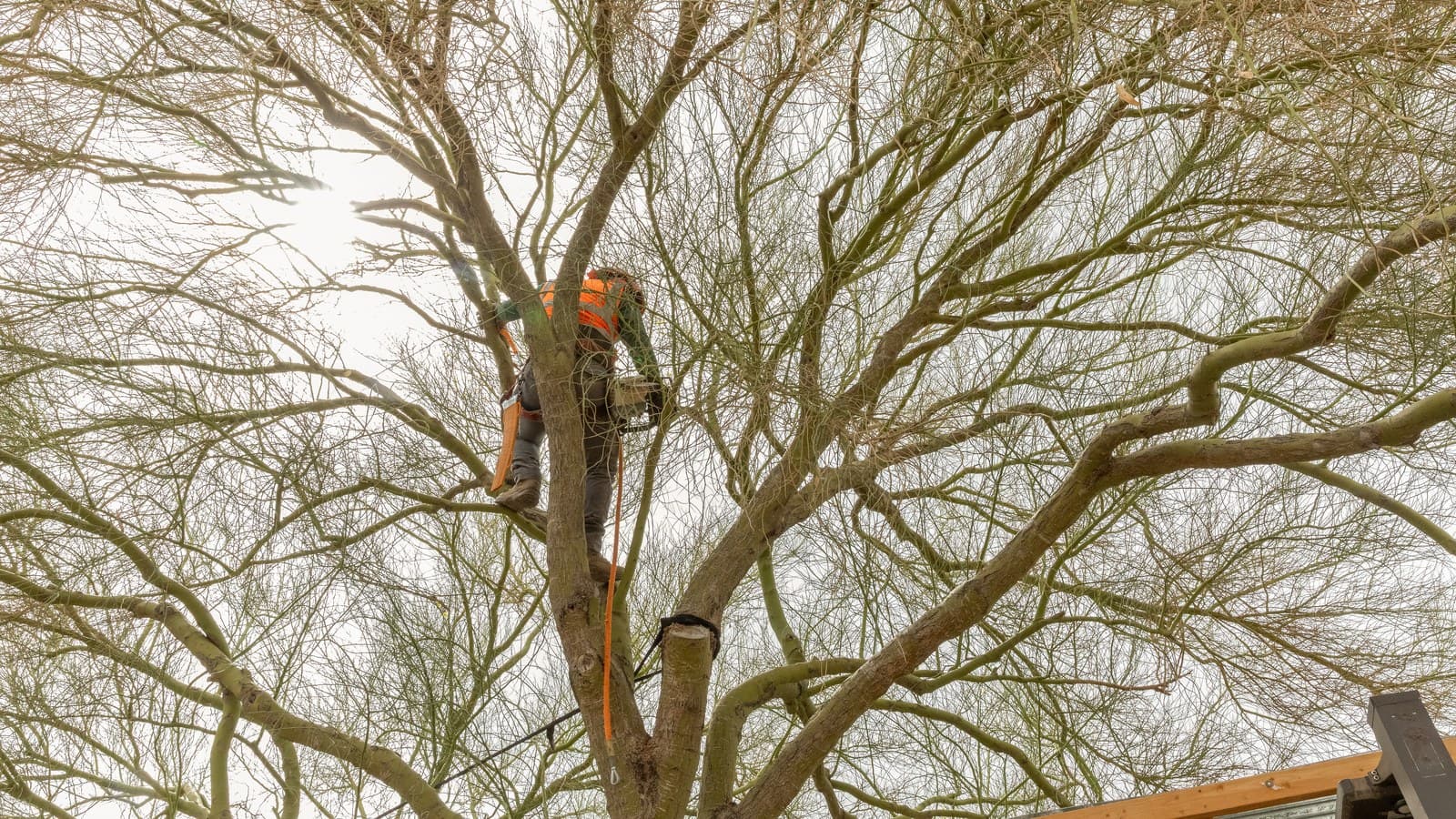
What "Crape Murder" Actually Does to the Tree
"Crape murder" is the nickname for topping: cutting main branches down to stubs, often at the same height every year, to keep a crape myrtle short or force a tidy, uniform look. It's usually done with good intentions, but the biology works against the goal.
When a branch is cut at a stub instead of at a natural branch collar, the tree can't seal the wound properly. Instead, it pushes out a cluster of fast, weakly attached shoots right at the cut site. Those shoots grow several feet in a single season, but because they're anchored to a stub rather than sound structural wood, they're far more likely to snap under their own weight once loaded with blooms, or in a gust of wind. Homeowners end up repeating the same hard cutback year after year, since the regrowth looks exactly like the kind of unstable growth that needs cutting back again. That cycle leaves the tree permanently smaller and less floriferous than an unpruned or lightly pruned specimen of the same age.
When to Prune Crape Myrtles in the Las Vegas Desert
Late winter, typically January into early February in the Las Vegas Valley, once the tree has fully dropped its leaves and before the first buds swell, is the ideal pruning window. Working while the tree is dormant makes it far easier to see the actual branch structure without leaves in the way, and new cuts have time to callus over before summer heat sets in.
Pruning too early in fall risks cutting into wood that hasn't fully hardened off for winter. Pruning too late, once spring growth has already started, means removing energy the tree has already invested in new buds, which can delay or reduce that season's bloom. Our guide on how often to trim trees in the Las Vegas desert climate covers timing for other common valley species, but crape myrtles specifically do best on this once-a-year dormant-season schedule rather than the multiple lighter trims some ornamentals tolerate.
The University of Florida's guide to pruning crapemyrtles confirms late winter dormancy as the recommended window nationally, and the same crape murder warning applies wherever the tree is grown. The desert timing constraint is specific to our climate, but the underlying pruning principles are the same ones every crape myrtle owner needs to know.
The Right Cuts: Thinning Versus Heading
Most of what a crape myrtle actually needs each winter is selective thinning, not a wholesale cutback:
- Remove suckers — the thin shoots that sprout from the base of the trunk or the root zone, which drain energy without contributing to the tree's shape
- Remove crossing or rubbing branches — where two limbs contact each other, the friction wears through bark and creates an entry point for pests and disease
- Remove dead, damaged, or diseased wood — cut back to a healthy branch collar or all the way to the trunk, not partway through the damaged section
- Thin crowded interior growth — opening the canopy improves airflow and lets more of the tree's energy go toward fewer, stronger bloom clusters
- Remove old seed pods — clipping spent seed heads back to a healthy bud can encourage a second, smaller bloom flush later in the season
Each of these is a thinning cut: it removes a branch back to its point of origin, whether that's another branch, the trunk, or the ground. A heading cut chops a branch partway through its length, which is what creates a stub, and should be reserved for genuinely rare situations, like removing storm damage back to the nearest healthy growth point. Our guide on crown reduction versus crown thinning walks through the same distinction for larger shade trees, and the logic holds just as well for a multi-trunk crape myrtle.
Training a Young Crape Myrtle for Strong Structure
A crape myrtle trained in its first three to five years rarely tempts anyone to top it later, because it never develops the overcrowded growth crape murder is usually a reaction to. Selecting well-spaced main trunks early, removing competing leaders before they thicken, and thinning crossing branches while small are all easier, and less stressful for the tree, than correcting a decade of neglect at once.
The International Society of Arboriculture's guide to pruning young trees covers this same structural-training approach, and it applies directly to a young crape myrtle: a little corrective attention every year or two while the tree is small prevents the overgrown structure that leads homeowners to reach for loppers and cut everything back to the same height out of frustration.
When a Mature Crape Myrtle Needs a Certified Arborist
Most crape myrtle maintenance is a modest job. A homeowner with clean bypass pruners and patience can often handle the annual thinning on a young or small specimen. Older, multi-trunk crape myrtles that have gone years without attention, or ones planted close to a roofline or power line, are a different story. Correcting years of improper heading cuts means identifying which whippy shoots are worth keeping as future structural branches, and getting that call wrong sets recovery back another year.
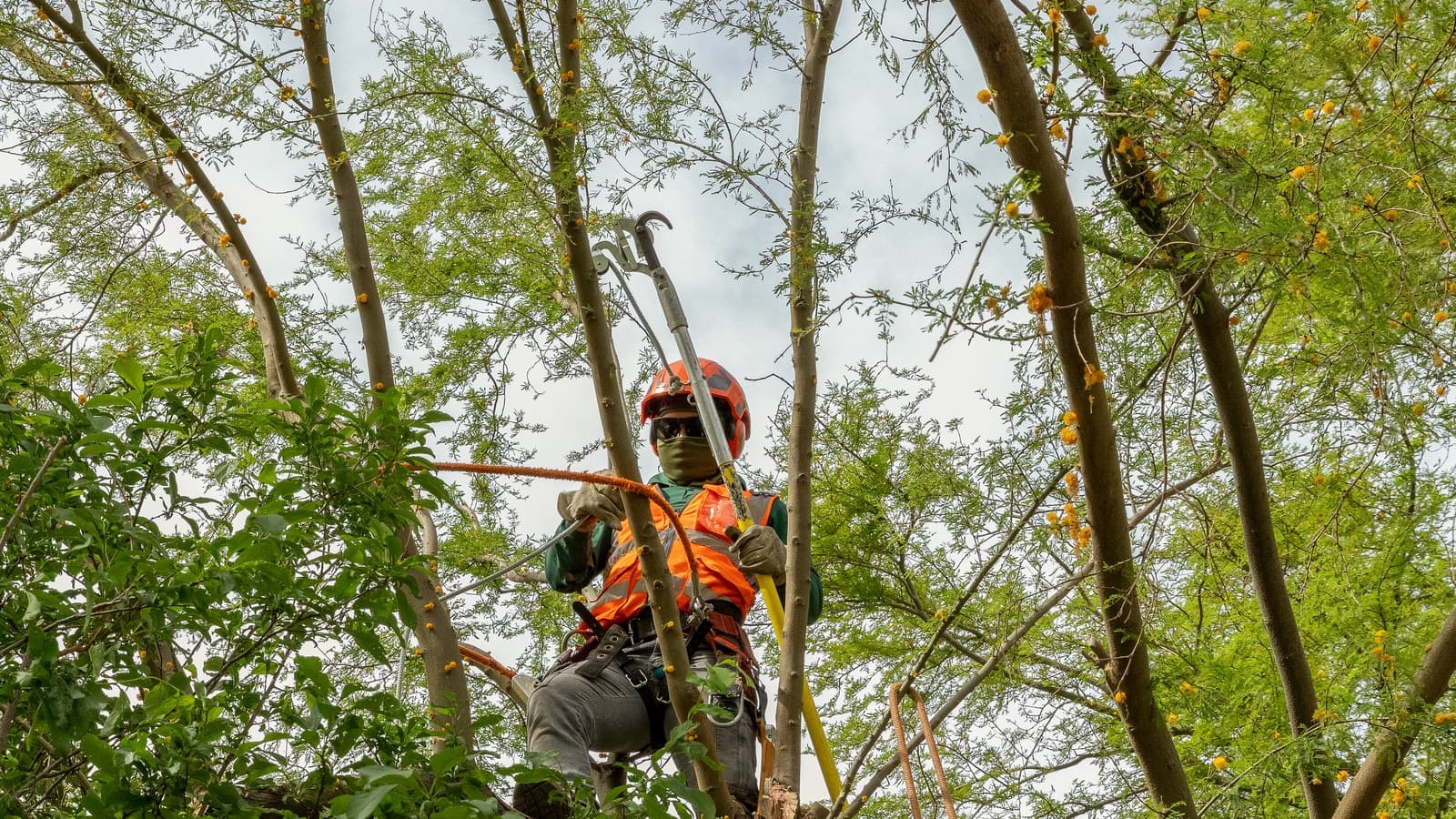
That's where a certified tree trimming and pruning crew earns its keep. Our ISA Certified Arborists can assess a crape myrtle's history and put together a multi-year plan to correct hard cutbacks without shocking the tree, and a tree assessment report can document a HOA-managed or previously topped specimen's condition before work begins. Many of the valley's oldest crape myrtle plantings sit in HOA common areas and apartment courtyards, and our HOA and property manager tree care service builds that documentation into the estimate for board approval.
Crape Myrtle Care Across the Las Vegas Valley
Crape myrtles thrive with the same care approach whether they're planted along a Summerlin parkway, an established Henderson courtyard, a newer yard in North Las Vegas, or a median strip in Green Valley. Heat and drought tolerance make them a valley favorite regardless of neighborhood, and our guide on protecting trees during Las Vegas summer heat notes that crape myrtles are among the thin-barked species most vulnerable to sunscald, one more reason a heavy summer cutback that strips away shading foliage is worth avoiding on top of the crape murder issue itself.
If a crape myrtle on your property has already been topped in past years, it's not a lost cause. Our guide on why tree topping hurts trees explains the same wound-response biology in more general terms, and a multi-year correction plan can gradually restore a more natural branch structure.
Frequently Asked Questions
Is crape myrtle pruning in Las Vegas different from other climates?
The underlying pruning principles are the same everywhere crape myrtles grow, but our dry winters change the timing window. Late winter dormancy, once the tree is fully leafless and before new buds swell, is the right time here, and cutting too early or too late adds stress a wetter climate wouldn't create.
Do crape myrtles need to be cut back hard every year to bloom well?
No. Crape myrtles bloom on new growth regardless of whether they were topped, so a hard cutback isn't required for flowering. Light annual thinning produces a fuller, better-structured tree with the same summer blooms, without the weak regrowth that heavy cutbacks cause.
What's the difference between crape murder and normal pruning?
Crape murder refers specifically to topping: cutting main branches down to stubs, usually at the same height every year. Normal pruning removes select branches back to their point of origin, whether that's the trunk, a larger limb, or the ground, which keeps the tree's natural branching structure intact.
Can a topped crape myrtle be fixed?
Often, yes, though it usually takes more than one season. An arborist can select the strongest regrowth shoots to keep as new structural branches and remove the rest, gradually training the tree back toward a healthier form over a few years rather than trying to correct everything in a single visit.
How much does professional crape myrtle pruning cost in Las Vegas?
Cost depends on the tree's size, how many trunks it has, and how much correction past cutbacks require, similar to other ornamental trimming work. An on-site estimate from an ISA Certified Arborist is the only way to get an accurate number for your specific tree.
Get a Free Crape Myrtle Pruning Estimate in Las Vegas
Crape myrtle pruning in Las Vegas comes down to timing and technique: late winter dormancy, thinning cuts instead of stubs, and a little structural patience instead of an annual hard cutback. Whether you're training a young tree or undoing years of crape murder on an older one, an ISA Certified Arborist can put together a plan that gets your tree back to its natural, full-blooming shape.
Call 725-227-6160 or request a free estimate online. Benjamin's Tree Service has provided licensed, insured trimming and pruning throughout Las Vegas, Henderson, Summerlin, and North Las Vegas since 2001, backed by ISA-certified expertise and 5-star Google reviews.
Benjamin's Tree Service
ISA Certified Arborists serving Las Vegas & the surrounding areas since 2001.
Related Reading
Trimming & Pruning
Mesquite Tree Trimming in Las Vegas: A Homeowner's Guide
Mesquite tree trimming in Las Vegas needs species-specific timing. Learn when to prune, mistakes to …
10 min read
Trimming & Pruning
Tree Topping in Las Vegas: Why It Hurts Trees
Tree topping can leave Las Vegas trees with weak regrowth and large wounds. Learn safer pruning opti…
9 min read
Trimming & Pruning
Palm Tree Trimming in Las Vegas: Homeowner's Guide
Learn when to trim palm trees in Las Vegas, how the process works, and why professional palm tree tr…
7 min read