
Olive tree pruning in Las Vegas keeps grandfathered trees healthy and code-compliant. Learn timing, sucker control, and the county's planting rule.
Olive tree pruning in Las Vegas comes with a wrinkle most homeowners don't expect: the county actually regulates which olive trees you're allowed to plant. Between a decades-old pollen ordinance, a shallow, wind-prone root habit, and a tendency toward dense, water-hungry suckering, olive trees need a different pruning approach than the mesquite or palo verde growing next to them. At Benjamin's Tree Service, our ISA Certified Arborists (ISA Cert. WE-15785A) have pruned olive trees throughout the Las Vegas Valley since 2001, and we get the same questions on nearly every visit: when to cut, how hard to cut, and what to do about the suckers taking over the base.
This guide covers what actually matters for a Las Vegas olive tree owner: why the county's fruitless-olive rule still affects your pruning decisions even on an older tree, the right timing and technique for structural cuts in a desert climate, how to manage suckers and water sprouts, and the mistakes that turn a healthy olive into a liability.
Quick Summary
- Clark County has prohibited planting new fruiting European olive trees since 1991 because of pollen allergy concerns, though existing olive trees on a property are grandfathered and don't have to be removed
- Late winter, after the last hard frost risk but before spring growth starts, is the safest pruning window for Las Vegas olive trees
- Olive trees send up aggressive suckers and water sprouts, especially after a hard prune, and managing them is an ongoing part of care, not a one-time fix
- Over-thinning an olive canopy in a single season stresses the tree and invites sunscald on previously shaded bark
- Benjamin's Tree Service has served Las Vegas Valley homeowners since 2001, ISA Certified (WE-15785A), licensed, insured, and 5-star Google rated
Table of Contents
- Why olive tree pruning in Las Vegas looks different
- The Clark County fruitless-olive rule and what it means for your tree
- Best time to prune olive trees in the desert
- Structural pruning for young vs. mature olive trees
- Managing suckers and water sprouts
- Common olive tree pruning mistakes
- Olive tree care across the Las Vegas Valley
- Frequently asked questions
Why Olive Tree Pruning in Las Vegas Looks Different
Olive trees showed up across the valley decades ago as a drought-tolerant, silvery-leafed staple of desert landscaping, and plenty of older properties in Las Vegas and Henderson still have one in the yard. But an olive tree doesn't grow or respond to pruning the way a mesquite or acacia does. Its wood is dense and slow to compartmentalize large wounds, its canopy tends toward a thick, twiggy interior that shades out its own lower branches, and it reacts to hard cuts by throwing out a flush of fast, weakly attached water sprouts rather than healing cleanly.
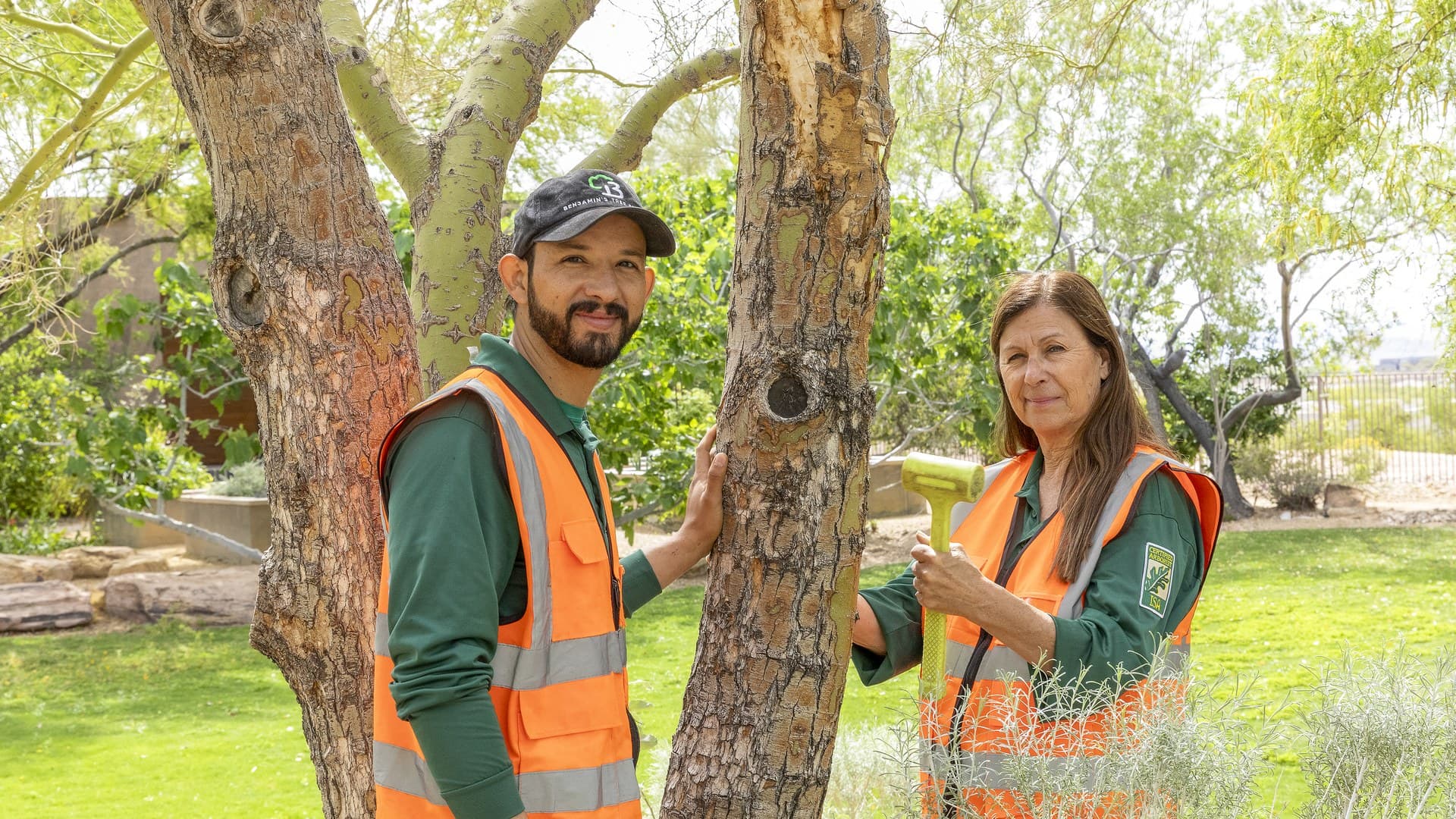
Desert heat adds another layer. An olive canopy that's been thinned too aggressively in one pass can expose bark that's never been in direct sun to Las Vegas summer temperatures, and sunscald on a trunk or major limb is a real risk that doesn't show up until weeks after the cut. Getting the timing and the cut ratio right matters more here than it does in a milder climate.
The Clark County Fruitless-Olive Rule and What It Means for Your Tree
Here's the part most homeowners never hear until they ask about replacing a dead olive: after April 1, 1991, Clark County's air quality regulations prohibited planting, selling, or authorizing the planting of fruiting European olive (*Olea europaea*) trees anywhere in the county, alongside fruitless mulberry. The reason was public health, not landscaping preference: olive and mulberry pollen had become heavy enough contributors to valley-wide allergy season that the county board of commissioners acted to cut off new plantings.
The ordinance only restricts new plantings. An olive tree that was already established on a property before the rule, or one planted under a valid exemption, doesn't have to come out, and routine pruning and maintenance are unaffected. What it does mean is that if your olive tree dies or has to be removed, you can't simply replace it with another standard European olive; low-pollen certified cultivars such as Swan Hill and Wilsoni are among the approved exceptions. That context matters for pruning decisions too. Because an existing olive on an older Las Vegas property usually can't be replaced in kind, keeping it structurally sound through correct pruning carries more weight than it would for a species you could freely replant.
Best Time to Prune Olive Trees in the Desert
Timing an olive prune in the Las Vegas Valley is less about the calendar and more about avoiding two windows: a sudden late frost right after cutting, and the stress of peak summer heat. Late winter, once the risk of a hard frost has passed but before the tree pushes new spring growth, is the window our crews use most often for structural work. Cuts made at this time heal into the spring flush rather than sitting open through a cold snap or a 110-degree stretch.
Light maintenance, removing a single broken branch or a sucker that's gotten out of hand, can happen almost any time of year without much risk. It's the larger structural cuts, crown thinning, or any reduction of more than a small share of the canopy, that benefit from waiting for the right season. Pruning right before or during the hottest months increases the odds of sunscald on newly exposed bark, since an olive canopy that's always provided its own shade doesn't have time to toughen up before peak heat arrives.
Structural Pruning for Young vs. Mature Olive Trees
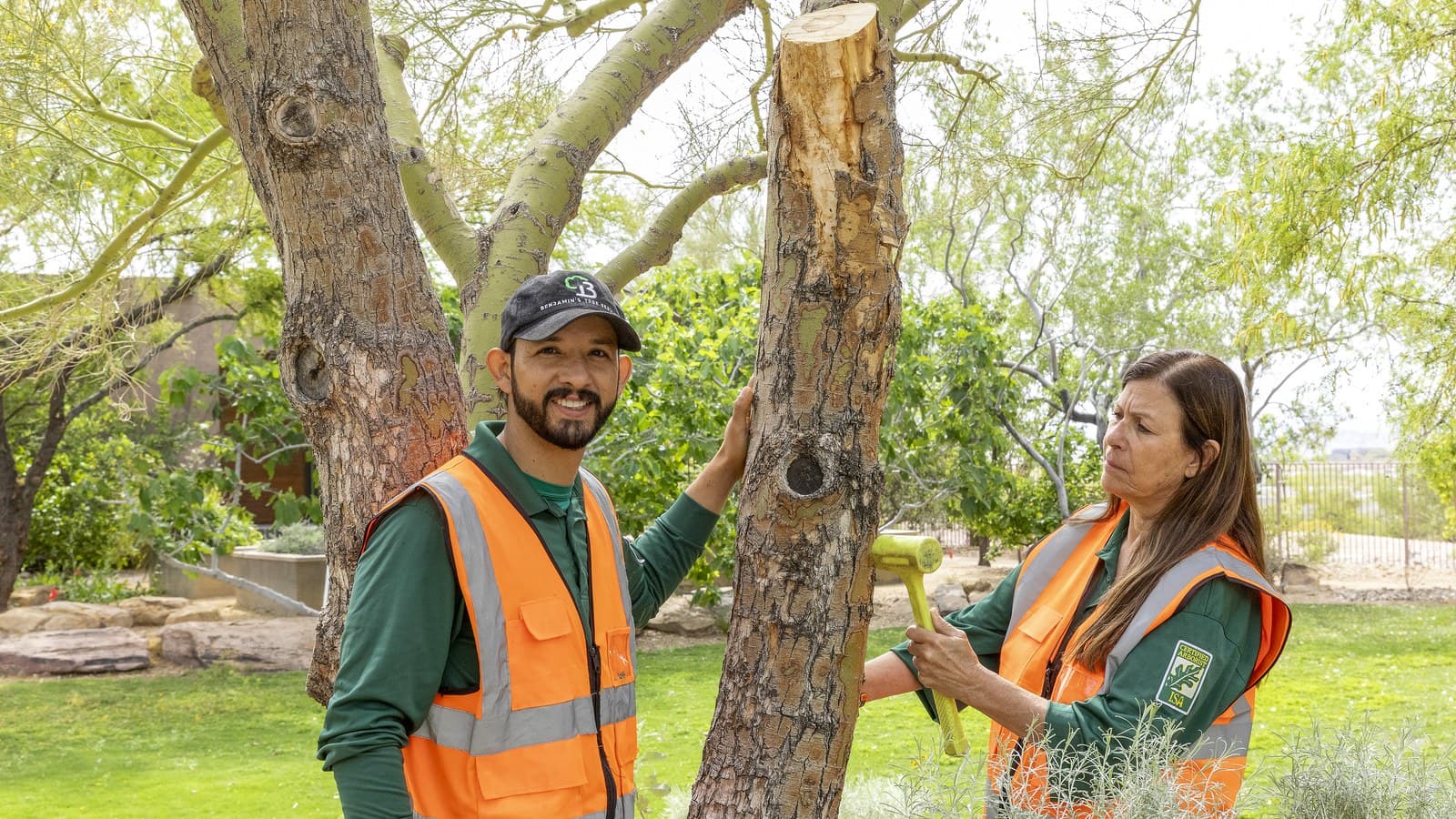
A young olive tree, planted within the last five to ten years, benefits most from structural training: establishing a clear central framework of main scaffold branches, removing competing leaders early, and opening the canopy gradually rather than all at once. Getting this right while the tree is still small prevents the kind of dense, self-shading interior that becomes much harder to correct later.
A mature, decades-old olive tree is a different project. Many of the olive trees we work on in older neighborhoods have never had a true structural prune, just light shearing over the years, which leaves a dense outer shell of foliage with a tangled, shaded interior. Correcting that safely means removing crossing and rubbing branches, selectively thinning the interior to let light and air through, and resisting the urge to take out more than roughly a quarter of the live canopy in a single visit. An older olive with significant deadwood, a split limb, or a cavity at a major branch union should get a professional tree assessment before any major pruning decision, since cutting into compromised wood on a tree this size carries real structural risk.
Managing Suckers and Water Sprouts
Suckers rising from the base of the trunk or the root zone, and water sprouts shooting straight up from interior branches, are one of the most persistent maintenance issues on a Las Vegas olive tree. Olives are genetically prone to this growth habit, and a hard prune or a stressed root system, common after a hot, dry summer, tends to trigger an even heavier flush of both.
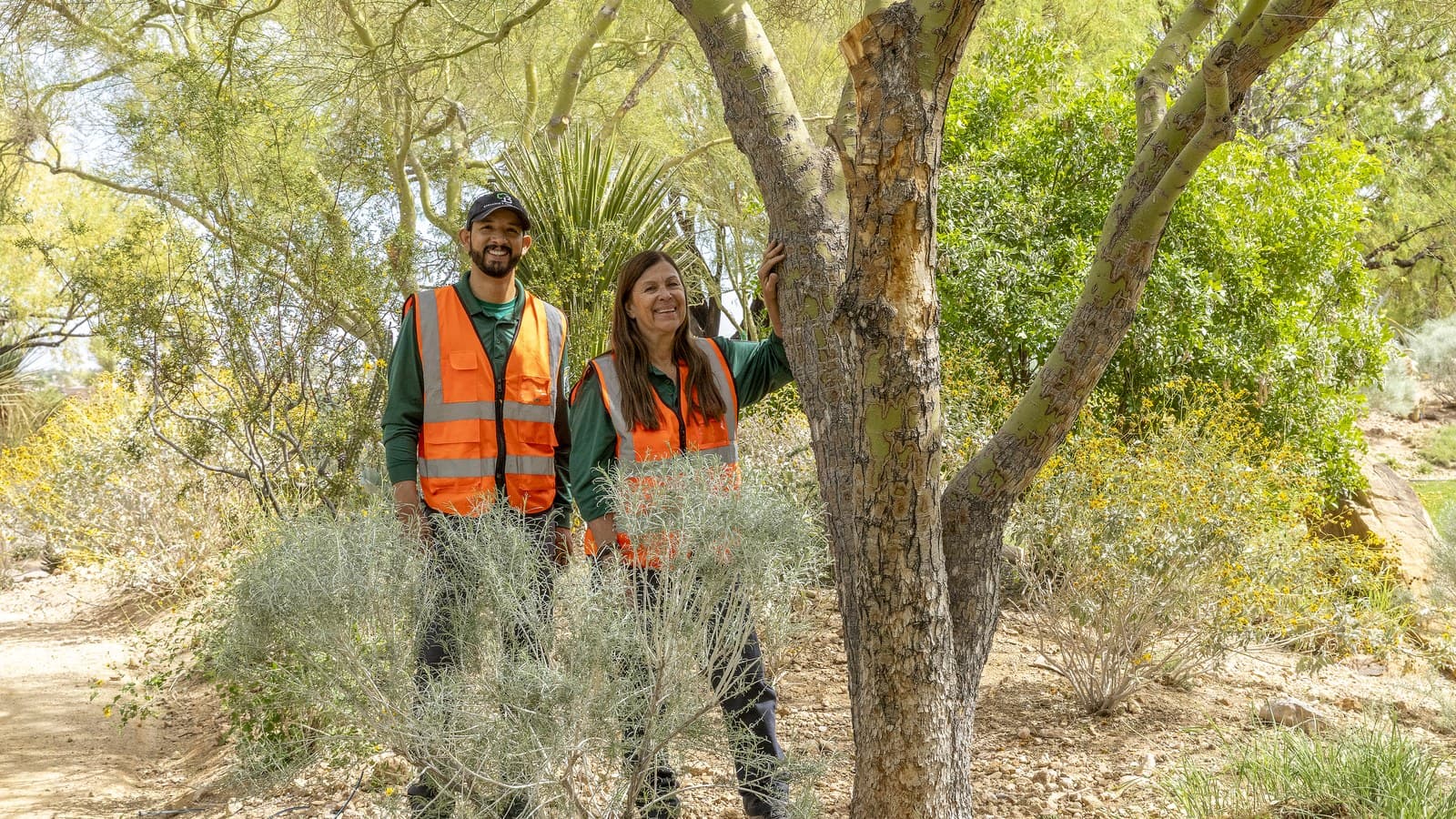
Left alone, suckers compete with the main tree for water and nutrients, clutter the base, and can eventually grow into their own weakly attached trunks. Water sprouts inside the canopy grow fast, attach poorly, and shade out the productive branches around them without adding real structure. Managing both is an ongoing job rather than a once-a-year task: our crews typically remove suckers and sprouts as part of each scheduled trimming and pruning visit, cutting each one flush at its point of origin so it doesn't just resprout thicker.
Common Olive Tree Pruning Mistakes
The most common mistake we see on Las Vegas olive trees is topping or shearing the outer canopy into a tight ball year after year, the same hedge-style treatment that causes problems on crape myrtles and other species around the valley. It looks tidy for a few weeks, but it thickens the outer shell, shades the interior even further, and triggers exactly the weak water-sprout growth that makes the next year's pruning harder. Our guide on why tree topping hurts trees in Las Vegas covers the structural damage this approach causes in more detail, and the same mechanics apply to a heavily sheared olive.
A second common mistake is over-thinning in a single visit to "get it all done," which is how an otherwise healthy olive ends up with sunscald on a trunk that's suddenly exposed to full summer sun. A third is ignoring suckers until they've grown into thick, established growth that takes real effort to remove cleanly. All three mistakes are avoidable with a pruning schedule that treats an olive tree as a multi-year project rather than a single aggressive cleanup.
Olive Tree Care Across the Las Vegas Valley
Older olive trees show up most often in established neighborhoods across Las Vegas, Henderson, and Summerlin, where decades-old landscaping predates the county's 1991 planting rule. HOA-governed communities add another layer worth checking before scheduling major pruning work, since architectural review commonly applies to significant canopy reduction even on an owner's own lot; our guide on HOA tree removal rules in Las Vegas covers what that approval process usually involves. For a broader look at pruning timing and technique across the species we see most, our general tree pruning guide for Las Vegas is a useful starting point alongside this one.
Wherever your olive tree is growing, from an original 1990s planting in central Las Vegas to a grandfathered specimen in a Henderson HOA common area, the same approach applies: careful, seasonally timed cuts that open the canopy gradually and keep suckers in check, not an annual shear-down.
Frequently Asked Questions
Can I still plant an olive tree in Las Vegas?
Not a standard fruiting European olive. Clark County has prohibited new plantings of that species since 1991 due to pollen concerns, though certified low-pollen cultivars such as Swan Hill and Wilsoni are exempt and still available.
Do I have to remove my existing olive tree because of the county rule?
No. The ordinance only restricts new plantings. An olive tree already established on your property before the rule, or planted under an exemption, is grandfathered and doesn't need to come out.
When is the best time to prune an olive tree in Las Vegas?
Late winter, after the last hard frost risk but before spring growth starts, is the safest window for structural pruning. Light maintenance, like removing a single sucker, can be done nearly any time of year.
Why does my olive tree keep sending up suckers after pruning?
Olive trees are naturally prone to vigorous sucker and water-sprout growth, and a hard prune or drought stress tends to trigger even more of it. Regular removal during scheduled maintenance keeps it from getting ahead of the tree.
Can I just shear my olive tree into a ball shape every year?
You can, but it's one of the more damaging long-term approaches. Repeated shearing thickens the outer canopy, shades out the interior, and triggers the weak water-sprout growth that makes future pruning harder and the tree less structurally sound.
Get a Professional Olive Tree Pruning Estimate in Las Vegas
Olive tree pruning in Las Vegas takes a different approach than most desert species: the right season, a conservative cut ratio, and ongoing sucker control rather than an annual shear-down. An on-site visit from an ISA Certified Arborist is the best way to get a grandfathered olive tree, one you likely can't replace in kind, pruned correctly.
Call 725-227-6160 or request a free estimate online. Benjamin's Tree Service has provided licensed, insured tree care throughout Las Vegas, Henderson, Summerlin, and the surrounding Valley since 2001, backed by ISA-certified expertise and 5-star Google reviews.
Benjamin's Tree Service
ISA Certified Arborists serving Las Vegas & the surrounding areas since 2001.
Related Reading
Trimming & Pruning
Crape Myrtle Pruning in Las Vegas: Avoid Crape Murder
Crape myrtle pruning in Las Vegas done wrong causes crape murder and weak regrowth. Learn the right …
9 min read
Trimming & Pruning
Mesquite Tree Trimming in Las Vegas: A Homeowner's Guide
Mesquite tree trimming in Las Vegas needs species-specific timing. Learn when to prune, mistakes to …
10 min read
Trimming & Pruning
Tree Topping in Las Vegas: Why It Hurts Trees
Tree topping can leave Las Vegas trees with weak regrowth and large wounds. Learn safer pruning opti…
9 min read